The 1960s File Feature
I'm On The Outside (Looking In)
Little Anthony and the Imperials and "I'm On The Outside (Looking In)" The chart history of Little Anthony and the Imperials is one of the more remarkable co…
01 The Story
Little Anthony and the Imperials and "I'm On The Outside (Looking In)"
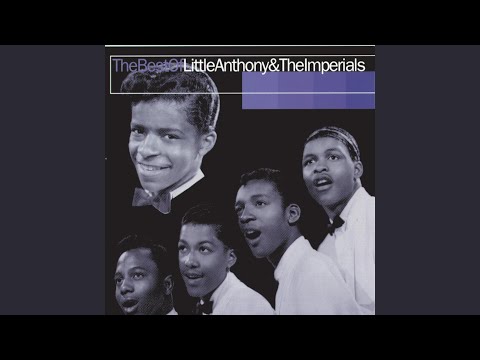
The chart history of Little Anthony and the Imperials is one of the more remarkable comeback narratives in American popular music. The group had achieved significant commercial and critical success in the late 1950s with recordings like "Tears on My Pillow" (1958) and "Shimmy, Shimmy, Ko-Ko-Bop" (1959), establishing lead vocalist Anthony Gourdine as one of the most distinctive tenor voices in early rhythm-and-blues and doo-wop. However, their commercial momentum had slowed considerably in the early 1960s, as the musical landscape shifted around them and the group experienced personnel changes and label transitions that disrupted their creative continuity.
The revival of Little Anthony and the Imperials' commercial fortunes came through a fortunate combination of factors: the group's signing with DCP Records and their collaboration with producer/songwriter Teddy Randazzo. Randazzo, a former recording artist himself, had developed a sophisticated approach to soul ballad writing that drew on the emotional intensity of gospel while providing the kind of melodic accessibility that mainstream pop audiences could embrace. His compositional style favored dramatic, sweeping arrangements that gave Gourdine's extraordinary falsetto voice maximum room to convey emotional weight.
"I'm On The Outside (Looking In)" was co-written by Randazzo with Bobby Weinstein and recorded in 1964 as the group's first major DCP release. The arrangement was characteristically lush, with orchestral strings and brass providing a backdrop that amplified the lyric's emotional intensity. Gourdine's vocal performance built from intimate vulnerability at the opening to passionate declaration at the song's climaxes, demonstrating the range and control that had made him stand out from his contemporaries even in the crowded field of early-1960s soul and R&B.
The single was released in the summer of 1964 and debuted on the Billboard Hot 100 on August 22, entering at number 66. The ascent was brisk: within three weeks the track had moved to number 36, reflecting strong radio response that suggested the group's audience had remained attentive even during the years of reduced commercial activity. The single continued to climb through September and reached its peak of number 15 on October 10, 1964. The 10-week chart run provided one of the group's strongest Hot 100 performances of the decade.
The timing of the release in mid-1964 placed it within one of the most competitive and historically significant periods in American popular music history. The British Invasion, launched in February 1964 by the Beatles' first US appearances, had fundamentally altered the commercial landscape of the Hot 100. British acts dominated chart positions throughout 1964 in a way that squeezed space for American acts in multiple genres. That Little Anthony and the Imperials achieved a top-fifteen placement during this period was evidence of the genuine strength of the record and of the group's enduring connection with their core audience.
Gourdine's falsetto was itself a historically significant vocal technique in the context of American popular music. The use of falsetto as a primary mode of emotional expression, rather than as an occasional ornament, had deep roots in gospel and doo-wop traditions, and Gourdine was among the most accomplished practitioners of the approach. His influence on subsequent generations of soul and R&B vocalists was substantial: the elongated, emotionally intense falsetto that became central to 1970s and 1980s R&B production style can trace significant lineage back to the vocal approach that Gourdine developed in the late 1950s and perfected in the DCP Records years.
Teddy Randazzo's production gave the recording a sonic architecture that was simultaneously of its moment and structurally distinct from most of what surrounded it on the charts. Where many 1964 pop productions were either imitative of British sounds or were working within the Motown/Stax framework, the Randazzo-Weinstein material for Little Anthony occupied its own emotional register: more operatic in its sweep than Motown, more polished and melodically elaborate than the Memphis soul coming from Stax, but fundamentally rooted in the same gospel and doo-wop traditions that underpinned both.
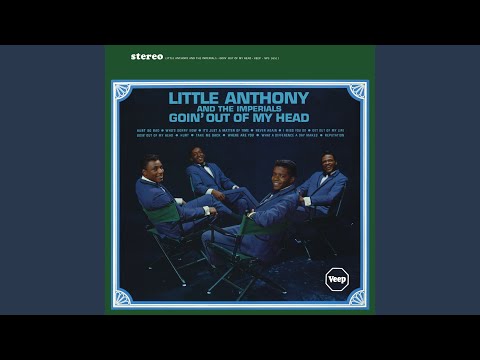
The success of "I'm On The Outside (Looking In)" was followed closely by "Goin' Out of My Head," which was released later in 1964 and would become an even larger commercial and artistic triumph for the group, eventually reaching number six on the Hot 100. The pairing of the two singles established Randazzo's collaboration with Little Anthony and the Imperials as one of the more productive creative partnerships in mid-1960s soul music, and the two records together document a peak moment in both Gourdine's vocal development and Randazzo's songwriting craft.
The group continued to record with success through the mid-1960s, accumulating additional Hot 100 entries before their commercial momentum slowed again in the late 1960s. Little Anthony himself maintained a performing career into the decades that followed, recognized both for his historical significance within the development of doo-wop and soul music and for the specific quality of his voice, which aged with uncommon grace and retained its distinctive character well beyond the years of his greatest commercial success.
Induction into the Rock and Roll Hall of Fame in 2009 recognized the group's contribution to the development of American popular music, affirming a legacy that extended from the earliest days of rock and roll through the sophisticated soul productions of the 1960s. "I'm On The Outside (Looking In)", as the record that initiated their most successful creative period, stands as one of the essential early documents of that legacy.
02 Song Meaning
The Meaning of "I'm On The Outside (Looking In)" by Little Anthony and the Imperials
"I'm On The Outside (Looking In)" uses one of the most evocative spatial metaphors in popular song to describe the specific pain of exclusion from a love that the speaker can perceive but cannot enter. The image of standing outside while looking in is a fundamentally visual experience translated into emotional terms: the speaker can see the relationship, can witness its warmth and intimacy from a position that is close enough to understand what is being missed but too far removed to share in it. This gap between visibility and participation is the song's central subject, and it is one of the more psychologically precise descriptions of unrequited love or post-relationship grief that the period's pop songwriting produced.
The title's parenthetical construction, "(Looking In)," is worth noting for how it functions. The phrase "on the outside" alone carries most of the necessary meaning, but the addition of the participial phrase specifies what the speaker is doing from that position of exclusion. He is not simply outside, having turned away; he is actively looking, still engaged with what he cannot have. This distinction between passive exile and active witnessing gives the song its emotional intensity and distinguishes it from simpler expressions of rejection.
Teddy Randazzo and Bobby Weinstein constructed the lyric to honor the complexity of this position. The speaker is not only sad; he is trapped in a condition of ongoing attention to the very thing that is hurting him. This compulsive looking, the inability to turn away from what one cannot have, is one of the more honest accounts of how rejection actually feels as opposed to how it is supposed to feel in a more resolved emotional narrative. The song refuses to move the speaker toward acceptance or away from the source of his pain; it holds him in place, outside, looking.
Anthony Gourdine's vocal interpretation was essential to the song's emotional impact. His falsetto voice, developed over years of work in doo-wop and gospel-rooted soul, carried a quality of yearning that was built into the timbre of the instrument itself. A falsetto voice sounds, by its nature, as if it is reaching for something: the vocal mechanism is strained slightly upward from its natural register, which gives the performance a built-in quality of aspiration or longing that aligned perfectly with the lyric's emotional content. Gourdine used this quality with full awareness, building his performance around the tension between the purity of his falsetto and the pain of the words it was delivering.
The orchestral arrangement that framed the vocal reinforced these themes through its sweeping, dramatic quality. The strings created a sense of emotional scale that made the speaker's individual pain feel appropriately significant: not trivial or self-indulgent but genuinely weighty. This was characteristic of Randazzo's production approach, which consistently treated the emotional experiences described in his songs as worthy of serious musical attention.
In the context of 1964, the song's themes resonated with listeners navigating the specific social dynamics of the mid-twentieth century, when romantic relationships were framed by relatively rigid social expectations and the experience of unrequited love or romantic exclusion was rarely discussed with the directness the lyric employed. The song provided a vocabulary for an experience that many listeners recognized but that mainstream culture did not often address so directly.
The spatial metaphor at the heart of "I'm On The Outside (Looking In)" proved durable enough to work across multiple cultural moments and listener demographics. The experience of being close to something one desires but unable to access it, of being a witness to rather than a participant in something that matters deeply, is sufficiently universal to remain legible long after the specific social context of its 1964 recording has receded. That universality, combined with the technical excellence of Gourdine's vocal performance and Randazzo's arrangement, gives the song a lasting place in the literature of American popular music about the experience of love withheld or lost.
→ More from Little Anthony And The Imperials
View all Little Anthony And The Imperials hits →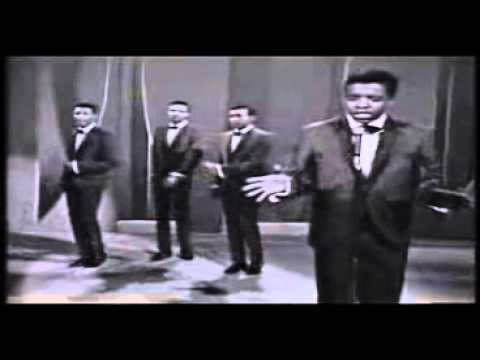

→ More from the 1960s File
View all 1960s hits →




Keep digging