The 1960s File Feature
Better Use Your Head
Little Anthony and the Imperials: "Better Use Your Head" and the DCP Records Era Little Anthony and the Imperials had already established themselves as one o…
01 The Story
Little Anthony and the Imperials: "Better Use Your Head" and the DCP Records Era
Little Anthony and the Imperials had already established themselves as one of the most enduring vocal groups in American pop music by the time they arrived at DCP Records in the mid-1960s. The group had formed in Brooklyn in the late 1950s and scored major hits on End Records, including "Tears on My Pillow" in 1958 and "Shimmy, Shimmy, Ko-Ko-Bop" in 1960. After several years of fluctuating commercial fortunes, they found a new artistic home with producer Teddy Randazzo and DCP Records, a pairing that would produce some of the most sophisticated and emotionally resonant recordings of their career.
Teddy Randazzo was a singer and songwriter who had developed an unusually refined approach to pop orchestration, drawing on classical techniques and applying them to rhythm and blues and soul contexts. His arrangements for Little Anthony and the Imperials were known for their dramatic scope, their lush string writing, and their careful attention to the emotional arc of each song. The combination of Randazzo's production instincts and Anthony Gourdine's exceptional falsetto voice created a distinctive sound that set the group apart from virtually every other act working in pop and soul during that period.
"Better Use Your Head" was released in the spring of 1966 and entered the Billboard Hot 100 on May 14 of that year, debuting at number 86. The record climbed through the chart over the following weeks, reaching its peak position of number 54 during the week of June 18, 1966, and spending seven weeks on the chart in total. While that peak placed it below the group's biggest hits, it represented a consistent commercial presence for an act that had already demonstrated remarkable longevity in a rapidly changing musical landscape.
The mid-1960s were a particularly challenging period for vocal groups of the early rock era. The British Invasion had reshaped audience expectations, and the emergence of soul music from Memphis and Detroit was offering powerful new alternatives to the polished pop that had defined the early part of the decade. Little Anthony and the Imperials navigated this period with considerable skill, maintaining their stylistic identity while adapting enough to remain relevant on pop radio.
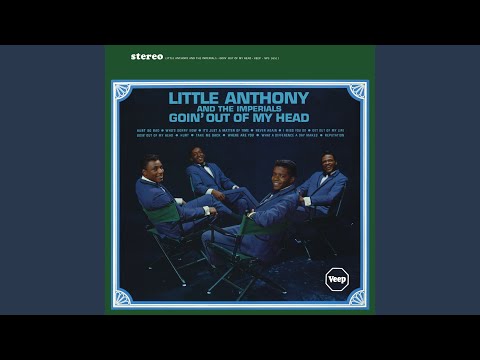
DCP Records, which operated out of New York, was a smaller label that had been co-founded by Don Costa, and it gave the group a creative environment where Randazzo's vision could be realized with considerable care. The recordings from this period, including "Goin' Out of My Head," "Hurt So Bad," and "Take Me Back," were notable for their production ambition and their departure from the rawer sounds that were gaining prominence in black popular music during the same years.
"Better Use Your Head" fit within that framework as an up-tempo pop-soul track that showcased the group's vocal ensemble work alongside Gourdine's lead performance. The arrangement reflected Randazzo's characteristic attention to detail, with a rhythm track that provided propulsion while the orchestration provided harmonic depth. The Imperials, consisting at this time of Clarence Collins, Sammy Strain, Ernest Wright Jr., and Gourdine, functioned as a genuine vocal unit rather than simply a backing group, and their interplay gave the record its texture.
The song arrived during a stretch of sustained chart activity for the group. The DCP period produced several Hot 100 entries across 1964 through 1967, and "Better Use Your Head" was part of that consistent run. It demonstrated that the group's appeal, rooted in vocal sophistication and emotional delivery, retained its commercial viability even as the broader pop landscape was undergoing rapid transformation.
Little Anthony and the Imperials would continue performing for decades after the DCP era, and Anthony Gourdine eventually received recognition from the Rock and Roll Hall of Fame as an inductee in 2009, a belated acknowledgment of the group's foundational importance to American vocal pop. "Better Use Your Head" stands as one of the records from their most musically ambitious period, when their collaboration with Randazzo was producing work of genuine sophistication and lasting appeal.
02 Song Meaning
The Meaning Behind "Better Use Your Head" by Little Anthony and the Imperials
"Better Use Your Head" belongs to a tradition of cautionary pop songs that use romantic advice as the vehicle for a broader message about emotional intelligence and self-preservation. The song addresses the conflict between feeling and judgment, between the pull of romantic attraction and the cooler assessment of what that attraction might cost. Little Anthony and the Imperials, working within the polished framework that producer Teddy Randazzo had built around their sound, deliver the message with the kind of vocal warmth that makes even a warning feel like an act of compassion.
The central premise is familiar to the genre: a speaker who has experienced the consequences of acting on emotion rather than reason is now counseling someone to avoid the same mistake. The cautionary stance is not cynical or dismissive of love itself; rather, it acknowledges that love without clear thinking is vulnerable to exploitation and heartbreak. The implied history of the narrator gives the advice its emotional weight, because the listener understands that these words come from experience rather than detachment.
What makes the song interesting within the context of the mid-1960s pop landscape is the way it speaks to an audience navigating genuinely complex social expectations around romance and commitment. Young listeners in 1966 were operating within a cultural moment when traditional expectations about courtship, loyalty, and emotional expression were beginning to be questioned, even as those expectations retained considerable power. A song about using one's head in romantic situations carried a particular resonance when the broader culture was debating how much freedom individuals should have in making their own emotional choices.
The performance by Anthony Gourdine adds a layer of nuance to the lyrical content. His falsetto voice carries an inherent vulnerability that complicates the song's seemingly rational message. When he delivers advice about keeping one's head clear, the emotional expressiveness of his delivery suggests that he knows exactly how difficult that advice is to follow. The tension between the rational message and the emotional performance is where much of the song's meaning resides.
Teddy Randazzo's production choices reinforce this tension. The arrangement is sophisticated and controlled, with the orchestration providing a sense of order and deliberation that mirrors the lyrical advice. But the vocal performance reaches for something more raw and urgent beneath that polished surface, as if the group understands that reason alone is insufficient in the face of genuine feeling.
The Imperials' ensemble singing provides a kind of communal endorsement of the message. When multiple voices join to deliver the same advice, it carries the weight of shared experience rather than individual opinion. The group vocal tradition that Little Anthony and the Imperials represented gave even relatively simple pop messages a sense of collective testimony, and "Better Use Your Head" benefits from that context. The song ultimately argues not for emotional suppression but for the kind of thoughtful engagement with feeling that prevents unnecessary suffering, a message as relevant to the pop landscape of 1966 as to any other era.
→ More from Little Anthony And The Imperials
View all Little Anthony And The Imperials hits →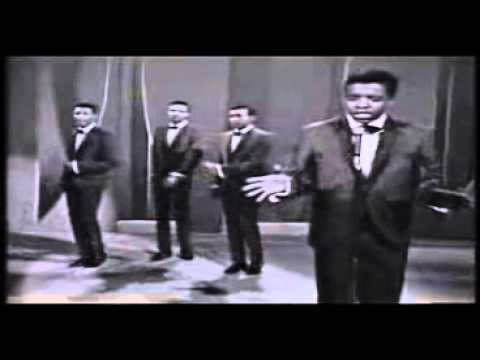

→ More from the 1960s File
View all 1960s hits →




Keep digging