The 1960s File Feature
Hurt So Bad
Hurt So Bad: Little Anthony and the Imperials and the Art of the Anguished Ballad Little Anthony and the Imperials had established themselves in the late 195…
01 The Story
Hurt So Bad: Little Anthony and the Imperials and the Art of the Anguished Ballad
Little Anthony and the Imperials had established themselves in the late 1950s as one of the premier vocal groups in American rhythm and blues, with a string of recordings for End Records that showcased Anthony Gourdine's extraordinary tenor voice and the group's polished harmonic blend. By the mid-1960s, they had moved to DCP (Donna-Clark Productions), a label that was part of the ambitious production enterprise developed by Don Costa and others, and it was in this new environment that they produced some of the most emotionally ambitious recordings of their career. "Hurt So Bad," released in 1965, was the most successful of these recordings in commercial terms, becoming one of the most recognizable soul ballads of the decade.
"Hurt So Bad" reached number 10 on the Billboard Hot 100 and performed even better on the R&B charts, where the emotional intensity of Anthony's performance found its most receptive audience. The song was written by Teddy Randazzo, Bobby Weinstein, and Bobby Hart, a trio of professional songwriters who understood both the formal requirements of the pop song and the particular qualities of Anthony's voice. Randazzo in particular had developed a close working relationship with the group during this period, serving as producer and co-writer on many of their DCP recordings and understanding intuitively how to construct material that gave Anthony the maximum space to demonstrate his exceptional range and emotional expressivity.
The production of "Hurt So Bad" was orchestrated to create a context of maximum emotional weight. Strings were used not as decoration but as structural elements, carrying the harmonic tension of the song and providing the kind of expansive sonic backdrop against which Anthony's vocal acrobatics could register with full force. The arrangement built carefully through its verses, creating accumulating pressure that the chorus and particularly Anthony's higher register excursions could release. This approach, careful orchestral buildup supporting a singular lead vocal, was characteristic of the best soul ballad production of the period and represented a genuine synthesis of the Brill Building pop aesthetic with the emotional directness of R&B tradition.
Little Anthony's vocal performance on "Hurt So Bad" is considered by many critics and scholars of the period to be among the finest examples of lead singing in early-1960s soul. His ability to move from intimate near-whisper to full-voiced anguish within a single phrase, to sustain notes at the upper edge of his range with clarity and control rather than strain, and to project genuine emotional urgency without losing technical precision placed him in a very small category of performers capable of achieving that particular combination. The performance served as a model for later soul singers attempting to navigate the same emotional territory and the same technical demands.
The song's chart performance reflected the particular moment in American music when the distinction between pop and R&B was in a state of productive flux. The British Invasion had disrupted the established commercial order of American popular music, but artists like Little Anthony and the Imperials were demonstrating that the emotional sophistication of Black American music could compete successfully in the mainstream marketplace on its own terms. "Hurt So Bad" did not compromise its emotional intensity or its R&B character to achieve pop crossover success; it achieved crossover because those qualities were genuinely compelling to a wide audience.
The song has been covered numerous times since its initial release, with notable versions appearing across decades and genres. Stephen Bishop recorded a well-known cover version that received substantial adult contemporary radio play, and the original has appeared in numerous films, television programs, and other cultural contexts that have extended its reach to successive generations of listeners. Each of these appearances has reinforced the status of "Hurt So Bad" as a standard of the soul ballad tradition, a song that functions equally well as a vehicle for performance and as an object of interpretation and recontextualization.
Little Anthony and the Imperials' place in the history of American vocal music is secure, and "Hurt So Bad" is the recording most likely to appear first on any list of their essential work. It captures what made Anthony Gourdine one of the most gifted vocal performers of his generation and demonstrates what the best pop-soul production of the mid-1960s could achieve: a record that sounds simultaneously effortless and deeply felt, polished and emotionally raw, crafted and genuine. The combination of professional songwriting, orchestral production, and extraordinary vocal performance that "Hurt So Bad" achieved was not accidental; it was the product of serious collaborative effort and artistic ambition directed toward a clearly understood goal.
02 Song Meaning
Hurt So Bad: The Physicality of Romantic Pain in the Soul Tradition
The soul ballad has as one of its defining characteristics the treatment of emotional experience through physical metaphor, the translation of inner states into bodily terms that make abstract feeling concrete and communicable. "Hurt So Bad" operates squarely within this tradition, using pain as both its subject and its organizing metaphor. The title's directness, the blunt statement that something hurts, and hurts badly, is both a description of an emotional state and an invitation to the listener to locate an equivalent feeling in their own experience.
What the song describes is the particular form of pain that comes not from loss itself but from proximity to loss, the experience of seeing someone you love who has moved on, of existing in the same world as a person whose absence from your life feels unbearable. This is a more psychologically specific form of heartbreak than simple abandonment, and it gives the song's emotional logic a precision that elevates it above more generic treatments of romantic pain. The hurt is not just the hurt of being left; it is the hurt of ongoing contact with the source of loss, the wound that cannot close because it is perpetually reopened.
Little Anthony's vocal approach to this material is inseparable from the song's meaning. In the soul tradition, the vocalist's performance is not simply an illustration of lyrical content but an embodiment of it, and Anthony's ability to produce sounds that genuinely convey physical anguish, the caught breath, the strained upper register, the controlled vibrato that suggests emotion barely held in check, made the song's claims legible in a way that purely textual description could not. Audiences hearing "Hurt So Bad" received the emotional content through their bodies as well as their minds, which is exactly what the soul tradition at its best achieves.
The song also participates in a specific tradition within Black American music of transforming personal suffering into art of such quality and beauty that the suffering itself becomes a kind of gift to the community. The blues tradition from which soul descended had always understood that the ability to articulate pain was a form of power, that putting the worst of experience into music was a way of surviving it and sharing its survival with others. "Hurt So Bad" carries this tradition forward into the orchestrated pop-soul format without losing its connection to the deeper emotional logic that tradition embodies.
For listeners encountering the song outside its original 1965 context, whether through later covers, film and television placement, or rediscovery through streaming and compilation platforms, "Hurt So Bad" retains its emotional force because the experience it describes has not dated. Romantic loss is not a historically specific phenomenon, and the song's particular way of describing it, through the idea of pain so intense it has a physical quality, resonates as strongly in the twenty-first century as it did in the mid-1960s. This durability is the mark of a genuine standard, a song that has earned its canonical status through continued relevance rather than mere historical importance.
The song's meaning within the broader trajectory of soul music is also significant. It appeared at a moment when the genre was establishing what its characteristic emotional vocabulary would be, defining the conventions that later artists would build upon, subvert, and transform. "Hurt So Bad" helped establish that orchestrated anguish, the full deployment of voice and arrangement in service of feeling, was one of soul's core modes of expression. Later ballads in the genre are legible partly because songs like this one defined the form.
→ More from Little Anthony And The Imperials
View all Little Anthony And The Imperials hits →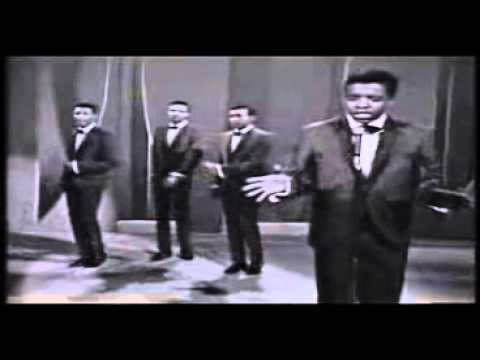

→ More from the 1960s File
View all 1960s hits →




Keep digging