The 1960s File Feature
It's Gonna Be Alright
Gerry And The Pacemakers Keep the Faith: "It's Gonna Be Alright" (1965) By the spring of 1965, the British Invasion that had remade American popular music wa…
01 The Story
Gerry And The Pacemakers Keep the Faith: "It's Gonna Be Alright" (1965)
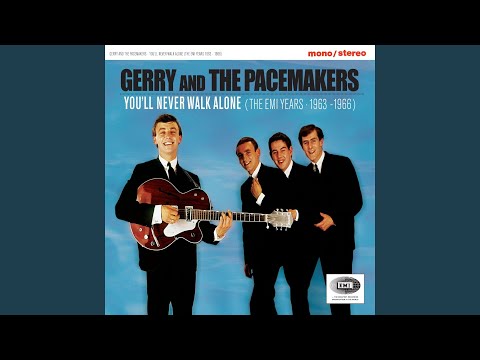
By the spring of 1965, the British Invasion that had remade American popular music was entering a more complicated phase. The initial tidal wave of British acts that had swept across the United States following the Beatles' appearance on The Ed Sullivan Show in February 1964 had receded somewhat, and the artists who remained commercially viable in the American market were those who could sustain a creative identity beyond the novelty of their origins. Gerry And The Pacemakers, one of the most celebrated acts to emerge from the original Liverpool scene, faced this challenge with "It's Gonna Be Alright," a single that reached the Billboard Hot 100 in the spring of 1965 and climbed to a peak position of number 23.
Gerry Marsden, the group's lead vocalist and the cheerful public face of their brand, had been a central figure in the Merseybeat scene since the early 1960s. The Pacemakers had the distinction of becoming the first act in British chart history to reach number one with their first three singles, a feat that generated enormous press attention and cemented their position among the most important artists of the British Invasion. Their early recordings, including "How Do You Do It," "I Like It," and the anthemic "You'll Never Walk Alone," had established a template of warmhearted optimism delivered with genuine vocal conviction.
"It's Gonna Be Alright" continued in that vein. The song was written by Gerry Marsden himself, and it reflected the group's characteristic approach: a melodically strong composition with an emotional directness that communicated reassurance rather than angst. The title itself is a statement of philosophy, a declaration of resilience that sat in interesting contrast to the more troubled emotional terrain that some of their British Invasion contemporaries were beginning to explore. Where the Rolling Stones were trading in menace and the Kinks were developing an increasingly satirical edge, Gerry And The Pacemakers maintained their commitment to songs that made the listener feel better rather than worse.
The group's American success had been substantial but slightly paradoxical. Their recording of "Ferry Cross the Mersey," released as part of the soundtrack to their 1964 film of the same name, had performed respectably on the Hot 100 and had given them a genuine American identity beyond their status as British Invasion participants. The film itself, a light musical drama set in Liverpool, had played well in the United States and had reinforced the group's image as genial, approachable, and thoroughly professional entertainers.
"It's Gonna Be Alright" debuted on the Billboard Hot 100 on April 10, 1965, at position 63. Its chart performance was steady and purposeful: the single moved through the forties and thirties over the following weeks before reaching its peak of 23 on May 8, 1965, where it held for one week before beginning a gradual descent. The eight-week chart run represented a solid commercial performance for a group that was no longer riding the initial wave of British Invasion excitement but had instead established itself as a reliable presence on American radio.
The recording was produced by George Martin, the producer whose association with the Beatles had made him the most celebrated figure in British popular music production. Martin's work with the Pacemakers predated his more famous collaborations; he had produced the group's early EMI recordings, and his involvement brought a level of sonic craft to their work that distinguished it from less carefully assembled contemporaries. The production on "It's Gonna Be Alright" was clean and direct, allowing Marsden's voice and the group's ensemble playing to carry the emotional content without unnecessary decoration.
The group's lineup at this point consisted of Marsden on lead vocals and rhythm guitar, his brother Freddie Marsden on drums, Les Chadwick on bass, and Les Maguire on piano. This configuration had remained remarkably stable since the group's formation, and the ensemble's coherence was audible in their recordings. There was a comfortable confidence to their playing, a quality that came from years of live performance in the Liverpool and Hamburg club scenes before the commercial breakthrough arrived.
In the broader context of British Invasion history, "It's Gonna Be Alright" represents a specific moment of transition: the point at which the initial excitement had to be converted into sustainable professional practice. Some of the groups that had ridden the first wave found this transition impossible and disappeared from the charts within two years of their breakthrough. Gerry And The Pacemakers managed it with characteristic steadiness, producing music that continued to find an audience even as the landscape around them shifted. The single stands as evidence that warmth and melodic directness remained commercially viable even as the pop world grew more sophisticated and experimental.
02 Song Meaning
Resilience as Popular Philosophy: The Meaning of "It's Gonna Be Alright"
"It's Gonna Be Alright" by Gerry And The Pacemakers belongs to a specific tradition in popular song: the anthem of reassurance, the musical declaration that hardship is temporary and that a better condition awaits on the other side of present difficulty. This tradition runs deep in both British and American popular music, drawing on folk and gospel sources that predated rock and roll by generations. What Gerry Marsden brought to the tradition in 1965 was a quality of personal warmth and believability that made the reassurance feel genuine rather than formulaic.
The song's central proposition, announced in its title and sustained throughout its structure, is deceptively simple. To say that things are going to be alright is to make a claim about the future, to assert that present pain is not permanent. Marsden's delivery was crucial to the credibility of this claim. His voice carried a quality of lived experience that made the reassurance feel earned rather than casual; he was not dismissing the difficulty of the present moment but rather insisting on the possibility of transcending it. This distinction between glib optimism and hard-won hope was central to the song's appeal.
The group's established identity as warm, approachable performers who genuinely seemed to care about their audience added another dimension to the song's meaning. Gerry And The Pacemakers had built their reputation on recordings that communicated human connection rather than attitude or provocation. Their most celebrated recording, "You'll Never Walk Alone," had made this quality explicit by borrowing a show tune specifically about communal support in difficult times. "It's Gonna Be Alright" continued in that tradition, operating as a kind of secular benediction delivered by performers whose sincerity their audience had learned to trust.
In the context of 1965, the song's message carried particular resonances. The mid-1960s were a time of significant social anxiety in both Britain and the United States, with Cold War tensions, the escalating conflict in Southeast Asia, and rapid social change producing an atmosphere in which reassurance was genuinely sought rather than merely convenient. Pop music served a psychological function for its audiences that is sometimes underestimated in retrospective critical accounts, and songs like this one met a real emotional need rather than simply providing entertainment.
The song also represents an interesting artistic choice by Marsden at a moment when the creative pressures on British Invasion artists were considerable. Many of his contemporaries were experimenting with darker material, more complex arrangements, and more ambiguous emotional stances. Marsden's decision to write and record a straightforward song of reassurance could have been read as a failure of artistic nerve; instead, it demonstrated a clear-eyed understanding of his relationship with his audience and a commitment to serving that relationship honestly. Not every artist needs to push toward new territory on every recording; some are most valuable when they deepen and sustain what they do best.
The song's meaning has not dimmed with the passage of time. The proposition at its center, that present difficulty will pass and that better times will come, is as available to contemporary listeners as it was to audiences in 1965. Gerry And The Pacemakers produced a piece of music whose emotional utility transcends its historical moment, a modest but genuine achievement that belongs to the lasting record of British popular music's most fruitful decade.
→ More from Gerry And The Pacemakers
View all Gerry And The Pacemakers hits →



→ More from the 1960s File
View all 1960s hits →




Keep digging