The 1960s File Feature
Rainbow
"Rainbow" — Gene Chandler's Return to the Charts in 1963 The Duke of Earl Seeks His Next Kingdom Gene Chandler had arrived on the national scene with a force…
01 The Story
"Rainbow" — Gene Chandler's Return to the Charts in 1963
The Duke of Earl Seeks His Next Kingdom
Gene Chandler had arrived on the national scene with a force that few artists ever experience. His 1962 recording of "Duke of Earl" had gone straight to number one on the Billboard Hot 100 and become one of the most recognizable recordings of the early rock and roll era, with its bass vocal intro and stately, almost regal arrangement lodging itself permanently in the cultural memory. The challenge that followed for Chandler was the challenge that faces every artist who arrives with such force: how do you build a sustained career after a debut that monumental? The answer, in 1963, involved a series of follow-up singles that drew on the soul and R&B traditions of Chicago, where Chandler was based. "Rainbow" was among the most ambitious of these follow-up efforts, drawing on a different emotional register than the confident swagger of "Duke of Earl."
Chicago Soul and the Vee-Jay Sound
Chandler recorded during this period for Vee-Jay Records, the Chicago independent that was one of the most important Black-owned labels in American music history. Vee-Jay had a roster that at various points included Jerry Butler, the Impressions, and John Lee Hooker, and the label's production aesthetic in the early 1960s balanced gospel-rooted warmth with the commercial demands of pop radio. "Rainbow" carried all of these qualities: strings arranged with a lushness that reached toward the orchestrated pop of the era, rhythm section work that kept the track grounded in something earthier, and Chandler's voice navigating between the crooning and the passionate with the kind of ease that marked the best Chicago soul recordings of the period. The song was reaching toward something more emotionally complex than "Duke of Earl" had been.
The Billboard Journey of 1963
The single entered the Billboard Hot 100 on February 23, 1963, debuting at number 85. The chart run was not a sharp spike but a slow, grinding climb through the spring: 79, then 75, then 70, then 68 as the weeks passed. The record reached its peak of number 47 on the Hot 100 during the week of May 4, 1963, having spent a total of 12 weeks on the chart. By the standard of "Duke of Earl," number 47 represented a significant step back. But evaluated on its own terms, a 12-week chart run and a mid-chart position was meaningful evidence of continued commercial relevance in one of the most competitive moments in pop music history.
The Competition in Early 1963
The environment into which "Rainbow" entered was extraordinary in its intensity. Early 1963 was a moment when American pop was in constant churn, with the girl groups, the Brill Building songwriters, the surf sound, and the remnants of teen idol pop all competing for radio space. The Beatles were about to change everything from across the Atlantic, though that transformation would not fully arrive in America until February 1964. For Chandler to chart at all in this landscape, coming off the enormous expectations created by "Duke of Earl," was an achievement that should not be understated. The Chicago soul community was watching to see whether the Duke could sustain his reign, and "Rainbow" offered a qualified but genuine affirmative answer.
Continuing the Legacy
Chandler would continue to record and chart through the 1960s and beyond, eventually finding another major commercial moment with "Nothing Can Stop Us Now" in the late 1960s and continuing to be a presence in Chicago soul circles for decades. The 1963 chart run of "Rainbow" sits in the middle of a career that resisted the one-hit-wonder label with genuine persistence. It shows an artist working hard to establish breadth, to demonstrate that the emotional and stylistic range that "Duke of Earl" had hinted at was real and sustainable. Put the record on and hear Chandler reaching for something that the constraints of a follow-up single could only partially capture.
"Rainbow" — Gene Chandler's singular moment on the 1960s charts.
02 Song Meaning
Hope and Longing: The Emotional Architecture of Gene Chandler's "Rainbow"
The Symbol and Its Weight
The rainbow has carried particular symbolic weight in human culture across centuries and traditions, standing for hope after storm, promise after suffering, the bridge between present difficulty and future possibility. When Gene Chandler chose this image as the organizing symbol of a song in 1963, he was drawing on a reservoir of meaning that his listeners would have felt instantly, without requiring explanation. The lyric positioned romantic longing within this larger symbolic frame, suggesting that love, or the hope of love, functioned as the rainbow in the singer's personal weather. The use of a universal symbol to contain an intensely personal feeling was a characteristic move of early 1960s soul and pop, a way of making private emotion publicly legible without diminishing its specificity.
Vulnerability as Artistic Strength
Chandler had introduced himself to national audiences with "Duke of Earl," a record built on confidence, authority, and a kind of aristocratic claim to the beloved. "Rainbow" moved in the opposite emotional direction, toward uncertainty, yearning, and the open acknowledgment that the desired future had not yet arrived. The singer in "Rainbow" is not the Duke declaring his sovereignty; he is a man looking at the sky after the rain, hoping that what he sees there is a sign of better things to come. This shift toward vulnerability required real vocal and artistic courage from Chandler, because it meant asking listeners who had come to him for one emotional temperature to follow him to a very different one.
Gospel Roots and Secular Expression
Like most of the best Chicago soul of the early 1960s, "Rainbow" carried within it the structures and emotional logic of gospel music, even as it was ostensibly a secular love song. The arc from suffering through hope to promised joy was the central narrative of Black church music, and when it appeared in a pop context it carried all the accumulated emotional charge of that tradition with it. Listeners who had grown up singing in churches recognized the shape of the feeling even if the words were about romantic love rather than spiritual redemption. This cross-contamination between sacred and secular emotional territory was one of the defining characteristics of the soul genre as it developed in cities like Chicago and Detroit in the early 1960s.
Finding an Audience Amid Enormous Competition
The fact that "Rainbow" spent 12 weeks on the Hot 100 in the spring of 1963 is significant precisely because of how competitive that period was. The pop charts were a battlefield of competing sounds and styles, each trying to capture the ear of a young American audience that was restless and curious. A record built on emotional nuance and vocal sophistication faced real commercial headwinds in that environment. That "Rainbow" found its audience at all speaks to the depth of feeling it managed to communicate across the noise and distraction of early 1960s radio. There were listeners who needed exactly what Chandler was offering, and they found him.
A Moment in a Long Career
Looking at "Rainbow" in the context of Chandler's full career, the song represents an important early experiment in expanding his emotional range beyond the persona that "Duke of Earl" had established. The results were commercially modest by comparison with that debut, but the artistic ambition the song represented was real. Chandler was demonstrating that he could navigate emotional complexity, that his artistry was not limited to a single mode, and that the years ahead would find him exploring territory that a one-dimensional artist could not have reached. The rainbow he was reaching toward in 1963 was not just a lyrical image but an artistic aspiration.
→ More from Gene Chandler
View all Gene Chandler hits →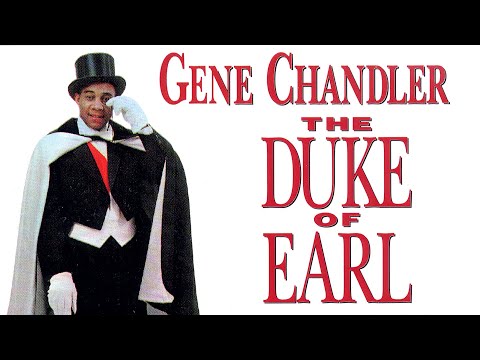

→ More from the 1960s File
View all 1960s hits →




Keep digging