The 1960s File Feature
Nothing Can Stop Me
Gene Chandler and "Nothing Can Stop Me": Curtis Mayfield's Production Touch on a Chicago Soul Classic Gene Chandler was born Eugene Dixon in Chicago in 1937,…
01 The Story
Gene Chandler and "Nothing Can Stop Me": Curtis Mayfield's Production Touch on a Chicago Soul Classic
Gene Chandler was born Eugene Dixon in Chicago in 1937, and his connection to that city's musical culture ran deep in ways that would shape the arc of his career for decades. He had achieved extraordinary early fame with "Duke of Earl," a record that reached number one on the Billboard Hot 100 in February 1962 and became one of the decade's most recognizable hits. The song's a cappella-influenced doo-wop structure and Chandler's dramatic baritone delivery made it an immediate classic, and the aristocratic persona associated with the song, "the Duke," became a defining element of Chandler's public identity for years afterward.
The commercial challenge that followed "Duke of Earl" was one familiar to many artists who achieve a massive debut hit: how to sustain relevance and commercial viability when the defining moment comes so early. Chandler navigated this challenge with considerable skill, continuing to release material that charted regularly on the R&B chart throughout the early 1960s. His connection to the Chicago soul scene, with its particular blend of gospel intensity and pop accessibility, provided the musical context within which he continued to develop as an artist.
The critical relationship in this development was his association with Curtis Mayfield, who by 1965 had established himself as one of the most important figures in Chicago soul through his work with the Impressions and as a songwriter and producer for other artists. Mayfield's productions were distinguished by sophisticated arrangements, socially conscious lyrics, and a harmonic approach that reflected his roots in gospel music. His involvement with a record was a mark of quality that Chicago's music industry recognized immediately.
"Nothing Can Stop Me" was produced by Curtis Mayfield and released on Constellation Records in 1965. The song entered the Billboard Hot 100 on April 17, 1965, debuting at number 96. Its chart trajectory over the following weeks was one of steady, consistent improvement: number 81 in its second week, number 72 in its third, number 58 in its fourth, number 45 in its fifth. By the week of June 19, 1965, the song had reached its peak position of number 18, spending twelve weeks on the chart in total and representing one of Chandler's stronger pop chart performances since "Duke of Earl."
The production that Mayfield brought to the record reflected the characteristic qualities of his work: the arrangement was warm and orchestrated without being cluttered, the rhythm section provided a groove that was propulsive without overwhelming the vocal, and the overall sonic picture had the kind of elegant coherence that distinguished Mayfield's output from more formulaic productions of the period. Chandler's voice was given a setting that suited his baritone strengths without requiring him to operate outside his natural range.
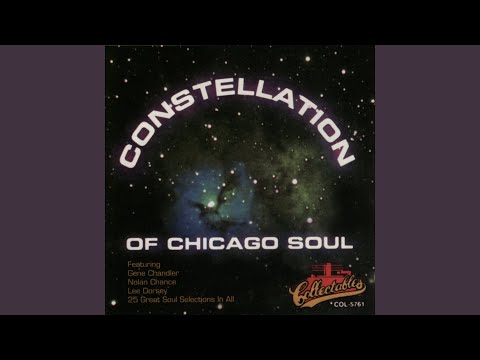
Constellation Records was a Chicago-based independent label that had been founded in the late 1950s and had built a small but respectable roster of soul and R&B artists. The label's connection to the Chicago music infrastructure made it a natural home for Chandler during this period of his career, providing both the production resources and the promotional relationships needed to move product through radio and retail channels.
The song's success in 1965 demonstrated that Chandler had not become a one-hit artifact but retained genuine commercial appeal in a market that was rapidly changing. The British Invasion had fundamentally altered the competitive landscape of American pop, and artists who had established themselves before 1964 were navigating a landscape in which many of the assumptions about what audiences wanted had been overturned. That "Nothing Can Stop Me" reached the top twenty under these conditions was a meaningful achievement.
Chandler continued recording through the late 1960s and would experience a significant commercial resurgence in the late 1970s with the disco-era hit "Get Down," produced by Carl Davis, which returned him to the top five of the R&B chart in 1978. His longevity as a commercial recording artist, spanning multiple decades and multiple stylistic shifts in American popular music, is itself a testament to the quality of his voice and the intelligence with which he navigated the industry's changing demands. "Nothing Can Stop Me" belongs to the middle chapter of that story, a moment when Mayfield's production partnership provided Chandler with exactly the right musical environment for his particular talents.
02 Song Meaning
Defiance and Determination in "Nothing Can Stop Me"
"Nothing Can Stop Me" by Gene Chandler operates within a tradition of declarative defiance songs that run through the entire history of American popular music, but the specific form it takes in 1965, with production by Curtis Mayfield and delivery by a Chicago soul baritone, gives it a particular cultural resonance that is worth examining. The title is an absolute assertion: not "very little can stop me" or "I will overcome most obstacles" but a categorical denial of any possible impediment. This extremity of expression was itself meaningful in the mid-1960s context.
Curtis Mayfield's work in the early to mid-1960s was deeply informed by the civil rights movement and the music that emerged from it. Songs of determination, perseverance, and the refusal to be defeated carried political as well as personal weight during this period, and Mayfield was acutely conscious of that weight in everything he produced. Whether "Nothing Can Stop Me" was intended as an explicitly political statement or as a personal romantic declaration, the cultural context in which Mayfield was operating inevitably inflected the song with resonances beyond its literal content.
For Black American listeners in 1965, a song asserting that nothing could stop the speaker was not a simple piece of romantic bravado. It was a statement made against a backdrop of systematic opposition to Black advancement, and the defiance embedded in it connected to a broader cultural conversation about resilience and self-assertion. Chandler's baritone gave the declaration a gravitas that a lighter vocal style might not have conveyed, and the gospel underpinnings of Mayfield's production supplied an additional layer of weight to what might otherwise have read as conventional pop braggadocio.
The song also belongs to a romantic tradition in which declarations of persistence are directed at a beloved rather than at an oppressive system. In this reading, the speaker is asserting that no external circumstance, no rival, no social barrier, and no personal obstacle will prevent him from pursuing or maintaining his romantic commitment. This combination of romantic and resilient meaning allowed the song to function simultaneously on multiple levels, speaking differently to listeners who brought different frameworks to the listening experience.
Mayfield's production aesthetic valued this kind of layered meaning. His own compositions as a songwriter for the Impressions were celebrated precisely for their ability to speak simultaneously to individual emotional experience and collective social reality, using the conventions of popular music to convey messages of substance without abandoning the requirements of commercial accessibility. The same sensibility that informed "People Get Ready" was at work in the production philosophy applied to "Nothing Can Stop Me," even in a song less explicitly about social themes.
Chandler's performance communicated the confidence of someone who had genuine reasons to feel that the odds were surmountable. He had achieved a number one record in 1962 against considerable commercial competition, and he was continuing to chart successfully in a market transformed by the British Invasion. The declarative certainty of "nothing can stop me" was not empty posturing in his case; it was a statement backed by documented commercial resilience. This biographical consonance between performer and material contributed to the authenticity of the recording in ways that listeners may not have consciously registered but that contributed to the song's emotional effectiveness.
The record's chart success in the spring and early summer of 1965, reaching number 18 on the Hot 100, confirmed that the combination of Chandler's voice, Mayfield's production, and the song's assertive central theme had commercial validity. It was a record that said something specific about persistence and will, and it found an audience ready to hear exactly that message.
→ More from Gene Chandler
View all Gene Chandler hits →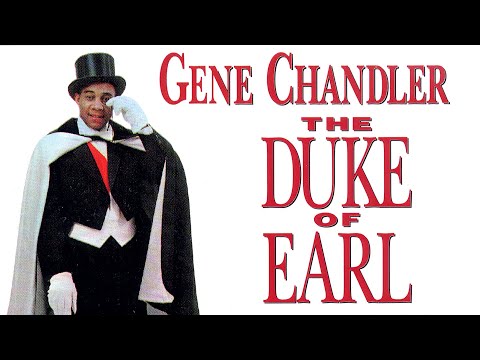
→ More from the 1960s File
View all 1960s hits →




Keep digging