The 1960s File Feature
It's Over
The Story Behind "It's Over" by Eddy Arnold A Country Legend Extending His Pop Crossover Reach Arnold had already achieved chart success across four separate…
01 The Story
The Story Behind "It's Over" by Eddy Arnold
A Country Legend Extending His Pop Crossover Reach
Arnold had already achieved chart success across four separate decades by this point, an almost unmatched achievement within American popular music that reflected both his remarkable vocal consistency and his willingness to adapt his sound gradually alongside shifting industry trends rather than remaining rigidly tied to his earlier traditional country style.
By 1968, Eddy Arnold stood as one of the most commercially successful and long-tenured artists in country music history, having already spent decades building an extraordinary run of hits stretching back to the 1940s. His continued ability to reach mainstream pop audiences well into the late 1960s spoke to a rare combination of vocal warmth, disciplined professionalism, and a genuine gift for smooth, orchestrated crossover production. "It's Over" arrived as part of that sustained late-career commercial success.
Sophisticated Countrypolitan Production
Nashville producer Chet Atkins, a key architect of the countrypolitan sound, had worked extensively with Arnold throughout this period, helping craft the smooth, string-laden production approach that allowed his recordings to compete comfortably alongside mainstream pop releases on adult contemporary radio stations nationwide.
The song reflected the polished "countrypolitan" style that had come to define much of Arnold's output during this period, pairing his rich, expressive baritone with lush string arrangements designed to appeal as much to adult contemporary pop listeners as to traditional country audiences. That sophisticated production approach helped Arnold maintain crossover relevance at an age when many of his contemporaries from country music's earlier decades had already faded from mainstream visibility.
A Gradual but Steady Chart Climb
The single debuted on the Billboard Hot 100 on May 18, 1968, entering at number 96. It then climbed gradually across the following weeks, reaching 91, then 88, then 80, then ultimately its peak of number 74 during the chart week of June 15, 1968. Altogether, the song spent seven weeks on the Hot 100, a solid, dependable showing consistent with Arnold's established pattern of reliable, if rarely explosive, pop crossover success.
Proof of Enduring Commercial Relevance
That sustained relevance stood in sharp contrast to many of his peers from country music's earlier "singing cowboy" era, most of whom had long since faded from mainstream commercial consideration by the time this particular single reached radio.
That steady seven-week chart run reinforced just how remarkably durable Arnold's commercial appeal remained, even decades into an already extraordinary career. Few artists from country music's earlier generations managed to sustain this level of consistent pop chart presence so far removed from their original commercial breakthrough, making Arnold's ongoing success a genuine outlier within his musical generation.
A Bridge Between Country Tradition and Pop Sophistication
That crossover template Arnold helped pioneer would later be adopted widely across Nashville throughout the following decades, influencing how an entire generation of country artists approached mainstream commercial ambition.
Arnold's continued crossover success throughout the late 1960s also reflected country music's broader evolution during this period, as the countrypolitan sound increasingly blurred the lines between traditional country songwriting and mainstream pop production values. Arnold, alongside a handful of similarly minded artists, helped pioneer that broader commercial and stylistic shift well before it became a dominant industry trend.
A Quiet Testament to Remarkable Longevity
Its steady chart run remains a small but genuine marker of an extraordinary, unusually long, and consistently productive career spanning multiple full decades.
Today, "It's Over" stands as a solid, representative single from one of country music's most enduring and commercially significant careers, a reminder of just how long Arnold sustained genuine mainstream relevance across such an unusually broad span of musical eras. Give the track a listen and you can hear a true veteran vocalist still delivering polished, emotionally resonant performances decades into an already legendary and remarkably enduring recording career overall.
"It's Over" — Eddy Arnold's singular moment on the 1960s charts.
02 Song Meaning
The Meaning Behind "It's Over" by Eddy Arnold
A Dignified Acceptance of Heartbreak
That dignity extended even into the smallest vocal choices throughout the recording, with Arnold consistently favoring understatement over vocal display whenever the song's emotional content might have tempted a less disciplined performer toward excess.
As its title plainly states, the song confronts the finality of a relationship's end directly, but it does so with a measured, dignified restraint rather than dramatic despair. Eddy Arnold's smooth, controlled vocal delivery reinforces that composed emotional approach, treating heartbreak as something to be processed with grace rather than overwhelming grief.
Countrypolitan Elegance Shaping Emotional Tone
That elegant restraint distinguished countrypolitan balladry from some of the more raw, unguarded emotional expression found in earlier honky-tonk and traditional country songwriting, offering listeners a different, more polished pathway toward processing similarly universal heartbreak.
The song's lush, orchestrated production plays an important role in shaping its overall emotional register, using gentle string arrangements to underscore sorrow without tipping into melodrama. That sophisticated, restrained musical backdrop was very much characteristic of the countrypolitan style Arnold helped popularize, favoring subtlety over the more raw, unvarnished emotional directness found in earlier traditional country balladry.
The Universal Finality of Endings
That shared human experience of confronting finality gave the recording broad emotional accessibility well beyond its specific country-pop crossover audience, appealing to anyone who had ever needed to accept a difficult ending.
The song's central theme, accepting that a relationship has genuinely and irreversibly concluded, taps into an experience nearly every listener has faced at some point, regardless of the specific circumstances surrounding their own particular loss. That universal resonance helped the song connect across generational and stylistic lines throughout Arnold's broad crossover audience.
Maturity as an Emotional Signature
Arnold's vocal performance throughout the song reflects a kind of hard-won emotional maturity, the sound of someone who has weathered loss before and understands how to carry that pain with composure rather than collapsing beneath it. That mature, measured quality had become one of the defining hallmarks of his singing throughout his lengthy career.
Grace as a Response to Loss
Rather than seeking blame or dwelling in anger, the narrator's tone throughout suggests a quiet acceptance, an acknowledgment that some endings simply must be faced honestly rather than resisted or denied. That graceful resignation offered listeners a model for processing their own heartbreak with similar dignity and composure.
A Timeless Statement of Composed Heartbreak
That composure still resonates with listeners today.
Decades later, "It's Over" continues to resonate as a fine example of Arnold's ability to deliver genuine emotional depth through restraint and elegance rather than overt drama, a quality that helped sustain his remarkable crossover appeal so far into his storied career.
→ More from Eddy Arnold
View all Eddy Arnold hits →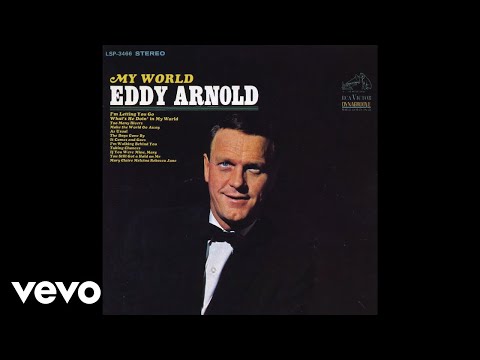
→ More from the 1960s File
View all 1960s hits →




Keep digging