The 1960s File Feature
Make The World Go Away
Make The World Go Away — Eddy Arnold Country Music's Smoothest Voice and the Nashville Sound There is a particular kind of comfort music can offer that has n…
01 The Story
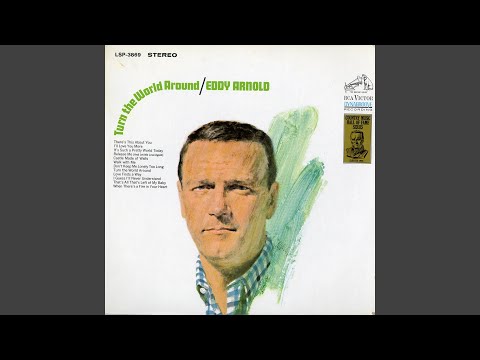
Make The World Go Away — Eddy Arnold
Country Music's Smoothest Voice and the Nashville Sound
There is a particular kind of comfort music can offer that has nothing to do with escapism. It sits with you in the difficulty rather than pretending the difficulty does not exist, and it says, simply, that someone else understands. Eddy Arnold understood this better than almost any recording artist of his generation. By the mid-1960s, Arnold had been one of country music's defining figures for two decades, and his recording of "Make The World Go Away" in 1965 remains the most remembered moment of a career that had already produced an almost unmanageable volume of charted material.
Arnold had begun his career in the late 1940s with a warm, accessible country style that earned him the nickname "The Tennessee Plowboy." By the 1960s, he had evolved considerably, embracing the Nashville Sound approach that producer Chet Atkins had pioneered: sweeping string arrangements, smooth vocal deliveries, and a production aesthetic designed to bridge the gap between country and mainstream pop audiences. "Make The World Go Away" was the fullest expression of that evolution.
Origins of the Song
The song was written by Hank Cochran, one of Nashville's most gifted composers of the period. Cochran had a gift for capturing emotional states in simple, unpretentious language, and "Make The World Go Away" is among his finest achievements. The premise is direct: a narrator who has caused pain in a relationship asks to have the ordinary world recede so that the two people involved can return to what they once had. The simplicity of that wish is what gives it universal resonance.
Ray Price had recorded the song in 1963, giving it its first chart run and establishing the core arrangement. Arnold's 1965 version retained the basic emotional blueprint while placing it within the lusher Nashville Sound production that Chet Atkins supervised for RCA Victor. Strings took on more prominence, and Arnold's warm baritone was given room to breathe within an arrangement that felt as smooth and enveloping as the sentiment itself.
The Chart Run
Arnold's version of "Make The World Go Away" debuted on the Billboard Hot 100 on October 16, 1965, entering at position 82. The song climbed steadily over the following weeks, reaching its peak position of number 6 on December 25, 1965, spending a total of 14 weeks on the chart. That Christmas Day peak was fitting: the song had a warmth and emotional accessibility that suited the season, and its combination of country roots with pop-friendly production made it as comfortable on mainstream radio as it was on country formats.
The Hot 100 placing was extraordinary for a country artist in 1965, a period when the genre's crossover potential was significant but not guaranteed. Arnold's version rode the Nashville Sound's bridge between formats to achieve the kind of pop visibility that country music was increasingly capable of generating. Its 14-week run confirmed that the song's appeal was broad and sustained rather than dependent on novelty.
Eddy Arnold's Place in Country History
Eddy Arnold holds the record for the most weeks at number one on the country charts across his career, a total accumulated over decades of consistent commercial success. By the time "Make The World Go Away" gave him a crossover pop hit, he had already spent years as one of country music's most bankable performers. The song gave a new generation of listeners access to a voice they might otherwise never have encountered on mainstream pop radio.
His approach demonstrated that country music's emotional directness and pop music's production sophistication were not in conflict but could reinforce each other, a lesson that Nashville would spend the following decades continuing to learn and apply. Arnold's career from the mid-1960s onward can be read as a sustained argument for that position.
Legacy and Endurance
Versions of "Make The World Go Away" have been recorded by artists ranging from Donny and Marie Osmond to Elvis Presley, a measure of how thoroughly the song had become standard repertoire within popular and country music. Each recording confirmed the strength of Cochran's original composition. Arnold's version, however, remains the definitive take, the one that gave the song its widest public profile and that continues to be the version most likely to be encountered by a new listener discovering the song for the first time.
In an era of increasingly complex production, the straightforward beauty of Arnold's recording offers something rare: a human voice delivering a human emotion with nothing unnecessary between them. Press play and let the world, briefly, go away.
"Make The World Go Away" — Eddy Arnold's singular moment on the 1960s charts.
02 Song Meaning
Make The World Go Away — Meaning, Themes, and Emotional Legacy
The Architecture of Longing
At the center of "Make The World Go Away" is one of popular music's most quietly devastating emotional requests: the wish to press pause on existence itself so that what has been damaged can be repaired. The world the narrator wants to go away is not the world in any grand or catastrophic sense. It is simply everything outside the relationship, the distractions and pressures and ordinary noise that have allowed distance to grow between two people who once knew exactly how to reach each other. That specificity of loss, small-scale and deeply felt, is what gives the song its lasting power.
Hank Cochran's lyric understands that relationships do not usually end in dramatic catastrophe. More often they erode through accumulation, through small failures of attention and small moments of thoughtlessness. The narrator is not innocent and knows it. The plea is made by someone who recognizes they have been at fault, which gives it a gravity that more straightforwardly romantic songs lack.
Regret and the Possibility of Return
The emotional register of the song sits in a particularly human space: the awareness that something has been damaged combined with the belief, or at least the hope, that it might still be repaired. The song does not promise that repair is possible, only that the narrator wants it badly enough to ask the entire world to accommodate that wish. That combination of genuine remorse and fragile hope is universally recognizable, which explains why the song has been covered by such a wide range of artists across different eras.
Country music in the 1960s was developing its capacity to address emotional complexity without sacrificing accessibility, and "Make The World Go Away" is a perfect example of that development. The emotion is not simplified but it is made available, offered in language that any listener could enter without prior expertise in the genre's conventions.
The Nashville Sound as Emotional Vehicle
The production choices that Chet Atkins made in shaping Arnold's recording were not merely aesthetic. The sweeping strings and polished arrangement acted as emotional amplifiers, taking the vulnerability in Arnold's vocal and placing it inside a sound that felt as sheltering and enveloping as the request in the lyrics. You do not hear distance in this production; you hear closeness, warmth, the sound of two people very near each other.
That alignment between production aesthetic and lyrical content is sophisticated even by contemporary standards. The Nashville Sound has sometimes been criticized for smoothing away the roughness of traditional country music, but in "Make The World Go Away" the smoothness is precisely what the song requires. The rough edges are in the story; the music offers the comfort the narrator is begging for.
Why the Song Endures
Decades after its recording, "Make The World Go Away" continues to circulate because the emotion it captures does not age. Relationships remain as complicated as they ever were. The experience of having caused harm through carelessness and then wanting desperately to undo that harm is not culturally specific or period-bound. It is simply part of what it is to be a person who loves another person imperfectly, which is most people most of the time.
Eddy Arnold's baritone carries all of that weight without overstating it, which is the final achievement of the recording. The restraint is part of the sincerity. The song never pushes toward melodrama because the emotion it describes is already dramatic enough in its simplicity. That is the mark of material that lasts.
→ More from Eddy Arnold
View all Eddy Arnold hits →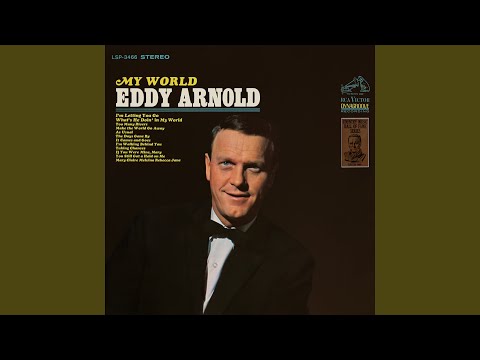
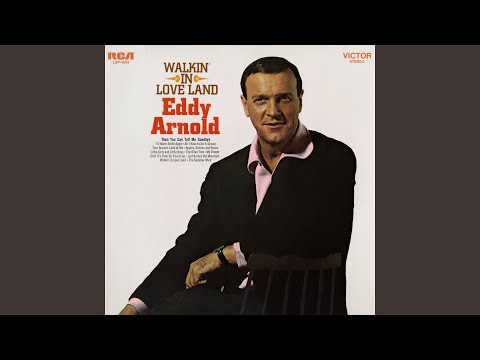
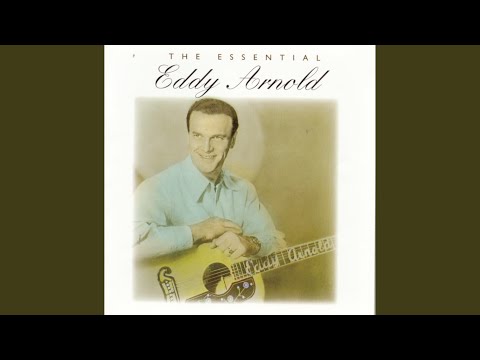
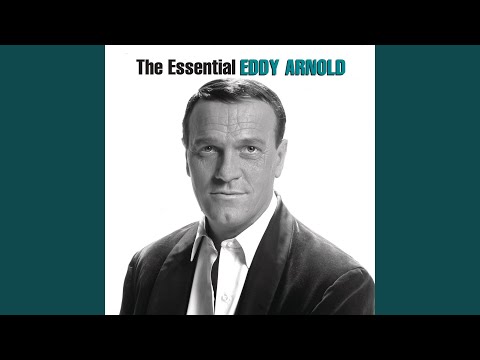
→ More from the 1960s File
View all 1960s hits →




Keep digging