The 1960s File Feature
What's He Doing In My World
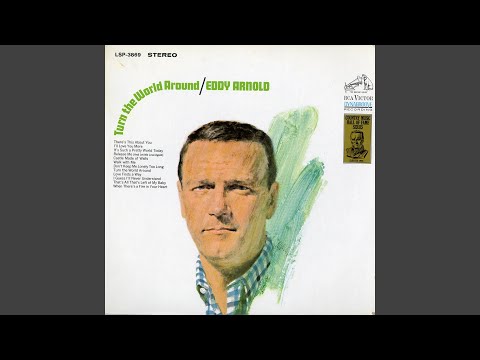
"What's He Doing In My World" — Eddy Arnold The Velvet Voice Crosses Over The spring of 1965 found country music in an interesting negotiation with its own i…
01 The Story
"What's He Doing In My World" — Eddy Arnold
The Velvet Voice Crosses Over
The spring of 1965 found country music in an interesting negotiation with its own identity. The Nashville Sound had spent the better part of a decade smoothing the rough edges of country and western music, replacing fiddles and steel guitars with lush orchestral arrangements and polished vocal production, deliberately positioning the genre for crossover acceptance on mainstream pop radio. No artist embodied this transition more comfortably than Eddy Arnold, whose rich baritone and instinctive grasp of melodic phrasing had made him one of the dominant forces in American commercial music since the late 1940s. By 1965, Arnold was operating at the peak of his second commercial prime, releasing records with a frequency and quality that kept him at the top of the country charts and occasionally nudged him onto the pop chart as well.
Arnold had been a country music institution for nearly two decades by the time "What's He Doing In My World" appeared. Born in Henderson, Tennessee in 1918, he had recorded for RCA Victor since the mid-1940s and had accumulated an extraordinary string of country chart successes over that period. His nickname, "The Tennessee Plowboy," had long since been eclipsed by the sophistication of his recorded output, but it spoke to the rural authenticity that remained at the emotional core of his appeal even as his production values became increasingly polished.
A Record Built on Jealousy and Longing
The emotional territory of "What's He Doing In My World" was familiar from the country tradition: a narrator confronting the presence of a rival and trying to understand what has gone wrong in a relationship he thought was secure. The question posed in the title captured a specific emotional state with unusual precision, the disorientation of discovering that someone else has moved into emotional space the narrator believed was his own. Bill Anderson wrote the song, drawing on the jealousy-and-heartbreak tradition that had produced so many successful country recordings while giving it a particular vulnerability in the phrasing of that central question.
Arnold's vocal approach to this material was characteristically measured. Rather than leaning into melodrama, he brought a contained, almost conversational quality to the delivery, letting the lyrical content do its emotional work without excessive performance. The production by Bob Ferguson, working within RCA's Nashville operations, framed Arnold's voice with the kind of lush, orchestrated backing that defined the Nashville Sound at its most commercially sophisticated: string arrangements, understated rhythm section, background vocals providing warmth without overwhelming the lead.
Making the Pop Chart From Nashville
The song debuted on the Billboard Hot 100 on May 15, 1965, entering at position 100, the lowest possible chart entry. From there it climbed consistently through the following weeks, moving through the 80s, the 70s, and eventually to its peak. By the chart dated June 26, 1965, the record had reached number 60 on the Hot 100, a solid crossover result for a record rooted firmly in the Nashville Sound tradition.
The nine-week chart run was typical for country-to-pop crossovers of this period: enough time to establish the record with a broader audience, draw some pop radio attention, and register as a genuine commercial success without the kind of sustained presence that would have required the record to compete directly with the dominant British Invasion and R&B sounds of 1965. The pop chart was a competitive and rapidly changing environment in the mid-1960s, and country artists who managed to penetrate it at all were achieving something meaningful.
Arnold's Enduring Commercial Genius
The mid-1960s were something of a commercial renaissance for Eddy Arnold. He worked with producer Bob Ferguson and later with Jerry Bradley at RCA Nashville, and the records from this period found him at his most commercially sophisticated, delivering material that satisfied country listeners while reaching across to pop audiences. "What's He Doing In My World" was a country number 1 hit as well as a pop chart entry, demonstrating Arnold's ability to serve multiple audiences simultaneously, a skill that had defined his career from its earliest days.
RCA Nashville was, in 1965, one of the most impressive recording operations in the United States, home to a stable of session musicians and arrangers who could produce finished recordings with extraordinary efficiency and consistency. Arnold benefited enormously from this infrastructure, receiving material and production support that maximized his considerable natural gifts as a vocalist and interpreter of songs.
A Chapter in the Nashville Sound Story
Understood historically, "What's He Doing In My World" represents a particular moment in the evolution of American popular music, when country music was actively negotiating its relationship to the mainstream and individual artists were navigating the commercial and artistic tensions that negotiation created. Eddy Arnold was among the most successful navigators of that terrain, achieving crossover success without abandoning the emotional directness and melodic warmth that had made him beloved in the first place. The record stands as an example of the Nashville Sound at its most effective, producing music that felt simultaneously rooted and accessible, specifically Southern in its emotional logic yet broad enough in its appeal to reach listeners who had never set foot in Tennessee.
Let that baritone settle over you and you'll understand why Eddy Arnold owned a generation.
"What's He Doing In My World" — Eddy Arnold's singular moment on the 1960s charts.
02 Song Meaning
"What's He Doing In My World" — Jealousy, Loss, and the Country Tradition
The Ache of a Perfect Question
Country music has always been particularly skilled at identifying the precise emotional coordinates of ordinary human suffering and finding language simple enough to be immediately understood yet pointed enough to cut. "What's He Doing In My World" accomplished this with its title alone, posing a question that compressed an entire emotional situation into seven words. The narrator has discovered a rival in his relationship, someone who has arrived to occupy space the narrator believed was exclusively his own. The disorientation that question implies, the sense that the familiar has become foreign, the territory of love suddenly contested and unstable, was something country listeners in 1965 recognized without needing a detailed explanation.
Jealousy as a Country Theme
The jealousy narrative had deep roots in country and western music, going back to the genre's origins in the folk and blues traditions of the American South. Bill Anderson's lyric worked squarely within that tradition while finding a freshness in the specific framing of the central question. Rather than focusing on anger or the desire for revenge, the narrator's emotional state in the song was closer to bewilderment, a genuine inability to understand how this intrusion could have occurred. That note of vulnerability gave the song a different quality from more confrontational jealousy narratives, making the narrator sympathetic rather than threatening.
The mid-1960s country audience was composed largely of listeners who had grown up with the genre's earlier, rawer forms and who now consumed the more polished Nashville Sound as their primary musical diet. They brought to recordings like this one a set of genre expectations and emotional habits that made the jealousy narrative feel immediately legible. The songwriter and the artist could assume shared understanding of the emotional terrain, which freed them to focus on the quality of execution rather than the work of establishing context.
The Nashville Sound as Emotional Container
The production style applied to "What's He Doing In My World" was an extension of choices that had been reshaping country music since the late 1950s. The Nashville Sound, associated with producers like Chet Atkins and Owen Bradley and later with the work being done at RCA Nashville, emphasized lush orchestration, smoothed-out rhythms, and a kind of professional polish that made country records feel welcome in contexts beyond the honky-tonk. This production approach served the emotional content of the song by creating a warmth and spaciousness around Eddy Arnold's vocal that amplified the feeling of loss without overwhelming it.
Arnold's Interpretive Gift
Eddy Arnold's contribution to this recording extended beyond his considerable vocal gifts. His interpretive choices, the placement of emphasis, the slight slowing or accelerating of phrases, the particular quality of restraint in his delivery, shaped the emotional meaning of the lyric as much as the words themselves did. Arnold brought a dignity to material that lesser performers might have pushed into self-pity, allowing the narrator's pain to register fully without collapsing into melodrama. This interpretive intelligence was the product of decades of performing and recording experience and was a central reason his records found audiences across multiple genres and demographic groups.
A Mirror of Mid-1960s Anxiety
Listening to "What's He Doing In My World" against the background of 1965, there is something almost emblematic about its emotional content. The mid-1960s were years of rapid change in American society, and the sense that one's world was being inhabited by unfamiliar presences, that the familiar was becoming strange, that established relationships and certainties were suddenly uncertain, resonated beyond the personal love story the song explicitly told. The pop chart success of the record, reaching number 60 on the Hot 100 across nine weeks, suggested that its emotional logic connected with listeners far beyond the country music audience, speaking to anxieties that were broadly shared even if the genre framework through which they were expressed was specific. Arnold's measured, dignified delivery made those anxieties bearable, which may be the most essential function music can serve.
→ More from Eddy Arnold
View all Eddy Arnold hits →
→ More from the 1960s File
View all 1960s hits →




Keep digging