The 1960s File Feature
I Want To Go With You
I Want To Go With You by Eddy Arnold Imagine country music in the mid-1960s, caught between the twang of the honky-tonk past and the lush, orchestrated futur…
01 The Story
"I Want To Go With You" by Eddy Arnold
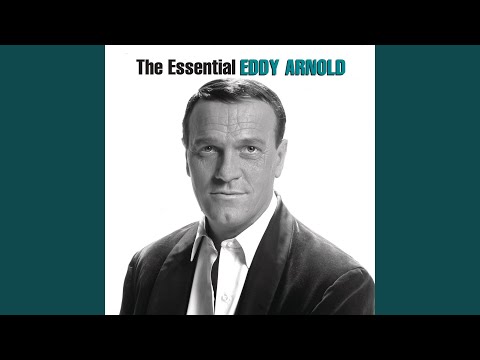
Imagine country music in the mid-1960s, caught between the twang of the honky-tonk past and the lush, orchestrated future that Nashville producers were busy inventing. Into that moment stepped Eddy Arnold, a singer who had already lived several careers, and who in this stretch was reinventing himself one more time. He had been a star since the 1940s, but by 1966 he was riding a remarkable late-career surge powered by a smoother, more sophisticated sound. This song sat right at the center of that comeback.
The Tennessee Plowboy Reinvented
Arnold had first risen to fame as the "Tennessee Plowboy," a warm-voiced country traditionalist. By the mid-1960s he had shed the overalls image entirely, embracing tuxedos, supper-club bookings, and a velvety crossover style often grouped under the Nashville Sound. Eddy Arnold remains one of the best-selling country artists in history, and this period was a major reason why, as he proved an older star could thrive in a changing market.
A Polished, Tender Single
The song fits perfectly into that elegant late phase. It is a ballad built on yearning, carried by Arnold's unhurried baritone and a soft cushion of strings and backing voices. There is no rough edge here, only smooth devotion. The arrangement leans into the sophisticated pop-country blend that made him a fixture on adult radio as well as country stations, a crossover act in the truest sense.
Climbing the Hot 100
On the pop chart, the record made a steady, respectable climb. It entered the Billboard Hot 100 at number 99 on February 5, 1966, and rather than stalling, it gathered momentum week by week. The single reached its peak of number 36 on March 19, 1966, a strong showing for a country crooner on the all-genre pop survey. In total it spent eleven weeks on the Hot 100, evidence of how broadly Arnold's appeal reached during these years.
A Voice Built for the Long Haul
Part of what made this stretch possible was the sheer durability of Arnold's instrument. His baritone had aged into something richer and more relaxed, an inviting, conversational tone that suited the supper-club sophistication he was now chasing. He did not push or strain; he leaned back and let the song come to him. That ease is everywhere in this recording, the sound of a singer completely comfortable in his own skin. By the mid-1960s he had spent two decades learning exactly how much to give a lyric, and he applied that hard-won restraint here to lovely effect. He understood that a great romantic ballad lives or dies on believability, and his unforced delivery made every line of devotion sound entirely sincere, never overdone.
Part of a Golden Run
This single arrived during one of the most successful stretches of Arnold's long life in music, a run that produced a string of crossover hits and cemented his standing as country's most graceful elder statesman. His blend of country roots and pop polish helped pave the way for the genre's mainstream acceptance, influencing the path that countless singers would later follow. Eddy Arnold would eventually be inducted into the Country Music Hall of Fame, recognition of a career few in the genre have matched for longevity or sales. The song may not be his most famous, but it is a perfect snapshot of the artist at his most assured, a veteran reinventing himself yet again and making it look effortless.
Put it on and let that easy, room-filling voice do its work. It is the sound of a performer who had nothing left to prove and chose instead to simply charm you, one warm phrase at a time, the way the very best balladeers always have.
"I Want To Go With You" — Eddy Arnold's singular moment on the 1960s charts.
02 Song Meaning
The Meaning of "I Want To Go With You"
At its heart this is a song about devotion stripped to its simplest form, the plain human wish to not be left behind by the person you love. There is no elaborate metaphor or twist of plot. The whole emotional weight rests on a single, direct plea, and that directness is exactly what gives it power.
The Ache of Wanting to Belong
The lyric speaks from the position of someone who would rather follow than be parted. It is a request more than a demand, a quiet offering of loyalty. The central theme is unconditional companionship, the idea that being beside the beloved matters more than any destination. Arnold delivers it without melodrama, which makes the longing feel genuine rather than performed.
Tenderness Over Drama
Where many love songs of the era reached for grand declarations, this one trades in gentleness. The emotional register is soft, almost confessional, the sound of someone speaking honestly across a quiet room. The song's message is about humility in love, about being willing to put another person's path ahead of your own pride. That vulnerability is what listeners responded to, the sense of a strong, established singer choosing to lay his feelings bare rather than posture.
A Mirror of Its Moment
The mid-1960s were a time of upheaval, with the cultural ground shifting fast. Against that backdrop, the song's old-fashioned sincerity offered something steadying. It spoke to audiences craving emotional reassurance, a reminder of constancy when so much else felt uncertain. Arnold's smooth, mature voice underlined that sense of safety and warmth.
Devotion Without Conditions
There is a generosity at the heart of the song that sets it apart from more possessive love songs. The singer is not asking to own or control; he is asking only to accompany. The lyric prizes presence over possession, the simple wish to share whatever road the beloved travels. That selflessness gives the song a gentle, almost devotional quality, the sense of a love that asks for very little and offers a great deal.
Why It Connected
The song endures as a small study in earnest feeling. It does not try to dazzle; it tries to comfort. Its appeal lies in how universal the sentiment remains, the timeless desire to stay close to the people who matter. For listeners then and now, it lands because it says something true in the plainest possible way, and lets a fine singer carry the rest. In an age of louder, flashier declarations, its quiet sincerity is exactly what keeps it warm. Sometimes the simplest sentiment, sung with real feeling, is the one that lasts the longest in the heart.
→ More from Eddy Arnold
View all Eddy Arnold hits →
→ More from the 1960s File
View all 1960s hits →




Keep digging