The 1960s File Feature
Over The Mountain (Across The Sea)
Over The Mountain (Across The Sea) — Bobby Vinton (1963) "Over The Mountain (Across The Sea)" arrived in 1963 on Epic Records as one of Bobby Vinton's many e…
01 The Story
Over The Mountain (Across The Sea) — Bobby Vinton (1963)
"Over The Mountain (Across The Sea)" arrived in 1963 on Epic Records as one of Bobby Vinton's many exercises in the art of refashioning established material into fresh chart currency. The song had originated with Johnnie and Joe, a duo whose original version had been a genuine rhythm and blues hit in 1957, reaching high on the R&B charts and crossing over to make a respectable impression on the pop chart of that era. By the time Vinton took his turn with the material, he was at the peak of his early commercial power, fresh off a remarkable run of successes that had made him one of the most commercially reliable recording artists in America.
Vinton's commercial story had begun in extraordinary fashion. After years of modest success and near misses, "Roses Are Red (My Love)" had reached number one on the Billboard Hot 100 in 1962, launching a hit-making run that would make him one of the dominant presences on the pop charts throughout the decade. He had a particular gift for identifying songs with melodic appeal and emotional directness, and then delivering them in a manner that maximized their accessibility without stripping away the qualities that had made them resonate in the first place. This approach brought him into frequent contact with cover versions of songs that had originally found success in the R&B market, a practice that was common among white pop artists of the era.
The Johnnie and Joe original of "Over The Mountain (Across The Sea)" had been a representative piece of late-1950s doo-wop balladry, featuring the kind of yearning, romantic narrative and lush vocal harmony that defined the genre at its peak. The song's lyrical premise, a lover separated by vast physical distance who nevertheless maintains faith in the power of romantic connection, was the kind of emotionally universal material that transcended genre boundaries. It was precisely the kind of song that could move from the R&B market to the pop charts without losing its essential appeal, and Vinton recognized this potential when he chose to record his own interpretation.
Vinton's production approach was rooted in the orchestrated pop style that Epic Records favored during this period, featuring string arrangements and background vocal treatments that placed the song firmly in the mainstream pop tradition rather than preserving the rougher edges of the original doo-wop recording. This was standard practice for the era, and Vinton executed the transformation with the professionalism that had by then become his trademark. The production gave the song a glossy warmth that made it instantly appealing to the broad pop radio audience that constituted his primary market.
The single charted on the Billboard Hot 100, adding another entry to the remarkable catalog of successes Vinton was accumulating during this peak period. While it was not among his most celebrated recordings, it demonstrated the consistent commercial reliability that made him such a valuable asset to Epic Records throughout the early and mid-1960s. The label had effectively built a significant portion of its commercial strategy around Vinton's ability to deliver hits with a regularity that few other artists of the era could match.
The broader context of 1963 is essential to understanding the cultural position of a record like this. The pop landscape was in the final months of its pre-Beatles configuration, a moment when the orchestrated pop that artists like Vinton represented still dominated the charts but when the forces that would soon transform popular music were already gathering momentum. British Invasion groups were beginning to penetrate American cultural consciousness even before the famous Ed Sullivan appearances of February 1964, and the R&B currents that would eventually feed into soul and then rock were growing stronger. In this context, Vinton's polished pop craftsmanship represented both a commercial peak and an implicit last flowering of a particular approach to American popular music.
Bobby Vinton's commercial reach during this period was remarkable by any measure. He would go on to achieve multiple number-one singles throughout the decade, including "Blue Velvet" and "Mr. Lonely," but this run of 1962 to 1964 recordings established the foundation of his commercial legacy. The cover of "Over The Mountain (Across The Sea)" fits naturally into this body of work as a thoughtful engagement with the American pop and R&B songbook, filtered through Vinton's particular sensibility and the production values that Epic Records had developed to maximize his commercial appeal.
The original Johnnie and Joe recording has retained its own place in the history of doo-wop, recognized as a genuinely significant artifact of that genre's golden age. Vinton's cover version exists in a different relationship to the material, less interested in preserving the sonic character of the original than in demonstrating the song's melodic durability by translating it into the pop idiom of a new era. Both versions stand as distinct documents of their respective moments in American popular music, reflecting the complex and often generative exchanges between the pop and R&B worlds that characterized the music industry of the late 1950s and early 1960s.
02 Song Meaning
What "Over The Mountain (Across The Sea)" Is About
"Over The Mountain (Across The Sea)" is a song about romantic longing across physical separation, a theme so fundamental to popular music that it has sustained thousands of variations across every genre and era. What distinguishes this particular treatment of the theme is the specificity of the geographic imagery embedded in the title, the mountain and the sea functioning as concrete obstacles that intensify the emotional stakes of the narrator's situation. These are not abstract distances; they are tangible barriers that must be imaginatively traversed in order for romantic connection to be maintained.
The emotional logic of the song follows a familiar but nonetheless affecting trajectory. The narrator exists in a state of absence, separated from the object of affection by circumstances that the song does not fully specify but implies are beyond immediate control. What the narrator asserts, and what the song's emotional energy is devoted to expressing, is the conviction that this physical separation cannot diminish the depth or authenticity of the romantic bond. Distance is presented as a test rather than a terminal condition, and the song's emotional arc is essentially one of determination and faith in the power of love to outlast circumstance.
This thematic framework was central to the doo-wop tradition from which the song emerged in its Johnnie and Joe original form, a genre that consistently returned to romantic longing, separation, and the desperate hopefulness of young love navigating an indifferent world. The melodic structures of doo-wop, with their emphasis on harmony and emotional directness, were ideally suited to conveying exactly this kind of earnest romantic sentiment, and the songs that succeeded in the genre typically did so by finding the perfect balance between melodic beauty and lyrical sincerity.
Bobby Vinton's reading of the material translates these qualities into the pop idiom of the early 1960s without fundamentally altering the song's emotional core. His vocal approach is warm and direct, prioritizing sincerity over vocal acrobatics, which suits the material well. The orchestrated production gives the song a slightly grander emotional scale than the original, which was itself quite spare by comparison, but the essential message remains intact: physical separation is real and painful, but romantic devotion is more powerful than geography.
In the broader context of Vinton's catalog, the song fits naturally alongside other recordings that dealt with romantic longing and emotional directness. His greatest commercial successes, including "Blue Velvet" and "Mr. Lonely," shared this commitment to emotionally legible content delivered without irony or detachment. Vinton's commercial success rested on his understanding that a substantial portion of the pop audience responded deeply to exactly this kind of honest emotional expression, uncomplicated by the self-consciousness that would become a dominant feature of rock culture in subsequent years. "Over The Mountain (Across The Sea)" is a representative expression of those values, a song about the oldest and most reliable of all pop music subjects delivered with the craft and sincerity that made its era genuinely distinctive.
→ More from Bobby Vinton
View all Bobby Vinton hits →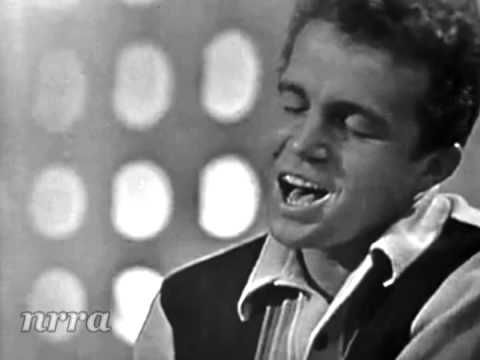




→ More from the 1960s File
View all 1960s hits →




Keep digging