The 1960s File Feature
Summertime
"Summertime" — Billy Stewart's Radical Reinvention, 1966 The Boldest Cover of the Season Picture the summer of 1966: transistor radios blaring from Coney Isl…
01 The Story
"Summertime" — Billy Stewart's Radical Reinvention, 1966
The Boldest Cover of the Season
Picture the summer of 1966: transistor radios blaring from Coney Island to Malibu, AM stations juggling the British Invasion's second wave with a resurgent soul scene that was producing some of the most adventurous black pop music America had ever heard. Into that already crowded landscape walked Billy Stewart, a Chicago-based soul singer with a remarkable gift for vocal gymnastics, carrying something that must have sounded genuinely shocking when programmers first dropped the needle on it. He had chosen to cover "Summertime," the George Gershwin aria from the 1935 opera Porgy and Bess, one of the most iconic and formally serious pieces in the American songbook. And he was going to do something to it that no one had done before.
Billy Stewart's Voice as Instrument
Billy Stewart, who recorded for Chess Records in Chicago, was known to other musicians and soul aficionados for a vocal technique that set him genuinely apart. He could perform rapid-fire vocal stuttering and improvised syllabic runs that transformed melody into something rhythmically percussive, almost scat-like in its density. Applied to a tender, spare lullaby like "Summertime," this technique created a productive friction: the formality of the source material versus the uncontained expressiveness of Stewart's delivery. Producer Billy Davis shaped the session at Chess, surrounding the vocalist with a full orchestral arrangement that gave Stewart's improvisations both a launching pad and a counterweight. The result was unlike anything else on radio that summer.
From Classical Stage to Soul Dancefloor
George Gershwin's "Summertime" had already endured decades of interpretation by 1966. Jazz vocalists, classical sopranos, big band arrangers, and folk singers had all taken their turns. But Stewart's version reframed the song's relationship to rhythm in ways that no prior interpreter had attempted. Where most covers treat the melody as something to be honored and preserved, Stewart treats it as a point of departure, a skeleton to be adorned with improvisational flesh. The arrangement shifts the harmonic language toward soul and R&B without abandoning the compositional intelligence of the original. The single ran for ten weeks on the Hot 100, a remarkable testament to how broadly appealing this high-concept move turned out to be.
Charting Through the Summer Heat
The track debuted on the Billboard Hot 100 on July 16, 1966, entering at position 97. Week by week through that long hot summer it rose: 82, then 57, then 33, then 21. By August 27, 1966, it had reached its peak of number 10, breaking into the top ten of the most competitive singles chart in the world. That meant competing with the Rolling Stones, the Lovin' Spoonful, and the full arsenal of Motown singles that dominated the era. Cracking the top ten under those conditions required something genuinely special, and Stewart's version delivered it through sheer originality of approach.
A Legacy Cut Short
Billy Stewart's career was tragically abbreviated when he died in an automobile accident in January 1970 at just 32 years old. His body of work is relatively compact as a result, which makes the recordings he did leave behind feel especially precious. "Summertime" stands as his commercial pinnacle and his artistic statement in a single three-minute package. It demonstrated that the American songbook, even its most formally hallowed corners, was open to radical reinterpretation by artists willing to bring their full personality to the task. The Chess Records catalog from this period documents a Chicago soul scene of extraordinary vitality, and Stewart's work sits at the center of it. His recordings have been sampled, reissued, and rediscovered across the decades precisely because they contain something irreplaceable: a voice doing things with melody that no one else had done and that few have attempted since. Find this record, put it on, and let that voice show you what soul music sounded like when it was pushing every boundary available to it.
"Summertime" — Billy Stewart's singular moment on the 1960s charts.
02 Song Meaning
"Summertime" — Abundance, Lullaby, and the Art of Vocal Freedom
A Song Built on the Promise of Ease
"Summertime" was written by George Gershwin with lyrics by DuBose Heyward for the 1935 opera Porgy and Bess, and its central promise is one of shelter and abundance. The lyrics paint a picture of a summer evening so benevolent that a child need not fear anything: the living is easy, the fish are plentiful, the cotton crop is high. The parent singing it promises protection and peace. That emotional core, the desire to assure someone you love that all will be well, is what has made the song endure across nine decades and hundreds of interpretations. It speaks to a universal parental instinct, the wish to make the world safe and simple for someone vulnerable.
The Weight Behind the Lightness
The original context in Porgy and Bess complicates the song's apparent serenity considerably. It is sung by a character in a poor African American community in the American South, in circumstances that are anything but secure. The gap between what the lullaby promises and the conditions in which it is sung gives the song its deepest emotional layer. It is not a song of complacency but of aspiration, of parents who know the world is hard choosing to offer their children a vision of ease and plenty even when those things are not readily available. Billy Stewart's 1966 soul treatment, recorded during the height of the civil rights movement, carries that historical weight without making it explicit.
Interpretation as Meaning
When Billy Stewart recorded his version, the liberties he took with the melody and rhythm were not merely stylistic choices. They were a kind of ownership. Black American artists taking a piece written to depict their community's experience and performing it on their own terms, with the full range of their own vocal traditions, is itself a meaningful cultural act. Stewart's scat-like ornamentation and rhythmic vocal gymnastics brought to the song the full legacy of jazz and gospel, the very traditions that Gershwin had drawn from in composing it. The interpretation completed a circle, returning the song to its cultural roots through a different musical language.
Seasonal Resonance
Part of why "Summertime" has worked in so many different interpretations is the sheer evocative power of its seasonal imagery. Summer in the American imagination carries a specific freight: heat, ease, extended light, childhood, freedom from routine. A song that captures that atmospheric quality can find a listener in nearly any year and any decade. Stewart's version, released in July 1966, arrived at the precise seasonal moment when its imagery was most viscerally legible. Radio listeners in August 1966 heard the word "summertime" and felt it in their bodies before the first bar was over.
The Legacy of Freedom in Song
What Billy Stewart's "Summertime" ultimately argues, through the choices made in its performance, is that the greatest songs are not fragile artifacts to be preserved under glass but living material to be inhabited and transformed. The song survives every interpretation because its emotional truth is durable enough to bear the weight of any approach. Stewart did not diminish the song by taking such dramatic liberties; he enlarged it, showed audiences a dimension that more reverent treatments had not reached. That spirit of vocal freedom, of trusting your own expressive instincts even when they strain against the original form, is the real meaning this particular recording carries into the world.
→ More from Billy Stewart
View all Billy Stewart hits →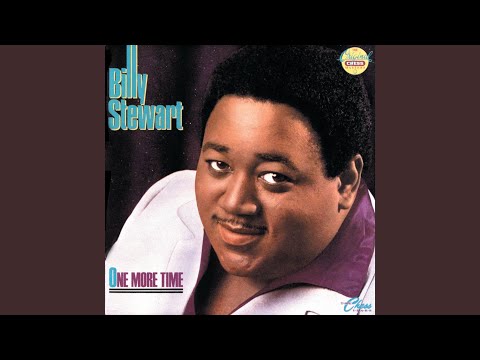
→ More from the 1960s File
View all 1960s hits →




Keep digging