The 1960s File Feature
I Do Love You
"I Do Love You" — Billy Stewart The Stuttering Soul of Billy Stewart The spring of 1965 on American radio was a fascinating contest between sounds and styles…
01 The Story
"I Do Love You" — Billy Stewart
The Stuttering Soul of Billy Stewart
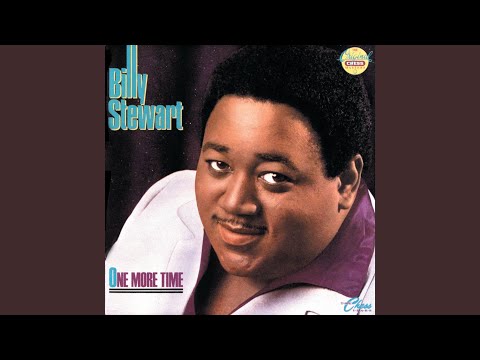
The spring of 1965 on American radio was a fascinating contest between sounds and styles. The British Invasion was well underway, with the Beatles and the Rolling Stones dominating airplay. Motown was producing a remarkable run of hits. And out of the Chess Records stable in Chicago came something harder to categorize: Billy Stewart, a pianist and vocalist whose approach to song was so idiosyncratic that he barely fit any of the prevailing categories. His trademark was a stuttering vocal technique that broke words into fragments and reassembled them with an almost percussive energy, creating a style that was immediately recognizable and unlike anyone else working in pop or soul.
Stewart had been signed to Chess Records since the late 1950s, but his Chess tenure had produced only modest results until 1965. "I Do Love You" changed that trajectory dramatically. Written by Billy Stewart himself, the song gave him the breakthrough he had been building toward for several years, matching his distinctive vocal style to a melody and arrangement that communicated the weight of his talent to a wide audience for the first time.
The Recording and Its Distinctive Sound
The production of "I Do Love You" carries the Chess Records house sound that had defined Chicago rhythm and blues for over a decade: a live, slightly rough-edged quality that stood in contrast to both the Motown polish coming from Detroit and the Stax warmth coming from Memphis. The arrangement is built on piano, rhythm section, and horns, with Stewart's vocal occupying the center of the arrangement in a way that demanded full attention. Chess Records, under the guidance of founders Leonard and Phil Chess, had developed an approach to production that prioritized the feel of a live performance over studio precision, and "I Do Love You" benefited from that philosophy.
Stewart's piano playing was an integral part of his artistic identity, and his dual role as instrumentalist and vocalist gave his performances an integrated quality that many soul singers of the era did not possess. He was not simply a voice in front of a band; he was a musician who happened to also sing, and that background informed his relationship with rhythm and melodic phrasing in ways that were audible throughout his recordings.
Thirteen Weeks on the Hot 100
The song entered the Billboard Hot 100 on March 27, 1965, debuting at number 98. Its ascent was steady rather than explosive: 82 the following week, then 71, then 60, then 41. By early May it was climbing into the top 30. "I Do Love You" reached its peak position of number 26 on May 8, 1965, and then spent several more weeks in the lower reaches of the chart before falling off. Thirteen weeks total on the Hot 100 represented a genuine sustained hit, not a brief bubble but a real run that confirmed Stewart as a name that radio listeners and record buyers were tracking.
The song also performed strongly on the R&B charts, where its Chess pedigree and Stewart's soul credentials made it a natural fit. The crossover performance on the Hot 100 was more significant from a career standpoint, demonstrating that his audience extended well beyond the core R&B market.
Stewart's Place in the Chess Roster
Chess Records in 1965 was an extraordinary enterprise, home to Muddy Waters and Howlin' Wolf in the blues division, Etta James and Fontella Bass in soul and R&B, and the Chess pop productions that were beginning to reach white audiences through rock and roll acts who covered their catalog. Billy Stewart occupied a particular niche within this company, an artist who drew on the gospel and blues traditions that Chess had long documented while bringing a personal eccentricity to his performances that was entirely his own. His success with "I Do Love You" demonstrated that idiosyncrasy and commercial appeal were not mutually exclusive.
Legacy and Tragically Short Career
Billy Stewart went on to have several more charting singles, most notably a remarkable version of "Summertime" in 1966 that applied his stuttering technique to the Gershwin standard with results that were both audacious and effective. His career was cut short by his death in a car accident in 1970 at the age of 32, leaving behind a catalog that has aged remarkably well. For fans of 1960s soul who venture beyond the most famous names, discovering Stewart is one of the genre's genuine pleasures. Press play on "I Do Love You" and hear why Chess Records believed in him.
"I Do Love You" — Billy Stewart's singular moment on the 1960s charts.
02 Song Meaning
"I Do Love You" — Devotion, Vocal Eccentricity, and the Art of the Soul Declaration
The Declaration of Love as Musical Form
The declaration of love is one of popular music's oldest and most reliable structures. From the earliest Tin Pan Alley songs through the rhythm and blues traditions that preceded them, the affirmation of devotion has provided songwriters with a framework that is simultaneously universal in its appeal and endlessly malleable in its execution. "I Do Love You" fits squarely within this tradition, offering an unambiguous title and emotional premise while using the specificity of Billy Stewart's performance to make the familiar feel distinctive.
What Billy Stewart brought to the love declaration genre was the same thing he brought to everything: a physicality of vocal delivery that made emotional content visceral rather than merely lyrical. His approach to a line was not to carry it smoothly from beginning to end but to inhabit it, to repeat syllables, to stutter and fragment words in ways that communicated intensity through the disruption of smooth delivery. The lover in "I Do Love You" does not croon his devotion; he enacts it in the texture of his voice.
The Stuttering Technique and What It Communicated
Stewart's characteristic stuttering was not a liability or a gimmick but a genuine extension of the emotional content he was conveying. In the context of a love song, the interruption of smooth verbal communication suggests something true about the experience of intense feeling: that it resists easy articulation, that the desire to express emotion can exceed the capacity of ordinary language to contain it. The fragmented delivery paradoxically communicated authenticity, a voice that could not simply say the thing cleanly because the feeling was too large for clean saying.
This technique had precedents in the gospel tradition that underpinned all of soul music, where singers would repeat syllables or words as a form of emphasis and as a way of holding the congregation's attention at peak emotional moments. Stewart secularized this technique, applying it to a romantic rather than spiritual declaration, but the emotional mechanism was essentially the same.
The Chess Records Context
Chess Records represented a specific aesthetic and philosophical approach to recorded music that shaped everything it produced. The label's history ran from the Chicago blues of the late 1940s and 1950s through the rhythm and blues and soul of the 1960s, and throughout that history Chess had prioritized emotional impact over technical perfection. The slightly raw, present-in-the-room quality of Chess recordings was a production philosophy as much as a limitation, an aesthetic choice that reflected the label's belief that feeling mattered more than finish.
"I Do Love You" sits within that aesthetic, a recording that does not smooth over the edges of Stewart's idiosyncratic delivery but frames it in a way that allows its intensity to communicate directly. The production serves the artist's strengths rather than compensating for his eccentricities.
Soul in 1965 and the Space for Individuality
In the spring of 1965, soul music had not yet been fully absorbed into the mainstream pop market in the way it would be by the late 1960s. The audience for a Chess soul release was primarily Black radio listeners and R&B fans, with crossover to the broader Hot 100 audience representing a bonus rather than the primary target. This dynamic gave artists like Stewart room to be genuinely idiosyncratic in a way that pop's demand for broad commercial accessibility might have constrained. The moderate success of "I Do Love You" on the Hot 100 demonstrated that his approach could travel, that the combination of a straightforward emotional premise and highly individual execution was legible to audiences beyond the core soul market. That legibility, achieved without compromise of his distinctiveness, is the meaningful artistic achievement of the record.
→ More from Billy Stewart
View all Billy Stewart hits →
→ More from the 1960s File
View all 1960s hits →




Keep digging