The 1960s File Feature
Sitting In The Park
"Sitting In The Park" — Billy Stewart The Stutter That Became a Signature Chicago in the mid-1960s had a sound, and Billy Stewart was one of its most distinc…
01 The Story
"Sitting In The Park" — Billy Stewart
The Stutter That Became a Signature
Chicago in the mid-1960s had a sound, and Billy Stewart was one of its most distinctive expressions. The city's R&B scene had developed its own character, distinct from the Memphis grit of Stax and the Detroit polish of Motown, shaped by the blues tradition that had traveled up from the Delta and then mutated under the pressure of urban life on the South Side. Stewart was not a blues singer in any strict sense, but he emerged from that environment and carried its influence into a style that was entirely his own.
What set Billy Stewart apart from virtually every other soul singer of his era was his vocal technique: a controlled stutter, a deliberate interruption of syllables and held notes that created rhythmic complexity no other vocalist was producing at the time. This was not an affectation designed to disguise an inability to sustain notes. Stewart could sustain notes beautifully. The stutter was a choice, a stylistic device that gave his voice a percussive quality and an unpredictability that kept listeners slightly off-balance in the best possible way.
The Song and Its Setting
Written by Billy Stewart himself, "Sitting In The Park" is a courtship song in the most direct and cheerful tradition: a man sitting in a park, watching a woman pass, working up the nerve to make his intentions known. The scenario is simple to the point of cartoon clarity, which is part of its appeal. There is nothing complicated about what the narrator wants or what he is doing about it. The pleasure of the record is entirely in the performance, in Stewart's vocal acrobatics, the driving rhythm section, and the general atmosphere of good-humored persistence.
Chess Records, the Chicago label that had been home to some of the most important blues recordings of the postwar era, released the single. By 1965, Chess was navigating the complicated territory between its blues heritage and the younger soul market, and Billy Stewart was one of the artists through whom that navigation was happening. The label's infrastructure and its relationships with radio programmers gave Stewart's singles strong support, and "Sitting In The Park" benefited from that backing.
Eight Weeks to Number Twenty-Four
The single entered the Billboard Hot 100 on June 19, 1965, at position 92. The summer was crowded with major releases, and making any impression required genuine commercial traction. Stewart's record climbed through June and July, moving steadily upward as radio rotation built and listeners responded. It peaked at number 24 on July 31, 1965, spending eight weeks on the chart. The performance was strong enough to confirm Stewart as a genuine chart presence and to establish his particular vocal style with a mainstream pop audience that had previously known him primarily through R&B radio.
On the R&B chart, the record penetrated even more deeply, reflecting the loyalty of the audience that had been following Stewart's Chess recordings through the early part of the decade. The crossover performance demonstrated that his eccentric vocal approach, which might have been expected to limit his commercial appeal, actually translated remarkably well across different radio formats.
A Voice Unlike Any Other
It is worth dwelling on what Billy Stewart was doing vocally, because it was genuinely unprecedented. The controlled stutter created a kind of metric subdivision within phrases that operated almost independently of the rhythm section. Where most soul singers worked with the groove, Stewart sometimes worked against it, creating rhythmic counterpoint between his voice and the band that produced a thrilling tension. His version of "Summertime," released the following year, became his biggest hit and showcased this technique even more dramatically, but "Sitting In The Park" established the foundation.
Stewart's influence on subsequent generations of soul and R&B singers is harder to trace than some of his contemporaries' because his style was so singular that direct imitation was difficult. You could borrow a Smokey Robinson phrase or approximate an Otis Redding riff, but copying the Stewart stutter without possessing his rhythmic intelligence would have produced only parody. His contribution was more about expanding the vocabulary of what a soul voice could do than about providing a template to be followed.
A Career Cut Short
Billy Stewart's life ended in a car accident in January 1970, when he was just thirty-two years old. The loss of his voice at that age, before the full range of his development had played out, makes "Sitting In The Park" and his other recordings feel particularly precious. They are all that exists of a talent that had only begun to demonstrate what it was capable of. Put this record on and let those vocals work on you, because there is nothing else in the catalog of American popular music quite like them.
"Sitting In The Park" — Billy Stewart's singular moment on the 1960s charts.
02 Song Meaning
"Sitting In The Park" — Meaning and Legacy
The Courtship as Pure Scene
The lyric of "Sitting In The Park" does not try to be complicated, and that simplicity is a strength. The scenario is entirely visual and situational: a man at rest in a public space, observing someone who has captured his attention, building the resolve to make himself known. The park itself functions as a space of suspended time, outside the demands of work and obligation, where such moments of spontaneous attraction can develop naturally.
The specificity of the setting grounds what might otherwise be a generic courtship song in a particular social reality. Parks in mid-1960s urban America were genuine community spaces, especially in the dense neighborhoods of cities like Chicago where outdoor public spaces served as extensions of domestic life. The scenario Stewart describes was one his listeners would have recognized from direct experience, which gave the song an immediacy that more abstract romantic scenarios lacked.
Vocal Innovation and Emotional Content
The extraordinary thing about "Sitting In The Park" is the relationship between its lyrical content and its vocal execution. The lyric is simple and cheerful; the vocal performance is a demonstration of radical rhythmic intelligence. Billy Stewart used the stutter technique to transform a straightforward courtship narrative into something musically complex and surprising, creating a gap between what the words said and how they were delivered that made even the most familiar sentiment feel new.
This technique of elevating simple material through performance innovation was central to the best R&B and soul of the 1960s. The tradition held that what the voice did with a melody was at least as important as the melody itself, that performance was a form of composition. Stewart extended this principle further than almost anyone else working in the idiom, making the voice itself a rhythmic instrument capable of independent structural contribution.
Chess Records and the Chicago Sound
The environment in which "Sitting In The Park" was recorded matters to understanding what it sounds like. Chess Records in the mid-1960s had a particular acoustic sensibility, a product of years of recording blues, soul, and R&B in its Chicago studio. The rhythm sections were tight and swinging without being polished to smoothness; the overall sound retained an edge that contrasted with the more refined productions coming from the coasts.
Stewart's voice worked differently in that environment than it might have in a more polished studio context. The slight roughness of the Chess production gave the stutter technique room to breathe, making it sound organic rather than gimmicky. The interplay between Stewart's vocal idiosyncrasies and the band's Chicago rhythm section feel is one of the defining pleasures of his recordings, and "Sitting In The Park" demonstrates it with particular clarity.
The Tragedy of Early Loss
Any honest account of Billy Stewart's meaning in American music must acknowledge the tragedy of his early death. At thirty-two, he had produced a body of work remarkable for its originality and its quality; what he might have done in subsequent decades, as his technique developed and the music around him continued to evolve, can only be imagined. The recordings he left behind feel precious in a way that few artists' catalogs do, not because they are incomplete exactly, but because they arrive with the awareness that they are all there will ever be.
"Sitting In The Park" was one of the earlier demonstrations of his full capabilities, and returning to it now is to hear a voice completely its own, doing things no other voice was doing, doing them with evident pleasure and skill, and leaving the listener wishing there were more.
→ More from Billy Stewart
View all Billy Stewart hits →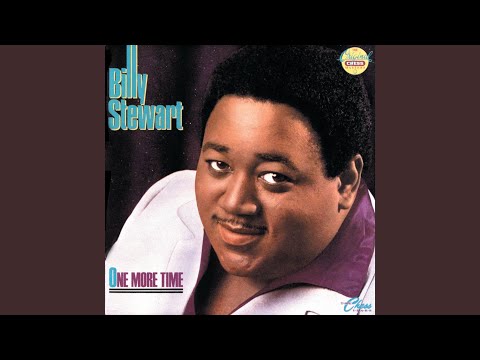

→ More from the 1960s File
View all 1960s hits →




Keep digging