The 1960s File Feature
Cross My Heart
"Cross My Heart" — Billy Stewart's Final Flourish in 1967 The Stuttering Genius of Soul Billy Stewart was one of the most idiosyncratic vocalists the soul er…
01 The Story
"Cross My Heart" — Billy Stewart's Final Flourish in 1967
The Stuttering Genius of Soul
Billy Stewart was one of the most idiosyncratic vocalists the soul era produced. The Washington D.C.-born singer brought to his recordings a technique unlike anything else on the radio: a rapid, stuttering style of vocal ornamentation that took the building blocks of gospel and rhythm-and-blues and reassembled them into something genuinely personal. He could take a familiar song, strip it to its foundations, and rebuild it with so many additional runs, breaks, and embellishments that it became an entirely new creation. His 1966 version of "Summertime" demonstrated this approach at its most spectacular, taking George Gershwin's standard and transforming it into a showcase of almost athletic vocal ability. When Cross My Heart arrived at the end of 1967, it came from an artist who had carved out a distinctive and beloved niche in American soul.
The context of late 1967 is important for understanding the song's position in Stewart's career. He had been recording for Chess Records since the early 1960s, developing his style across numerous singles before achieving genuine commercial recognition with "I Do Love You" in 1965 and the remarkable "Summertime" in 1966. By late 1967, he was an established figure rather than a newcomer, and "Cross My Heart" arrived with the weight of a solidified artistic identity behind it.
A Promise Set to Soul
The subject matter of "Cross My Heart" places the song in one of soul music's most productive emotional territories: the declaration of sincerity and commitment. The phrase "cross my heart" carries with it the weight of childhood oath-taking, the gesture of drawing an X over the heart as a seal on a promise. Stewart brings this familiar expression into the soul context and invests it with the kind of vocal energy that his style uniquely enabled: the sincerity of the declaration is amplified by the sheer physical energy of the performance.
The production reflects the Chess Records aesthetic of the late 1960s: a rhythm section built for groove, horns that add punctuation and color, and an overall sonic approach that valued presence and directness over elaborate orchestration. Chess understood what its artists did best, and what Billy Stewart did best was transform relatively straightforward material into something that felt completely alive through the force of his personality and technique.
Nine Weeks Across Two Years
The chart story of "Cross My Heart" spans a transition from one year to the next. The track entered the Billboard Hot 100 on December 2, 1967, at position 99, making it one of the final Hot 100 entries of that year. Its climb was slow but consistent: 95, then 94, then 93, then 91, as the calendar turned to 1968. The song reached its peak position of number 86 during the week of January 27, 1968, having spent nine weeks on the chart across the turn of the year. That modest peak reflects the competitive nature of the Hot 100 in the winter of 1967-1968, a period that placed Stewart in direct competition with some of the most commercially successful music the era would produce.
The R&B audience, where Stewart had built his most passionate following, represented a different accounting than the Hot 100 crossover picture suggested. His reputation within the soul community was built on recordings that demonstrated his vocal gifts to an audience that recognized and valued what he was doing, regardless of where they fell on a pop chart.
The Tragedy and the Legacy
Discussing "Cross My Heart" within Billy Stewart's biography requires acknowledging the circumstances that prevent us from knowing what he might have achieved next. Stewart died in a car accident in January 1970, at the age of thirty-two, taking with him a vocal gift that had barely reached its full development. The recordings he left, including "Cross My Heart," serve now as documents of a singular talent that was given too little time. In that light, every Stewart recording carries a quality of farewell that was not intentional when the music was made.
His influence on subsequent soul and R&B vocalists, particularly in the area of vocal ornamentation and the use of stuttering and rhythmic embellishment as expressive tools, has been noted by numerous musicians who came after him. The particular style he developed, rooted in gospel but pushing into territory no one had quite explored before, opened pathways that others would walk long after his death.
The Promise in the Performance
"Cross My Heart" rewards attention as both a record of its specific moment in late 1967 and as a showcase for a vocal approach that has never been exactly replicated. Billy Stewart's technique was so personal, so thoroughly his own, that even when listeners have absorbed its influence through subsequent artists, the original recordings retain an unmistakable fingerprint. Put this one on and hear the sound of a genuine original, delivering his promise with every ornament and embellishment his remarkable instrument could produce.
"Cross My Heart" — Billy Stewart's singular moment on the 1960s charts.
02 Song Meaning
The Meaning Behind "Cross My Heart" by Billy Stewart
The Oldest Oath
The phrase at the center of this song's title is one of the oldest informal pledges in English-speaking culture. Children swear it in schoolyards; adults invoke it when they need to signal that what they are saying is not merely true but genuinely, solemnly meant. "Cross my heart" reaches back through layers of folk tradition to a gesture of sealing a promise with a reference to something sacred. Billy Stewart's use of this oath in a soul context invests the song with a quality of genuine, almost childlike sincerity that cuts through any suspicion of romantic rhetoric. This is not the sophisticated language of persuasion; it is the direct language of conviction.
Soul music of the 1960s was deeply invested in the relationship between performed emotion and genuine feeling, and the best recordings of the era navigate that relationship with considerable sophistication. "Cross My Heart" places itself squarely in the tradition of the sincere declaration, a song that stakes its emotional credibility on the unadorned directness of its central promise.
Fidelity as a Soul Theme
The promise of faithfulness and truth runs through the history of rhythm-and-blues with particular insistence. The genre developed in communities where genuine commitment and reliability carried significant moral weight, and songs that dramatized those values connected with audiences who understood their importance from direct experience. The declaration "cross my heart" in this context becomes more than a romantic gesture; it is a statement about the kind of person the narrator is and intends to be, a commitment to a mode of conduct rather than merely a description of current feeling.
Billy Stewart's gospel roots give his delivery of this theme additional authority. The Black church tradition from which he drew was deeply concerned with the question of integrity, with the alignment of what one says and what one does, and that concern inflects his vocal approach even when the context is overtly secular.
Stewart's Ornamentation and Its Meaning
Understanding the meaning of "Cross My Heart" requires attending to the form as well as the content. Stewart's vocal ornamentation was not mere decoration; it was a language in itself, a way of intensifying and amplifying the emotional content of words through musical means. When he adds his characteristic stutters and runs to a phrase, he is not obscuring the meaning but deepening it, demonstrating through the sheer energy of the performance the genuine quality of what he is expressing. The elaborateness of the technique mirrors the depth of the feeling: simple words do not fully contain what the song is trying to say, so the voice goes beyond them.
This approach places Stewart in a specific tradition within Black vocal music, one that values the voice as an instrument capable of expressing things that language alone cannot reach. His recordings are demonstrations of that capacity, and "Cross My Heart" is among them.
A Promise That Time Cannot Qualify
The emotional content of "Cross My Heart" remains as legible now as it was in the winter of 1967. The specific social contexts change, the production sounds of an era date themselves, but the fundamental experience of making a sincere promise and meaning it with everything you have is perennial. Billy Stewart delivered that experience with the full force of his extraordinary vocal gifts, and the recording preserves it intact across the decades. It is a promise made once, captured on tape, still audible to anyone who cares to listen.
→ More from Billy Stewart
View all Billy Stewart hits →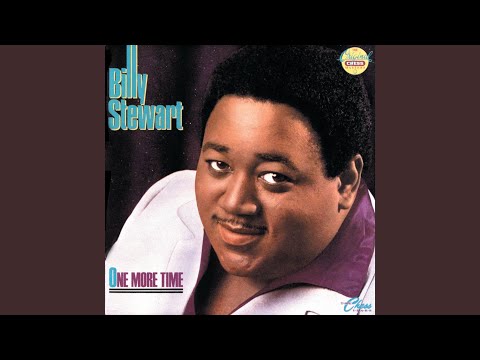

→ More from the 1960s File
View all 1960s hits →




Keep digging