The 2010s File Feature
Tin Man
Tin Man: Miranda Lambert's Award-Winning Country Meditation Miranda Lambert has built one of the most critically respected careers in contemporary country mu…
01 The Story
Tin Man: Miranda Lambert's Award-Winning Country Meditation
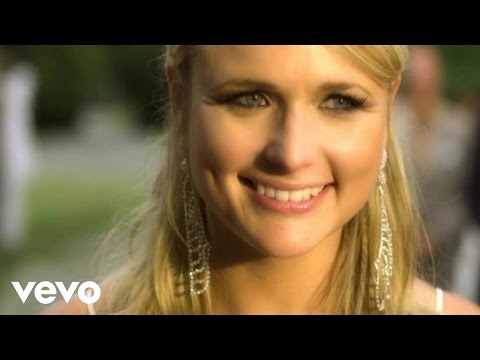
Miranda Lambert has built one of the most critically respected careers in contemporary country music through a combination of unflinching emotional honesty, exceptional songwriting, and a vocal authority that places her in conversation with the great country women who preceded her. "Tin Man," released in 2017 as part of her double album "The Weight of These Wings," represented one of the purest and most distilled expressions of her artistic gifts, a song that stripped away everything unnecessary to deliver a meditation on heartbreak so direct that it felt almost uncomfortably intimate.
"The Weight of These Wings" was released on November 18, 2016, through RCA Nashville, arriving as a sprawling two-disc collection that documented the emotional aftermath of Lambert's divorce from fellow country star Blake Shelton, one of the most publicly discussed separations in the history of Nashville's celebrity culture. The double album was received as a major artistic statement, and "Tin Man" was identified early as one of its defining tracks.
The song was co-written by Lambert along with Jack Ingram and Jon Randall, collaborators who had been part of her creative circle and whose contributions helped shape the track's quietly devastating emotional arc. The writing session for "Tin Man" has been discussed in interviews as an unusually focused and emotionally charged creative experience, reflecting the raw emotional material that Lambert was processing in the period following her divorce.
The production on "Tin Man" was handled with exceptional restraint. Where much of contemporary country music, including significant portions of Lambert's own previous output, employed densely layered production and anthemic arrangements, "Tin Man" was built on near-silence, a spare acoustic framework that placed Lambert's voice in a space usually associated with the most austere folk recordings rather than commercial country radio. This production choice was both artistically courageous and commercially risky, as radio formats typically favor more sonically robust recordings.
"Tin Man" won the Grammy Award for Best Country Solo Performance in 2018, giving Lambert one of the most significant recognitions in the genre and confirming the song's status as an exceptional piece of country songwriting. The Grammy win was part of a broader critical consensus that had formed around "The Weight of These Wings" as one of the most significant country albums released in the 2010s, a work that succeeded both as emotional testimony and as formal artistic achievement.
The album "The Weight of These Wings" debuted at number two on the Billboard 200 and reached number one on the Top Country Albums chart, demonstrating that Lambert's commercial standing had not diminished despite the personal turmoil she was documenting. Her audience remained deeply loyal, and critical enthusiasm translated into meaningful sales and streaming numbers in an era when the country audience was still strongly oriented toward album consumption.
The Wizard of Oz reference embedded in the song's conceit was widely noted and appreciated by critics and listeners. The Tin Man, who in L. Frank Baum's story lacks a heart and yearns for one, is reappropriated in Lambert's song as an envied figure rather than a pitiable one. The suggestion that having no heart might be preferable to having one capable of the pain she is describing is a striking emotional inversion of the original fairy tale's values, and it gave the song an additional layer of literary resonance that distinguished it from simpler expressions of romantic grief.
Radio reception for "Tin Man" was more limited than Lambert's more commercially conventional singles, reflecting the song's spare production and unhurried emotional pace. But the track thrived in the streaming environment, where listeners seeking the kind of slow, careful emotional engagement that radio formats typically discourage could find and return to it on their own terms. The gap between radio performance and streaming engagement for this particular track illustrated the way in which the measurement systems of the streaming era had created new possibilities for songs that operated outside the parameters radio programmers typically favored.
Lambert's voice, unadorned and precisely controlled throughout the recording, delivered the track's emotional content with a directness that critics repeatedly identified as the key to its power. She is one of the finest pure vocalists in contemporary country music, with a technical capability that she consistently deploys in service of emotional truth rather than virtuosic display. "Tin Man" was an opportunity to demonstrate this quality at its most concentrated, and she used it fully.
The song has maintained a significant place in Lambert's live performances since its release, often functioning as one of the emotional centerpieces of her concert sets. Its power in a live setting, with the spare arrangement creating intimacy even in large venues, reflects the quality of the underlying composition: it does not require production density to work, because its emotional logic is sufficient on its own.
02 Song Meaning
The Meaning Behind Tin Man
"Tin Man" is a song about the paradox of emotional capacity: the ability to feel deeply is the same quality that makes devastating loss possible, and someone who cannot feel cannot be hurt. The song's central gesture is an address to the Tin Man of Wizard of Oz mythology, the hollow-chested figure who yearns for a heart, and the revelation is that having no heart to break might actually be a gift rather than a deprivation. This inversion of the classic fairy tale's emotional logic is the song's most striking formal achievement, taking a beloved cultural reference and turning its value system precisely upside down.
The emotional register of the song is not anger but exhaustion, not bitterness in any conventional sense but a kind of weary honesty about what love costs. Lambert's narrator has paid that cost and is now contemplating, with something like genuine envy, what it would feel like to have been spared it. This is a nuanced emotional position, more complex than the straightforward grief or rage that might characterize a simpler heartbreak song. The narrator is not asking for her heart back or wishing for revenge; she is wishing for numbness, for the absence of the capacity that created the wound.
The song's connection to Lambert's publicly documented divorce from Blake Shelton gives it a biographical grounding that listeners could not entirely ignore, even as the song itself operated at a level of universality that extended far beyond any single personal situation. The combination of widely known biographical context and universal emotional content is one of the things that made "Tin Man" resonate so broadly. Listeners who knew nothing of Lambert's personal life could hear it as a pure expression of heartbreak's aftermath; those who did know found an additional layer of poignant specificity.
The Wizard of Oz framework is not merely decorative; it carries thematic weight throughout the song's duration. The original story presents the Tin Man's lack of a heart as a problem to be solved, his yearning for emotional capacity as a noble aspiration. Lambert's song suggests that this hierarchy of values deserves examination. Feeling is not always superior to not feeling; in specific circumstances, the inability to be hurt might represent not a lack but a kind of protection. The song does not advocate for emotional closure permanently but for the temporary, desperate wish to not hurt anymore.
The spare production that Jack Ingram and Jon Randall helped develop alongside Lambert is itself meaningful. The near-silence around Lambert's voice creates an environment of radical vulnerability, a space in which there is nothing to hide behind and nowhere to direct the listener's attention except toward the voice and what it is saying. This formal choice enacts the song's content: someone who has stripped away all the protective layers and is left with nothing but the raw fact of what she has experienced and what she wishes she could not feel.
Within Lambert's catalog, "Tin Man" represents the most concentrated expression of a consistent thematic preoccupation with emotional honesty at whatever cost. From her earliest recordings through her subsequent work, Lambert has returned repeatedly to the territory of women who refuse to perform happiness or strength they do not feel, who insist on speaking plainly about difficult emotional realities. "Tin Man" is the most distilled version of this commitment, stripped of the anger or defiance that sometimes accompanies it elsewhere in her work.
The Grammy Award for Best Country Solo Performance validated what critics and listeners had recognized from the song's first release: that this was a piece of songwriting and performance that exceeded the ordinary standards of commercial country music and demanded to be evaluated against the best of the genre's long tradition of honest emotional communication. Miranda Lambert, Jack Ingram, and Jon Randall wrote a song that belonged in that tradition without apology, and the recognition it received reflected its genuine achievement within that context.
→ More from Miranda Lambert
View all Miranda Lambert hits →
→ More from the 2010s File
View all 2010s hits →



Keep digging