The 2000s File Feature
White Liar
White Liar: Songwriting, Production, and Chart Achievement "White Liar" was written by Miranda Lambert and Travis Howard and recorded for Lambert's third stu…
01 The Story
White Liar: Songwriting, Production, and Chart Achievement
"White Liar" was written by Miranda Lambert and Travis Howard and recorded for Lambert's third studio album, Revolution, released in September 2009 on Columbia Nashville. The song emerged during a productive songwriting period in Lambert's career during which she was developing the more assertive artistic identity that would define Revolution as a departure from some of the sonic conventions of mainstream country radio. Lambert's co-writing relationship with Howard, a fellow Nashville songwriter, produced material that drew on her instinct for confrontational storytelling and her willingness to give voice to morally complex female perspectives in a genre that had historically preferred more passive emotional positions for women.
The recording was produced by Frank Liddell and Mike Wrucke, who had worked with Lambert on her previous album Crazy Ex-Girlfriend and understood her preference for arrangements with a raw, slightly gritty edge beneath the polished surface required for country radio. "White Liar" was built around a mid-tempo groove with acoustic and electric guitar interplay, a snapping rhythm, and a vocal performance that balanced Lambert's characteristic bite with enough melodic accessibility for radio programming. The production struck a balance between the traditional country textures that defined Lambert's base appeal and the edge that distinguished her from more polished contemporaries.
Revolution was released September 29, 2009, and debuted at number one on the Billboard Top Country Albums chart. The album was broadly praised by critics as Lambert's most fully realized statement to that point in her career, with reviewers noting both the songwriting ambition and the consistency of the performances. "White Liar" was selected as the album's first single and serviced to country radio in advance of the album release, generating early airplay momentum that positioned the album well for its launch.
On the Billboard Hot 100, "White Liar" debuted the week of October 31, 2009, entering at number 98. Its trajectory was rapid for a country crossover, climbing to 86 in its second week, then 83, 66, and reaching its peak of number 38 during the chart week of November 28, 2009. That peak represented a significant crossover achievement for Lambert, placing her comfortably within the upper half of the Hot 100 at a moment when country acts rarely penetrated the pop chart's top 40. The song spent 9 weeks on the Hot 100.
On the Hot Country Songs chart, "White Liar" performed even more strongly, reaching the top five and spending an extended run in heavy rotation. The song's success on country radio reinforced Lambert's position as one of the genre's most commercially viable artists and demonstrated that her more assertive, confrontational songwriting approach had found a broad audience within the country mainstream. Radio programmers responded to the track's combination of strong hook construction with Lambert's distinctive vocal character.
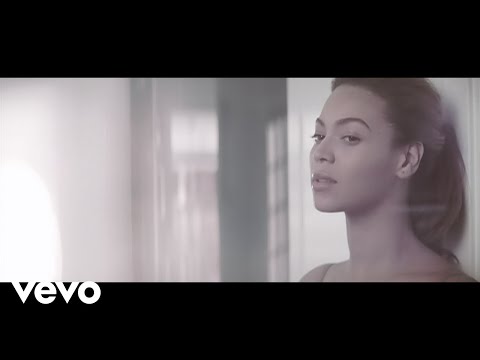
The accompanying music video was directed to emphasize the dramatic tension of the song's narrative, with Lambert's performance centering on the moment of confrontation that lies at the heart of the lyrical story. The video received strong rotation on CMT and GAC, contributing to its visibility beyond radio audiences and reinforcing the song's narrative power through visual storytelling. Lambert's performance in the video was noted by critics as particularly commanding.
Award recognition for "White Liar" was substantial. The song was nominated for the Grammy Award for Best Female Country Vocal Performance, and Lambert received recognition from the Country Music Association and Academy of Country Music in related categories for her work on Revolution as a whole. These nominations reflected both the quality of the recording and the critical consensus that had formed around Lambert as one of country music's most important voices of her generation.
The song's commercial success established a commercial template for Lambert's subsequent singles, which would continue to blend confrontational lyrical content with radio-friendly country production. "White Liar" demonstrated that an audience existed for female country artists willing to occupy aggressive narrative positions and that the genre's radio infrastructure was capable of supporting that content when it was delivered with sufficient musical craftsmanship. This demonstration was significant for the genre's subsequent development and contributed to a broadening of permissible emotional stances in mainstream country songwriting.
Long-term place in Lambert's catalog is secure. The song is regularly performed in her concert sets and serves as a representative example of the artistic identity she established with Revolution, a period of her career that critics and fans alike regard as the foundation of her lasting significance as a country recording artist.
02 Song Meaning
White Liar: Themes, Meaning, and Cultural Reception
"White Liar" is a song structured around a moment of mutual confrontation and revelation, in which the narrator exposes her partner's deception while simultaneously acknowledging her own. The central lyrical conceit, that the speaker is revealing the other person's lies while confessing her own, gives the song a moral complexity unusual in mainstream country narratives of romantic conflict. Rather than positioning the narrator as a wronged innocent, the song places her in a more ambiguous moral position where she participates in the same pattern of dishonesty that she is calling out.
The phrase "white liar" itself operates on multiple levels within the song's framework. A white lie is culturally understood as a harmless or socially motivated untruth, but the accumulation of such lies within the song's narrative has led to something more corrosive. The song suggests that the distinction between innocent and harmful deception is less clear than it might initially appear, and that relationships built on mutually convenient fictions are ultimately unstable.
Miranda Lambert's delivery of the song was widely noted for its combination of controlled anger and emotional precision. Her vocal performance conveyed the narrator's position as someone who has arrived at this confrontation through deliberate choice rather than impulsive reaction. This sense of calculated reckoning gave the song a psychological depth that distinguished it from simpler breakup or confrontation narratives within the country canon.
The song was received as an expression of a more contemporary female country perspective in which women are not simply reactive to men's behavior but are active agents in their own romantic narratives, including in the uncomfortable ways that such agency manifests. Lambert's willingness to implicate her narrator in the dishonesty she criticizes was noted by critics as a sign of songwriting maturity and contributed to the track's reputation as one of the more intelligent country singles of 2009.
Culturally, "White Liar" arrived at a moment when country music's female presence was increasingly contested at radio. Several commentators used the song's success as a data point in arguments about the viability of female-fronted country acts in an era when radio formats were beginning to skew heavily toward male artists. Lambert's breakthrough with this song and with Revolution as a whole was cited as evidence that the audience for complex female country voices was robust, even if the radio landscape was not always welcoming.
The song's legacy within Lambert's catalog reflects its role in establishing the artistic identity she would carry through her subsequent career. Its combination of emotional directness, narrative complexity, and musical craft became something of a template for her most celebrated work, making it a foundational text for understanding her development as one of country music's defining voices of the early twenty-first century.
→ More from the 2000s File
View all 2000s hits →



Keep digging