The 2010s File Feature
Love
Love by Lana Del Rey: A 2017 Pop Statement Built for the Streaming Age "Love" was released on February 18, 2017 , by Lana Del Rey as the lead single from her…
01 The Story
Love by Lana Del Rey: A 2017 Pop Statement Built for the Streaming Age
"Love" was released on February 18, 2017, by Lana Del Rey as the lead single from her fourth studio album Lust for Life, issued through Interscope Records and Polydor Records. The song was co-written by Del Rey and produced by Rick Nowels, one of her most frequent collaborators, who had contributed to much of the sound that defined her commercial and critical ascent since her breakthrough with Born to Die in 2012. The track was released simultaneously with a striking music video that positioned the song as a cinematic statement consistent with her established artistic identity.
By 2017, Lana Del Rey had become one of the most commercially successful and critically discussed pop artists of her generation. Her albums had generated substantial streaming numbers and significant critical attention, and she had cultivated a devoted fanbase that responded intensely to her specific aesthetic blend of melancholy, nostalgia, and cinematic grandeur. "Love" was positioned as a signal of both artistic continuity and a degree of emotional openness that some observers found new in her work.
The production of the track was characteristically lush and orchestrated, built on the layered strings, reverb-drenched guitars, and the slow, contemplative tempo that had become hallmarks of Del Rey's aesthetic. Nowels and Del Rey constructed an arrangement that gave the song the feel of a film score, with the instrumentation rising and falling around her vocal in ways designed to maximize emotional impact. The production was deliberately timeless in its sonic ambitions, avoiding the trend-following that characterized much mainstream pop of the period in favor of a sound that referenced classic pop production from the 1960s and 1970s.
The song entered the Billboard Hot 100 following its release, reflecting Del Rey's substantial streaming and airplay presence. It also charted in multiple international markets, where she had built particularly strong audiences in the United Kingdom and across continental Europe. The UK performance was strong, with the song achieving meaningful chart positions there consistent with her established commercial strength in that market. The international chart success reflected the genuinely global reach that Del Rey had developed, a reach unusual for an American pop artist whose work is not straightforwardly radio-friendly in the conventional sense.
Critical reception of "Love" was notably positive, with many reviewers identifying it as among her most emotionally generous and accessible recordings. Where earlier Del Rey singles had sometimes been accused of a cultivated emotional distance, "Love" was praised for a quality of directness and warmth that her most ardent supporters considered a significant development. The song's musical qualities, the soaring melody, the orchestral grandeur of the arrangement, and the clarity of its emotional content, were broadly recognized even by critics who had maintained reservations about her earlier work.
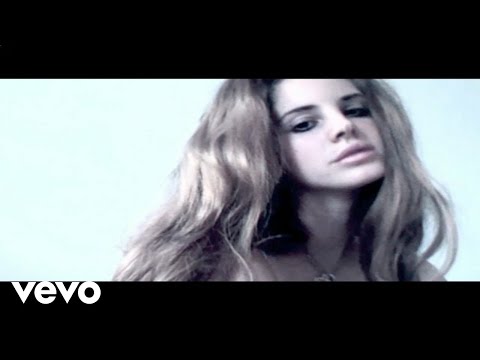
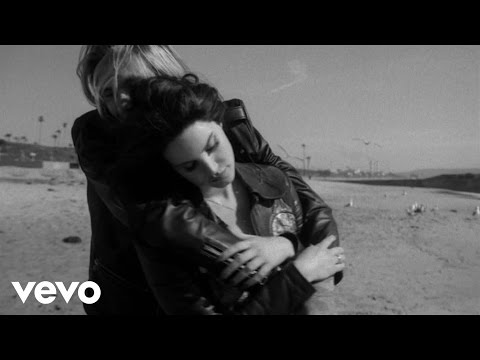
The music video, directed by Rich Lee, featured Del Rey performing against cosmic and terrestrial imagery including shots of young people gathered outdoors under a night sky, creating a visual language of generational solidarity and youthful aspiration that complemented the song's lyrical themes. The video was visually striking and consistent with the cinematic production values that Del Rey maintained across her promotional materials, reinforcing the sense that she regarded her artistic output as a unified aesthetic project rather than a collection of independent commercial products.
Lust for Life, the album that "Love" introduced, was released in July 2017 and debuted at number 2 on the Billboard 200, confirming Del Rey's position as a consistent commercial performer at the top level of the music industry. The album featured high-profile collaborations with artists including The Weeknd, A$AP Rocky, Stevie Nicks, and Sean Ono Lennon, and its arrival generated significant media and critical coverage. "Love" had successfully built anticipation for the project and delivered on the promise implied by its promotional positioning.
The song's streaming numbers continued to accumulate well beyond the initial release window, demonstrating the kind of long-tail streaming behavior that characterizes Del Rey's audience engagement. Unlike more commercially formulaic pop acts whose streaming activity declines sharply after the initial release period, Del Rey's listeners tend to return repeatedly to her catalog, and "Love" benefited from this pattern. Its place within her body of work has strengthened over time as it has been incorporated into playlists and listening sessions that treat her albums as complete artistic objects rather than collections of singles.
02 Song Meaning
The Meaning of Lana Del Rey's "Love": Youth, Beauty, and the Weight of Feeling
"Love" is, at its most direct level, an address to young people about the experience of feeling everything intensely and living under the pressure of beauty, desire, and the awareness that extraordinary moments are temporary. Lana Del Rey describes a generation that is conscious of its own youth and romanticism without being naive about the forces that surround it. The song holds youth and its attendant feelings at a slight distance, observing them with tenderness and a kind of aching recognition.
The word "love" in the song's title and refrain carries multiple simultaneous meanings. It functions as a direct address, as an exclamation of admiration, and as a description of the emotional state that defines the experiences the song chronicles. This ambiguity is not accidental but characteristic of Del Rey's most effective lyrical work, where single words or phrases open onto multiple registers of meaning simultaneously. The title's simplicity belies the complexity of the emotional territory it covers.
The generational dimension of the song is particularly prominent. Del Rey seems to be speaking from a slight distance from the youth she is addressing, observing it with the mix of nostalgia and recognition that comes from having passed through a particular phase of life rather than currently inhabiting it. This creates an interesting emotional position: the song is celebratory about youth and beauty and intense feeling, but it is celebratory in the mode of someone who understands that these things are temporary, which gives the celebration its particular bittersweet quality.
The cosmic imagery that runs through the song, references to stars, to vast spaces, to the scale of the universe, serves to amplify the intensity of the personal and romantic feelings being described. By placing individual human experience against a backdrop of cosmic scale, Del Rey does what many of the great Romantic poets did: she suggests that the most profound human feelings are not diminished by the scale of the universe but are in some sense equal to it, significant precisely because they are felt so completely by beings whose existence is brief and local.
There is also a quality of permission in the song's emotional address. Del Rey seems to be telling her young audience that it is acceptable to feel as intensely as they do, to take seriously the experiences of beauty and desire and longing that might seem, from the outside, to be merely youthful melodrama. Her career has been built partly on this kind of emotional validation, on taking seriously the feelings that popular culture sometimes dismisses as excessive or immature.
Rick Nowels's production is a crucial element of the song's meaning because the orchestral grandeur of the arrangement enacts rather than merely accompanies the lyrical content. The swelling strings and the expansive sonic landscape do not make the song's emotional claims larger; they demonstrate that the feelings being described deserve the scale they receive. The production and the lyrics arrive at the same conclusion through different means, which gives "Love" a formal coherence that Del Rey's best recordings consistently achieve.
The song's emotional openness, which many critics noted as something new in Del Rey's work, represents a meaningful shift in her artistic posture. Her earlier recordings were characterized by a certain emotional melancholy and a sense of loss or corruption at the heart of romantic experience. "Love" retains the melancholy but adds something more generous: a willingness to celebrate what is beautiful and intense even while acknowledging its transience. This combination of celebration and elegy is the song's most distinctive emotional achievement.
Within Del Rey's catalog, "Love" stands as a pivotal recording because it demonstrates her ability to be more emotionally available to her audience without sacrificing any of the artistic qualities that distinguish her work. The orchestral scale, the cinematic ambition, the nostalgic production aesthetic, all of the signature elements are present, but they are deployed in service of an emotional generosity that extends outward toward the listener rather than remaining enclosed within a private world of loss. It represents a genuine artistic development, and its commercial and critical success in 2017 confirmed that the development was recognized and valued by both audiences and observers.
→ More from Lana Del Rey
View all Lana Del Rey hits →


→ More from the 2010s File
View all 2010s hits →



Keep digging