The 2010s File Feature
Young And Beautiful
The Creation and Chart Journey of "Young and Beautiful" by Lana Del Rey Lana Del Rey released "Young and Beautiful" in April 2013 as part of the soundtrack f…
01 The Story
The Creation and Chart Journey of "Young and Beautiful" by Lana Del Rey
Lana Del Rey released "Young and Beautiful" in April 2013 as part of the soundtrack for Baz Luhrmann's film adaptation of F. Scott Fitzgerald's The Great Gatsby. The song was written by Lana Del Rey and produced by her longtime collaborator Rick Nowels, a songwriter and producer who had worked with artists including Stevie Nicks and Celine Dion. The collaboration with Luhrmann's film represented a significant high-profile opportunity for Del Rey, whose career had risen sharply following the viral success of "Video Games" in 2011 and the release of her major-label debut album Born to Die in 2012.
Luhrmann approached Del Rey specifically because her artistic sensibility, which drew heavily on mid-20th-century American nostalgia, melodrama, and cinematic atmosphere, aligned closely with the themes and aesthetic of his Gatsby adaptation. The film's setting in the excess and yearning of 1920s New York translated naturally into Del Rey's characteristic mode of romantic longing and faded glamour. The result was a song that felt organic to both its creator's catalog and the film's thematic concerns.
"Young and Beautiful" was constructed around a spare arrangement built on piano and Del Rey's vocals, with orchestral strings gradually building through the track. The production was deliberately restrained in its opening minutes, allowing Del Rey's voice to carry the emotional weight of the song, before expanding into a more full-bodied arrangement that suited the film's epic visual scale. Nowels' production sensibility was ideally suited to this kind of slow-building emotional architecture, and the partnership between his craft and Del Rey's atmospheric vocal approach produced a track of considerable emotional impact.
The song was included on the The Great Gatsby: Music From Baz Luhrmann's Film soundtrack album, released in April 2013 alongside the film's premiere at the Cannes Film Festival. The film itself was released in the United States on May 10, 2013, generating enormous publicity that extended to all elements of its soundtrack. The Gatsby soundtrack was notable for its eclectic mix of contemporary artists creating original material alongside period-appropriate music, and Del Rey's contribution was one of the most discussed tracks on the release.
On the Billboard Hot 100, "Young and Beautiful" debuted at number 82 on the chart dated May 11, 2013. The song's trajectory on the chart was initially slow before accelerating dramatically: it rose to 95 the following week, which typically would indicate chart exit, but then surged to 59 and then reached its peak of number 22 during the week of June 1, 2013. It spent 21 weeks on the Hot 100 in total. This unusual chart trajectory reflected the song's increasing radio airplay as the film gained broader theatrical release and as listeners seeking out the soundtrack discovered the track.
Internationally, "Young and Beautiful" was an even more substantial success than in the United States. In the United Kingdom, the song reached number two on the UK Singles Chart, a remarkable result for a soundtrack contribution from an American artist. It reached the top five in Australia, Ireland, and New Zealand, and charted strongly across continental Europe including France, Germany, the Netherlands, and Belgium. In several countries, the song became one of the biggest hits of 2013, far outperforming its domestic American chart position.
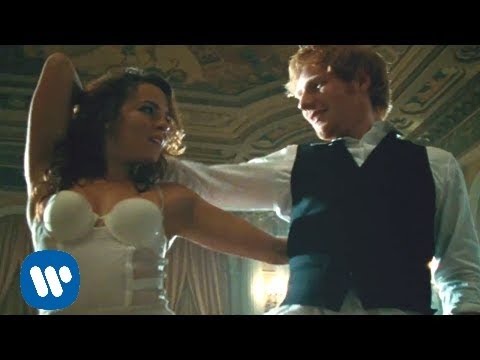
The music video, which featured Del Rey in period-appropriate styling with footage from the Luhrmann film, reinforced the connection between the song and its cinematic context. The visual treatment placed Del Rey within the film's aesthetic framework while also presenting her as the primary artistic identity behind the music.
Critical reception was strongly positive. Reviewers praised the song's haunting quality and its emotional coherence with the source material's themes of obsessive love and the fear of transience. Several noted it as one of the finest original songs to emerge from any major film soundtrack in recent memory. The song received Golden Globe and Academy Award consideration, though it did not ultimately receive nominations in those categories.
The song's success internationally helped further establish Lana Del Rey's profile in markets where her previous work had already found strong audiences. The association with a major Hollywood production broadened her exposure beyond the indie-adjacent audience that had first discovered her and positioned "Young and Beautiful" as one of the defining tracks of her early career. Its emotional resonance and distinctive production ensured it remained a frequently referenced point in discussions of Del Rey's artistry for years after its release.
02 Song Meaning
Themes and Meaning in "Young and Beautiful" by Lana Del Rey
"Young and Beautiful" is organized around a single, aching question: whether love will endure beyond the physical attributes of youth and beauty that initially inspired it. The narrator, addressing a beloved directly, asks whether the same depth of feeling will remain when youth has passed and the physical characteristics that once made her desirable have faded. This is not a question about the present but about the future, a meditation on the fragility and contingency of romantic devotion when it is rooted, even in part, in appearance.
The song's connection to F. Scott Fitzgerald's The Great Gatsby is central to its meaning. The narrative of Gatsby himself is one of obsessive, idealized love rooted in the fixed image of a person as they were at a specific moment, and the inability to accept that time changes both people and circumstances. Lana Del Rey's narrator inhabits a version of this anxiety from the inside: she is Daisy's position reimagined, aware that she has been made an object of idealized devotion and wondering whether that devotion is durable or whether it will dissolve when the ideal inevitably gives way to ordinary human aging.
The recurring structural question in the song generates its emotional power through repetition. Each time the question returns, the weight of it accumulates, transforming what might initially seem like conventional romantic insecurity into a deeper meditation on mortality, impermanence, and the existential challenge of loving someone whose attraction to you may be grounded in qualities that time will inevitably take away. This depth of concern elevates the song above generic expressions of romantic uncertainty.
Lana Del Rey's artistic persona throughout her catalog has consistently engaged with themes of idealized, doomed, and unequal love. "Young and Beautiful" fits naturally within this thematic framework, but achieves a particular resonance because of its formal elegance. The song does not tell a story with a beginning, middle, and end; instead, it sustains a single emotional note with extraordinary intensity across its entire duration. The restraint of this approach, refusing narrative resolution and leaving the central question unanswered, mirrors the emotional reality it describes: there is no answer to whether love will last.
The production choices reinforced these themes with considerable skill. The spare piano opening, building gradually into an orchestral arrangement, created a sense of growing emotional weight that suited the song's movement from quiet personal anxiety toward something approaching existential dread. The strings, when they arrived, gave the song a cinematic grandeur that connected it to the world of the Luhrmann film while also positioning the narrator's personal anxiety within a larger, more universal frame.
Critical reception of "Young and Beautiful" frequently noted its timeless quality. Unlike many pop songs that feel inseparable from their moment of production, this track was heard by many listeners as belonging to a much longer tradition of songs about the fear of being unloved. Its musical and lyrical antecedents reached back through decades of popular balladry, giving it a quality that made it feel simultaneously contemporary and classic.
The song also resonated with listeners outside its original film context in ways that spoke to its thematic universality. While its connection to The Great Gatsby gave it a specific narrative frame, the central question it posed was broadly applicable to anyone who had experienced the vulnerability of being loved and feared the conditions that love might carry. The anxiety of conditional affection, the worry that one is valued for what one is now rather than who one is fundamentally, gave "Young and Beautiful" an emotional truth that transcended its origins as a commissioned film soundtrack piece and established it as one of the signature songs of Del Rey's career.
→ More from the 2010s File
View all 2010s hits →



Keep digging