The 2010s File Feature
Take One
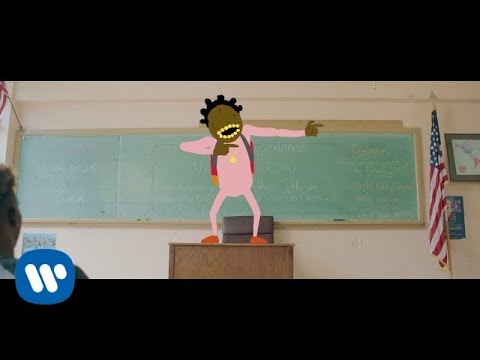
Take One — Kodak Black: Chart History and Reception Kodak Black released "Take One" in 2018 as part of a broader creative period in which the Pompano Beach, …
01 The Story
Take One — Kodak Black: Chart History and Reception
Kodak Black released "Take One" in 2018 as part of a broader creative period in which the Pompano Beach, Florida rapper was simultaneously navigating legal troubles and consolidating his commercial standing. The track appeared during a stretch when Kodak was one of the most talked-about voices in Southern hip-hop, a figure whose raw vulnerability in the recording booth consistently translated into streaming numbers. "Take One" arrived as a loose single release rather than the centerpiece of a formal album campaign, which became increasingly common practice for Kodak as he favored a high-volume approach to content delivery.
The song emerged from Kodak's established recording process, which he had refined through mixtape output earlier in the decade. Working with producers aligned with the trap sound that defined Broward County rap, Kodak leaned into the stripped-back, confessional style that made records like "Tunnel Vision" break through to mainstream audiences. "Take One" carried that same introspective weight, though it operated on a somewhat smaller commercial scale than his peak crossover material.
Kodak Black had scored a number-one single on the Billboard Hot 100 in 2017 with "Tunnel Vision," which reached the top spot as the rapper's legal situation became public. That context followed him into the 2018 cycle, and releases from this period carried the emotional strain of an artist aware his freedom was uncertain. "Take One" fit into that larger narrative, carrying a reflective quality that his core fanbase responded to strongly even if mainstream radio did not adopt the record at the same rate as his crossover output.
Streaming performance carried the song's commercial story. By 2018, Spotify and Apple Music had become the primary arbiters of hip-hop success, and Kodak's loyal base consistently delivered strong first-week streaming numbers for his releases. The record accumulated millions of plays across platforms in the weeks following its release, contributing to Kodak's overall presence on the streaming-era charts. His ability to drop material and immediately register on streaming platforms without traditional promotional machinery was itself a demonstration of how the music industry had shifted by the mid-to-late 2010s.
The song was released through Atlantic Records and Dying Breed Records, the label infrastructure that had taken Kodak from regional mixtape notoriety to national recognition. Atlantic's distribution power ensured that the track reached digital storefronts globally on release day, amplifying what his organic fanbase would have otherwise driven on its own. The label relationship also meant that promotional pushes, however modest, were coordinated with Kodak's broader release schedule during the period.
Critical reception positioned the track as consistent with Kodak's established mode rather than a departure or reinvention. Music journalists and bloggers covering Southern rap noted the familiar production palette and Kodak's unaffected vocal delivery as strengths. The song did not generate the kind of debate or think-piece coverage that surrounded his most controversial moments, but it landed as solid material from an artist whose talent had never been seriously questioned even by critics who complicated their assessments with concerns about his public conduct.
The cultural context of Kodak Black in 2018 was inseparable from his legal entanglements, which shaped how media covered everything he released. Nevertheless, his audience drew a consistent line between the music and the controversy, continuing to engage with his output at high levels. "Take One" benefited from that loyalty and from the general appetite for introspective trap material that characterized the streaming era.
Kodak would be sentenced to federal prison in 2019, making the releases from 2018 feel in retrospect like documents of a transitional and emotionally fraught period. That retrospective weight gave tracks from the year an additional layer of meaning for fans who tracked the arc of his career. "Take One," while not his biggest commercial moment, contributed to the body of work that his supporters cited when arguing for his significance as a storyteller within hip-hop.
The song's production featured the minimalist trap architecture that Southern producers had refined over the previous five years, with hi-hat patterns and bass programming that gave Kodak's voice maximum space. This approach suited his delivery style, which favored texture and emotional shading over technical velocity. The lo-fi emotional quality of "Take One" connected it to a lineage of Southern rap confessionalism that ran from early UGK through the melodic trap movement Kodak helped shape.
By 2018, Kodak Black had accumulated well over a billion streams across his catalog, establishing him as one of the most streamed artists in contemporary hip-hop. "Take One" added to that total and reinforced the consistency of his audience relationship even during a period of personal turbulence. The record stands as part of a concentrated burst of activity that defined this particular chapter of his career before his incarceration temporarily interrupted his output.
In the longer view of Kodak Black's discography, "Take One" occupies a place among the introspective catalog cuts that appeal most strongly to his dedicated following. It demonstrates the qualities that made him a singular presence in the mid-2010s hip-hop landscape: an unguarded emotional register, a distinctive cadence, and a willingness to process difficulty through music rather than filter it away.
02 Song Meaning
Take One — Kodak Black: Themes and Meaning
"Take One" operates in the emotional register that Kodak Black had made his signature by the latter half of the 2010s: an unfiltered, stream-of-consciousness approach to processing personal pain, loyalty, loss, and survival. The track belongs to a tradition of Southern confessional rap in which the performance of vulnerability is not weakness but a form of witness testimony, an insistence on acknowledging suffering rather than performing imperviousness to it.
The song's lyrical terrain covers the emotional costs of life in environments defined by hardship and the weight that success brings when it arrives without warning. Kodak consistently returns to themes of personal responsibility and guilt, and "Take One" continues that pattern. He describes relationships strained by circumstance, the difficulty of trusting people as one's circumstances change, and the psychological pressure of watching peers fall while one continues forward. These are not abstract concerns in his music but felt observations drawn from the specific reality of growing up in Pompano Beach and navigating the violence and instability that characterized that environment.
Kodak's lyrical approach on the song reflects the melodic trap mode he pioneered, in which sung passages carry emotional content that purely rapped verses might not access with the same immediacy. The blending of singing and rapping allows him to shift registers mid-song, moving between cool-voiced delivery and more urgent, emotionally strained moments. This technical choice reinforces the thematic content: the song is about internal conflict, and the musical form mirrors that division.
The meaning of "Take One" also resonates with Kodak's broader catalog-level project of self-documentation. He has consistently treated his recordings as journals, capturing where he is emotionally and circumstantially at the moment of creation. In this sense, the song is less a finished artistic statement than a snapshot, an artifact of a specific emotional state that his audience could hold alongside knowledge of his biography to reconstruct the full picture. The title itself suggests something provisional, a first attempt at articulating something that might resist easy expression.
The track also engages implicitly with themes of mortality and legacy. Kodak had lost friends and associates to violence by the time this material was recorded, and the awareness of how quickly circumstances could change shapes the emotional undertone of the song. There is a gratitude in his reflective passages that coexists with anxiety, a recognition that continued survival is not guaranteed and that the present moment carries unusual weight as a result. This combination of gratitude and dread is a defining feature of much Southern trap confessionalism, and Kodak deploys it with characteristic directness.
In the context of his 2018 release period, the song reads as an emotional document from an artist who understood his circumstances were precarious. The combination of legal pressure, commercial success, and personal loss that defined this phase of his life gave every release a heightened stakes quality. "Take One" does not position itself as an artistic manifesto but as an honest transmission from someone working through difficulty in real time, and that sincerity is precisely what his audience valued most about his work during this period.
The song's emotional register connects it to a broader tradition of hip-hop vulnerability that includes artists ranging from Lil Wayne in his most confessional moments to the emo-rap movement that was crystallizing around the same period with artists like Juice WRLD and XXXTentacion. Kodak was a forerunner of the melodic, emotionally transparent approach that would define a significant wing of hip-hop in the late 2010s, and "Take One" is a useful example of how that mode sounded before it became the dominant commercial style.
For listeners invested in Kodak Black's artistic arc, the song represents one of the clearest distillations of his thematic concerns: survival, loyalty, loss, and the emotional labor of processing a life defined by extremes. It may not be the track that casual listeners encounter first, but within his catalog it functions as a reliable window into the sensibility that made him one of the most compelling storytellers in his generation of Southern hip-hop.
→ More from Kodak Black
View all Kodak Black hits →
→ More from the 2010s File
View all 2010s hits →


Keep digging