The 2010s File Feature
More Girls Like You
More Girls Like You — Kip Moore (2017) Kip Moore had spent the first half of the 2010s establishing himself as one of country music's more credible rock-lean…
01 The Story
More Girls Like You — Kip Moore (2017)
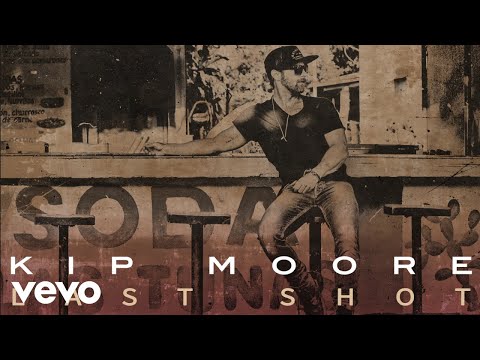
Kip Moore had spent the first half of the 2010s establishing himself as one of country music's more credible rock-leaning voices, a singer-songwriter from Tifton, Georgia, who brought genuine grit and emotional weight to a format that sometimes rewarded surface polish over substance. His debut single "Somethin' 'Bout a Truck" had reached number one on the Billboard Hot Country Songs chart in 2012, and follow-up singles demonstrated his capacity for both commercial success and artistic integrity. By the time he began developing material for what would become his third studio album, Moore had a clearer sense of where he wanted to go artistically: toward something more personal, more acoustic, and more honest about the domestic values that had come to matter to him as he aged into his thirties.
"More Girls Like You" emerged from that reflective period. The song was written by Moore alongside co-writers, and its lyrical focus on wanting to raise a daughter with the values embodied by a specific woman represented a significant departure from the male-gaze romanticism that had fueled much of his earlier commercial work. Where "Somethin' 'Bout a Truck" dealt in the pleasurable clichés of summer country, "More Girls Like You" was a more genuinely adult statement about partnership, admiration, and what the narrator hoped to pass on to a future generation.
The song was released as a single in 2017 from Moore's third studio album "Slowheart," which was released on September 8, 2017, through MCA Nashville. "Slowheart" was an album that attracted considerable critical attention for its guitar-forward production, its thematic cohesion, and its willingness to prioritize emotional authenticity over radio-readiness. The album as a whole represented a departure from the bro-country aesthetic that had dominated Nashville's mainstream output during the mid-2010s, and "More Girls Like You" captured that departure particularly well, offering something warm and contemplative rather than loud and celebratory.
The single performed on the Billboard Hot Country Songs chart and received meaningful airplay on country radio stations, though it did not replicate the commercial peak of Moore's earlier hits. This outcome was not unexpected: the song's thematic material and production approach were genuinely countercultural relative to the chart-dominant sounds of 2017 country radio, which still favored uptempo tracks with party-oriented themes. Moore had made clear in interviews during this period that he was more interested in making the album he needed to make than in engineering chart outcomes, and the reception of "More Girls Like You" reflected that priority.
The production on the track was understated by the standards of mainstream country in 2017. Acoustic guitar was prominently featured, and the arrangement avoided the wall-of-sound approach that had characterized much of the format's commercial production during the bro-country era. Producer Whispering Bill Anderson and Moore himself shaped a sound that felt lived-in rather than manufactured, creating space for the lyrical content to carry the emotional weight of the song rather than relying on production bombast.
Moore's vocal performance on the track drew on the weathered quality his voice had developed over years of intensive touring. He was known as one of country music's most committed live performers, regularly playing 150 or more dates per year, and that road experience had given his voice a texture that communicated emotional authenticity without requiring any artificial aging effects. On a song about maturity and the values one hopes to perpetuate, that vocal quality was an enormous asset.
The "Slowheart" album, of which "More Girls Like You" was a prominent component, debuted at number two on the Billboard Top Country Albums chart, confirming that Moore retained a substantial and loyal audience even as he moved toward a more artistically demanding approach. Country music critics noted the album's quality with some unanimity, pointing to it as evidence of Moore's growth as a songwriter and his seriousness as an artist. "More Girls Like You" was frequently cited as one of the album's standout tracks.
The song also resonated in contexts beyond traditional radio promotion. Its themes of admiration for a woman's character and the desire to honor that character by raising a daughter with similar values found audiences through digital streaming and social sharing, particularly among listeners who appreciated country music for its storytelling capacity rather than its party soundtrack function. That audience was smaller than the mainstream country radio audience but deeply engaged, and Moore's connection to them was one of the foundations of his commercial sustainability throughout the mid-2010s and beyond.
02 Song Meaning
Admiration, Legacy, and the Future in "More Girls Like You"
"More Girls Like You" operates in a thematic space that is relatively uncommon in mainstream country: instead of pursuing romantic desire or processing romantic loss, it expresses admiration for a woman's character as the basis for a wish about the future. The narrator describes qualities in his partner that he values so deeply he hopes to one day raise a daughter who shares them. This framing transforms what might otherwise be a conventional love song into something closer to a meditation on values, legacy, and what it means to admire another person completely.
The song's emotional register is warm rather than passionate, appreciative rather than urgent. This distinguishes it from the majority of country love songs, which tend to emphasize romantic pursuit, heartbreak, or celebration. "More Girls Like You" is none of those things: it is a song about settled, mature affection, about loving someone so specifically and so thoroughly that you want their particular combination of qualities to continue into the next generation. That is a genuinely adult sentiment, and the fact that Moore committed to it fully rather than hedging toward something more conventionally romantic gives the song its distinctive emotional character.
The reference to raising a daughter gives the lyric a temporal dimension that most romantic songs lack. The narrator is not describing the present only but projecting forward into a future family, imagining a life built with this person and the values they might collectively pass on. This kind of forward-looking contentment, rooted in the present but oriented toward the future, is the emotional territory of a person who has moved beyond the anxious urgency of early romantic experience into something more grounded and more grateful.
For Kip Moore's artistic catalog, the song marked a meaningful evolution in the subjects he chose to explore. His earlier commercial successes had traded in the pleasures and frustrations of youthful romance, which is the dominant currency of country radio. "More Girls Like You" signaled a willingness to address the emotional life of a person who had grown past that phase, whose concerns had shifted from getting the girl to appreciating the woman and thinking about what kind of life they might build together. That shift was not a commercial calculation but a genuine artistic development, and listeners who had followed Moore's career recognized it as such.
The production's acoustic warmth supports the lyrical content by creating a sonic environment that feels domestic and unhurried rather than charged and spectacular. The song is not trying to excite or impress; it is trying to be honest about something quiet and important. That combination of thematic substance and sonic restraint placed "More Girls Like You" in a tradition of country songwriting that values craft and emotional truth over commercial formula, a tradition associated with artists like Guy Clark, Townes Van Zandt, and John Prine rather than the chart-dominant mainstream of Moore's era.
The song endures in Moore's catalog as evidence of his range as a songwriter and his seriousness as an artist. It demonstrates that he was capable of more than the rowdy anthems that first brought him attention, and that his creative development had moved consistently toward greater emotional depth and thematic complexity. For listeners who encountered it during the "Slowheart" album cycle, it remains one of the most personal and carefully realized songs in his body of work.
→ More from Kip Moore
View all Kip Moore hits →



→ More from the 2010s File
View all 2010s hits →



Keep digging