The 2010s File Feature
New Slaves
"New Slaves" — Kanye West's Incendiary 2013 Statement The World Kanye Was Raging Against Picture the summer of 2013, when Kanye West had already spent nearly…
01 The Story
"New Slaves" — Kanye West's Incendiary 2013 Statement
The World Kanye Was Raging Against
Picture the summer of 2013, when Kanye West had already spent nearly a decade redefining what a rap superstar could look and sound like. He had shepherded the maximalist orchestration of My Beautiful Dark Twisted Fantasy in 2010, collaborated obsessively with Jay-Z on Watch the Throne, and was now preparing to unveil Yeezus, an album so deliberately abrasive it functioned almost as a provocation. The music industry was deep into the streaming transition, luxury fashion was ascendant as a cultural language for hip-hop artists, and discussions of race, consumerism, and corporate power were sharpening in the public square. Into that atmosphere, Kanye dropped "New Slaves."
A Projection Heard Around the World
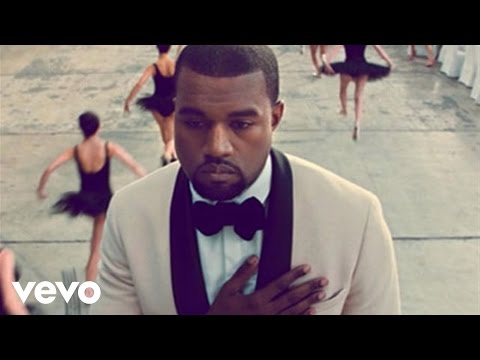
The rollout alone was theatrical on a scale rarely attempted. On the night of May 18, 2013, Kanye West arranged for the track to be projected simultaneously onto the facades of 66 buildings across cities worldwide, from New York and Los Angeles to London, Paris, and Sydney. There were no traditional press leaks, no streaming singles pushed through radio gatekeepers. Instead, crowds gathered in the streets and watched footage of West performing the song projected against concrete and brick. It was a deliberate choice to bypass the conventional industry machinery, which was itself part of the song's argument. The global simultaneous projection premiere turned "New Slaves" into a genuine event before most listeners had ever heard the track in its studio form.
The Sound of Controlled Fury
Produced by Kanye West, Frank Dukes, and Che Pope, "New Slaves" opens with a stark, minimal arrangement that gradually accumulates pressure. The production is angular and confrontational, avoiding the lush orchestration of earlier Kanye records in favor of something rawer and more industrial in texture. The first half of the track rides a tense, looping synthesizer figure before the song pivots dramatically into its closing section, where a soulful interpolation of Hungarian composer György Ligeti's "Atmosphères" transforms the track's emotional register entirely. That shift, from rage to something more mournful and expansive, is one of the most striking structural moves in West's discography. The track was released as a promotional single from Yeezus and debuted on the Billboard Hot 100 at number 56 on July 6, 2013, spending two weeks on the chart.
Reception and the Friction It Generated
Critical reception was sharp and divided in ways that suited the track perfectly. Many critics praised "New Slaves" as a genuinely confrontational piece of art, one willing to risk commercial appeal in order to make a pointed argument about race, consumerism, and the mechanisms through which Black wealth gets redirected back into the hands of corporations. Others found the rhetoric uneven or the persona overwrought. What no one could reasonably argue was that it sounded like anything else on the radio in the summer of 2013. The song's themes of corporate exploitation and luxury consumption as a new form of servitude generated substantial cultural commentary, with writers in major publications spending considerable effort parsing West's argument and its contradictions, given his own deep involvement with luxury fashion brands.
Legacy Within the Yeezus Era
Within the broader context of Yeezus, which debuted at number one on the Billboard 200 and was widely regarded as one of the most polarizing major-label releases in years, "New Slaves" occupies a central position. It is the track that most explicitly states the record's thesis. West had always trafficked in provocation and self-mythology, but Yeezus represented a harder, more stripped-down version of that impulse, and "New Slaves" is its sharpest edge. The song drew comparisons to Public Enemy in its willingness to court controversy in service of a larger argument, a comparison West himself clearly welcomed. Its influence on subsequent rap music, particularly in the wave of politically conscious hip-hop that gathered force in the mid-2010s, is traceable even when it goes uncited. The projection stunt alone seeded a template for unconventional album rollouts that artists would imitate for years. Put on the track, turn it up, and listen for where the fury meets the Ligeti and transforms into something stranger and more lasting than anger alone.
"New Slaves" — Kanye West's singular moment on the 2010s charts.
02 Song Meaning
"New Slaves" — Consumerism, Race, and the Architecture of Modern Bondage
The Central Argument
At its core, "New Slaves" advances a critique that is as uncomfortable as it is precise: that systems of racial oppression have not disappeared but rather mutated, trading explicit legal subjugation for economic entrapment. The track's narrator moves through a specific landscape of luxury brands, prison-industrial complex economics, and corporate media ownership, arguing that the aspiration toward premium consumer goods and status symbols functions as a distraction and a mechanism of control. West frames this not abstractly but personally, positioning himself as both a product of that system and someone with enough cultural standing to name it. The critique of luxury consumption as a contemporary form of servitude is the track's primary intellectual offering.
Corporate Power and the Prison Pipeline
One of the track's most direct sections addresses the relationship between the private prison system and corporate profit, pointing at specific industries that benefit financially from incarcerated labor. This was not a new observation in political discourse, but West's decision to name corporations by name and to situate that critique within a chart-oriented rap track was genuinely unusual. The song's willingness to make explicit economic arguments about who profits from mass incarceration distinguished it from more generalized protest music. The anger in that section feels specific and legible, which is part of why the track generated so much commentary beyond the usual music press.
The Contradiction at the Song's Heart
What made "New Slaves" genuinely interesting as a cultural object was its self-awareness about contradiction. The person delivering this critique was simultaneously one of the most visible luxury fashion collaborators in hip-hop, a man whose public persona was inseparable from the very brands his lyrics attacked. West does not try to resolve this tension cleanly. The narrator is implicated in the systems being described, which gives the track a psychic complexity that pure agitprop would lack. The refusal to claim a position of clean moral authority is what separates "New Slaves" from simpler protest records.
The Emotional Pivot and the Ligeti Interpolation
The structural genius of the track, from a meaning perspective, is what happens in its final minutes. After the confrontational rap verses, the song opens up into a slow, almost devotional passage built around an interpolation of György Ligeti's orchestral work. The shift in register from fury to grief gives the track an emotional dimension that pure argument could never reach. It suggests that beneath the rage is something sadder: a mourning for what has been lost and for the people who never found language for their own entrapment. The combination of intellectual argument and emotional catharsis is what kept "New Slaves" resonating long after the initial controversy had cooled.
Why It Still Lands
More than a decade on, the questions "New Slaves" raises about race, consumption, and corporate power have not become less relevant. If anything, the concentration of corporate media ownership and the expansion of the private prison industry that the track addresses have continued. The song functions as a document of a particular moment when an artist at the peak of his commercial power chose to spend that capital on discomfort rather than comfort. The track's lasting resonance lies in that choice, and in the proof that a major pop release could still carry genuine intellectual and political weight in the streaming era.
→ More from Kanye West
View all Kanye West hits →
→ More from the 2010s File
View all 2010s hits →


Keep digging