The 2010s File Feature
Monster
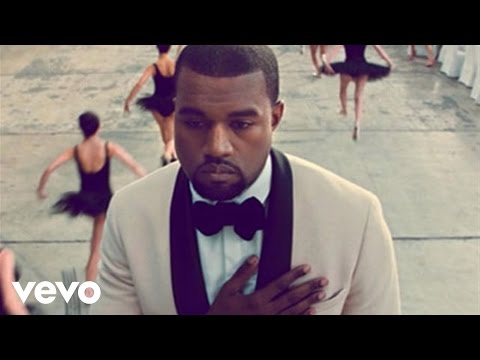
"Monster" — Kanye West Featuring Jay-Z, Rick Ross, Bon Iver Rick Ross, at the peak of his own commercial and credibility surge; Bon Iver, the indie folk act …
01 The Story
"Monster" — Kanye West Featuring Jay-Z, Rick Ross, Bon Iver & Nicki Minaj
The Album That Changed Everything, and the Track That Proved It
November 2010. Kanye West had spent the preceding year rebuilding in public, processing the fallout from the Taylor Swift incident at the MTV VMAs through what would become My Beautiful Dark Twisted Fantasy, an album so widely praised on its release that it immediately entered conversations about the greatest rap albums of all time. Into this moment of critical redemption came Monster, one of the album's most audacious tracks, assembled from guest verses representing several distinct corners of the rap universe and stitched together by production that sounded like nothing else on radio in 2010.
The list of featured artists alone was enough to signal that this was not going to be a conventional hip-hop collaboration: Jay-Z, still the reigning elder statesman of the genre; Rick Ross, at the peak of his own commercial and credibility surge; Bon Iver, the indie folk act fronted by Justin Vernon, whose presence on a Kanye track represented exactly the kind of genre boundary violation that made the album so disorienting and exciting; and Nicki Minaj, who was at a decisive moment in her own career trajectory.
Kanye West and Rick Rubin's Production
Produced by Kanye West, with additional production credited to multiple collaborators across the My Beautiful Dark Twisted Fantasy sessions, Monster carries a sonic density that rewards repeated listening. The sampling foundation, built around a filtered, slowed-down vocal fragment, creates a dreamlike, slightly ominous atmosphere over which the verses land with unusual force. The sonic space is dark, the bass is physical, and the tempo is deliberate enough to let each lyrical moment register before the next one arrives.
The title concept runs through the entire track's aesthetic: this is music that presents itself as monstrous, as outside the normal rules of commercial behavior, as too large and too strange to be contained by genre convention. The production choices enforce this self-image: the odd samples, the unconventional vocal contributions from Bon Iver's Justin Vernon processed into something half-human, the sheer ambition of the multi-artist construction all contribute to a track that sounds like it is trying to be, and largely succeeds at being, genuinely singular.
The Chart Trajectory
Monster debuted on the Billboard Hot 100 on November 6, 2010 at number 79. The following week it made one of the chart's more dramatic single-week jumps, leaping to number 18 on November 13, 2010, which proved to be its peak position. Over the following weeks it descended gradually, spending 10 weeks total on the chart. The peak of number 18 was a strong performance for a track that was dense, lengthy, and commercially uncompromising in ways that mainstream singles rarely are.
The chart context of late 2010 was dominated by the emergence of artists and sounds that would define the following decade, with streaming beginning to exert real pressure on the sales-based metrics that had previously driven chart positions. Monster's performance in this environment demonstrated that Kanye West could command real commercial attention even with material that made no obvious concessions to mainstream accessibility.
Nicki Minaj's Defining Moment
The track is arguably most discussed today in relation to Nicki Minaj's verse, which has become one of the most analyzed and celebrated guest appearances in recent hip-hop history. Minaj delivered a performance that many critics considered the best verse on the track, distinguished by a rapid-fire technical facility, an unusual range of vocal characters and registers within a single verse, and a lyrical confidence that suggested she was fully aware of the opportunity the platform provided. The verse functioned as a declaration of arrival, and the music industry largely received it as such.
For Minaj, Monster was a critical inflection point, the moment where she moved from promising newcomer to peer of the established figures surrounding her. The fact that she managed this on a track headlined by Jay-Z and Kanye West, two of the most dominant figures in hip-hop history, made the achievement all the more significant.
The Album and Its Place in Hip-Hop History
My Beautiful Dark Twisted Fantasy has continued to grow in critical estimation since its release, now frequently cited among the greatest albums of its decade. Monster as a track captures several of that album's central qualities: the willingness to collaborate across unexpected boundaries, the production ambition that treated each song as its own contained world, and the sheer density of lyrical and sonic information that rewarded close attention. It remains one of the essential documents of an artist at a specific, defining peak of creative ambition.
Play it loud. The production demands it.
"Monster" — Kanye West Featuring Jay-Z, Rick Ross, Bon Iver & Nicki Minaj's singular moment on the 2010s charts.
02 Song Meaning
"Monster" — The Shadow Self and the Theater of Excess
The Central Conceit
Monster operates on a central conceit that runs through the entire album it comes from: the idea that the public perception of a powerful, controversial figure and the figure's own interior experience are radically different, and that the gap between them is where the interesting psychological and artistic territory lies. The monster of the title is a persona embraced with full self-awareness: the artists on this track are claiming the monstrous identity that culture has assigned them, inverting the intended criticism into a statement of power.
This is a familiar rhetorical move in hip-hop, where artists have long reclaimed derogatory labels and hostile images as marks of pride. But Monster is unusual in the degree of self-examination it brings to this reclamation. The verses are not simply defiant; they are psychologically intricate, exploring what it feels like to occupy a position of extreme public visibility while simultaneously experiencing private doubt, desire, and vulnerability.
Kanye West's Artistic Redemption Arc
My Beautiful Dark Twisted Fantasy, the album that houses this track, was constructed in the context of Kanye West's public fall from grace after the Taylor Swift incident at the 2009 MTV VMAs. The album functions as an extended meditation on fame, ego, self-destruction, and the cost of genius. Monster is the track where this meditation takes its most extreme and confrontational form, with each featured artist contributing their own version of the monstrous self to the collective portrait.
The construction of the track as a collective statement rather than a solo performance is itself meaningful: the monster is not one person but a type, a social and cultural position occupied by anyone who achieves sufficient power and visibility to become threatening to conventional norms. By assembling Jay-Z, Rick Ross, Nicki Minaj, and even Bon Iver's Justin Vernon around this theme, Kanye West made a point about the breadth of the category.
Nicki Minaj's Psychological Complexity
Nicki Minaj's verse deserves particular attention for its approach to the monster theme. Rather than presenting a single unified persona, her performance moves between multiple voices, characters, and registers within a single extended passage. This rapid persona-shifting is itself a kind of monstrous quality: the inability or unwillingness to be contained within a single identity, the multiplication of selves that exceeds normal human coherence.
The verse also contains a significant amount of lyrical content about competition, dominance, and the specific challenges of being a female artist in a male-dominated industry. Her claim to monstrousness has a gendered dimension that the other verses lack; she is monstrous partly by virtue of succeeding in a space that was not designed to accommodate her success. That dimension gives her performance a political edge that the other contributions, however accomplished, do not fully share.
The Cultural Moment and the Question of Darkness
Late 2010 was a particular cultural moment for the embrace of darkness and complexity in hip-hop. The genre had been moving since at least the mid-2000s toward a more psychologically nuanced engagement with the costs and contradictions of the success it celebrated. Kanye West had been central to this shift since his debut album, and Monster represents the culmination of that trajectory in his own work.
The track also intersects with a broader cultural conversation about the performance of identity and the construction of persona in the age of social media and 24-hour celebrity coverage. The monster self is partly a response to the conditions of extreme public visibility, a way of claiming agency over an image that would otherwise be constructed entirely by others. Whether this constitutes genuine self-knowledge or elaborate self-mythology is a question the track poses without definitively answering, which is part of what makes it so enduringly interesting to analyze.
→ More from Kanye West Featuring Jay-Z, Rick Ross, Bon Iver & Nicki Minaj
View all Kanye West Featuring Jay-Z, Rick Ross, Bon Iver & Nicki Minaj hits →
→ More from the 2010s File
View all 2010s hits →


Keep digging