The 2010s File Feature
Black Skinhead
Black Skinhead: Kanye West's Industrial Manifesto When Kanye West unveiled "Black Skinhead" in May 2013, the track arrived not as a conventional single but a…
01 The Story
Black Skinhead: Kanye West's Industrial Manifesto
When Kanye West unveiled "Black Skinhead" in May 2013, the track arrived not as a conventional single but as a thunderclap announcement that the artist who had given the world "Gold Digger" and "Power" was entering an entirely new sonic and ideological territory. The song appeared on his sixth studio album, Yeezus, released on June 18, 2013, through Roc-A-Fella Records and Def Jam Recordings, and it announced that album's confrontational aesthetic more forcefully than any press release could have managed.
The production behind "Black Skinhead" is a defining element of its cultural impact. West co-produced the track alongside Daft Punk, Mike Dean, Hudson Mohawke, and Brodinski, drawing on industrial percussion, distorted bass frequencies, and a relentless rhythmic pulse that owed as much to the abrasive European electronic underground as it did to Chicago's South Side hip-hop tradition. The drum pattern in particular drew widespread attention from listeners and critics who noted its similarity to the percussion loop in Marilyn Manson's track "Beautiful People," though West and his collaborators built something far more compressed and brutal around it. The production strips away melodic comfort, replacing it with a confrontational bareness that mirrors the lyrical content.
West had begun publicly performing pieces of what would become Yeezus in late 2012, and the overall album was largely recorded in Paris, New York, and Chicago over an intense creative period in which West worked with a rotating cast of producers and collaborators. "Black Skinhead" crystallized the album's central tension between rage and ambition, between cultural critique and ego, between the mainstream celebrity West had become and the punk-inflected outsider he was positioning himself as. The song's title itself was a deliberate provocation, a collision of two loaded identity markers designed to unsettle easy assumptions about race, genre, and belonging.
The music video, directed by West himself in collaboration with Nick Knight, reinforced the track's visual intensity. It featured West rendered as a digitally manipulated CGI figure, animalistic and monumental, moving through a fractured black-and-white environment. The video extended the song's themes of power, threat, and otherness into a visual language drawn from performance art and horror aesthetics. West showed an early version of the video on Saturday Night Live during a May 2013 performance that many observers described as one of the most memorable television appearances of his career, a moment in which the artist visibly rejected the comfort and pleasantries that late-night variety formats typically demand.
Commercially, "Black Skinhead" performed well given its deliberately abrasive nature. The track debuted on the Billboard Hot 100 and reached a peak position in the top 20 upon the album's release, a strong showing for a song with no conventional hook structure and no attempt at radio-friendly production. Yeezus itself debuted at number one on the Billboard 200, selling approximately 327,000 copies in its first week in the United States, a figure that West and his label accepted as a validation of his approach even as commentators noted it was lower than his previous album's opening numbers. The critical reception was overwhelming: Yeezus landed on virtually every major year-end list for 2013, with publications including Rolling Stone, Pitchfork, and The New York Times placing it among the year's finest records.
The track gained additional cultural exposure through its use in video games, most notably as the soundtrack to a viral web game created in the days around Yeezus's release, which allowed players to control a character modeled on West. West also incorporated "Black Skinhead" prominently into his Yeezus tour, which ran from late 2013 into early 2014 and was notable for its elaborate stage production featuring mountains, masked figures, and a theatrical presentation that many critics described as the most ambitious concert staging in recent hip-hop history.
The song's influence on subsequent hip-hop and rap-adjacent music has been substantial. Its willingness to abandon melodic palatability, to use industrial sonic vocabulary, and to position the rapper as a figure of primal power rather than aspirational wealth opened doors for a generation of artists who followed with their own confrontational aesthetics. Producers and artists ranging across genre lines have cited the sonic palette of Yeezus, and "Black Skinhead" in particular, as a reference point for aggressive, experimental rap production. A decade after its release, the track remains one of the most discussed and analyzed songs in West's catalog, a reference point in ongoing conversations about the intersection of race, art, commerce, and identity in contemporary American music.
02 Song Meaning
Power, Provocation, and the Politics of "Black Skinhead"
"Black Skinhead" operates as one of the most deliberately confrontational pieces in Kanye West's catalog, deploying its title and sonic ferocity in concert to force a reckoning with contradictions embedded in American culture and in West's own public persona. The song positions the rapper as a figure of elemental, threatening power, drawing on imagery of primal force and animal energy to construct an identity that refuses the respectable pathways through which Black artists have historically been expected to gain mainstream acceptance.
The collision of identity markers in the title is central to the song's rhetorical strategy. "Skinhead" carries associations with white working-class subculture and, in many contexts, with racial violence and far-right ideology. By placing "Black" before it, West performs a kind of cultural judo, taking a term associated with white supremacy and repurposing it as a declaration of Black power and aggression. He is not endorsing the skinhead movement; he is appropriating its connotations of rawness, outsider status, and menace and redirecting them toward a Black male identity that refuses to be contained or domesticated by mainstream expectations.
The production reinforces this conceptual argument through sound. The industrial percussion and distorted low-end frequencies that drive the track communicate a physical aggression rarely associated with hip-hop's most commercially successful artists. West had, by 2013, spent years as one of the most celebrated and photographed figures in popular music, attending fashion shows, marrying into a media dynasty, and operating at the highest levels of celebrity culture. "Black Skinhead" is in part a rejection of the softening that such proximity to mainstream legitimacy might imply. The sonic violence of the track insists on an unreconstructed core identity that the surrounding luxury cannot fully absorb.
The song also engages with questions of how Black men are perceived physically and socially, particularly by law enforcement and by white mainstream culture. The imagery throughout the track evokes surveillance, threat assessment, and the gap between how West perceives himself and how powerful institutions perceive him. This theme resonated strongly with listeners in 2013, a period in American public life marked by intensifying national conversation about racial profiling, police violence, and the criminalization of Black masculinity. West's framing of himself as simultaneously powerful and endangered, celebrated and feared, captured something real about the contradictions that Black public figures navigated in that cultural moment.
Within West's own artistic development, "Black Skinhead" represents a decisive break from the soulful, emotionally open register of albums like 808s and Heartbreak and even the baroque ambition of My Beautiful Dark Twisted Fantasy. Those records allowed vulnerability, humor, and melodic warmth to coexist with grandiosity. Yeezus and "Black Skinhead" specifically shut down those avenues and offer instead a hardened, confrontational surface. The song marked a new phase in West's catalog, one in which self-criticism and playfulness gave way almost entirely to assertion and provocation. Whether this shift represented artistic growth, defensive posturing, or some combination of both has been debated by critics and fans ever since, and the song's enduring presence in discussions of West's legacy suggests it touched something essential about the tensions at the center of his identity as an artist and a public figure.
The track has also been read as a commentary on the fashion and luxury industries into which West had moved aggressively by the time of its release. Having been publicly dismissed or ignored by major European fashion houses despite his evident passion for design, West channeled resentment of those gatekeeping structures into music that explicitly refused to seek their approval. "Black Skinhead" thus functions as both cultural critique and personal therapy, a place where the frustrations accumulated in boardrooms and on red carpets could be transmuted into something louder, more permanent, and less polite than any fashion collaboration.
→ More from Kanye West
View all Kanye West hits →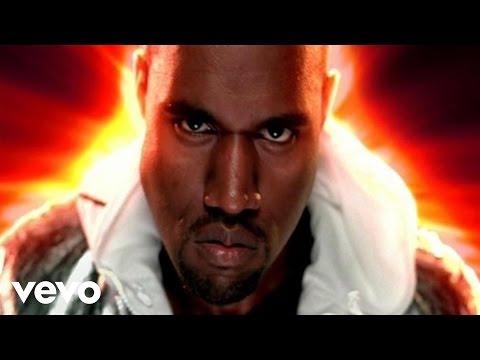


→ More from the 2010s File
View all 2010s hits →



Keep digging