The 2010s File Feature
Valerie
Valerie — Glee Cast: Television's Take on a Pop-Soul Standard The Glee Cast's recording of "Valerie" represents one of the more layered entries in the long h…
01 The Story
Valerie — Glee Cast: Television's Take on a Pop-Soul Standard
The Glee Cast's recording of "Valerie" represents one of the more layered entries in the long history of a song that had already changed hands twice before the Fox television series got hold of it. To understand what the Glee version accomplished commercially and culturally, it is necessary to trace the song backward through its predecessors, because the Glee Cast was not covering a Zutons song or even, precisely, a Mark Ronson song. They were covering a sound, a sensibility, and a star turn that had already been canonized by the time Ryan Murphy's writers slipped it into a Season 2 episode of the series.
"Valerie" was originally written and recorded by The Zutons, the Liverpool indie rock band, and released on their 2006 album Tired of Hanging Around. In its original form it was a mid-tempo guitar-driven pop song with a distinctly British indie flavor, well-regarded within that scene but not a major international hit. The transformation of the song from regional British indie track to global pop touchstone happened in 2007 when Mark Ronson selected it for his album Version, reimagined it as a brass-heavy neo-soul production, and handed the vocal to Amy Winehouse.
Winehouse's performance on the Ronson version turned "Valerie" into something different in kind, not merely in degree, from the Zutons original. Her voice, carrying all the weight of her specific gift for soul phrasing and emotional projection, made the song feel as though it had always been hers. The Ronson and Winehouse version reached number two on the UK Singles Chart and became one of the definitive pop recordings of the late 2000s, inseparable from Winehouse's broader cultural moment.
By 2010, when the Glee Cast recorded and released their version, Amy Winehouse was still alive but already in the turbulent final chapter of her public career. The Glee producers were working with the song's accumulated meaning: the Zutons' authorship, Ronson's arrangement, and Winehouse's ghost hanging over any version that followed. The Glee Cast recording, released on the Columbia Records album associated with the series, was arranged in the spirit of the Ronson production, retaining the brass and the soul-inflected rhythm track that had made that version famous.
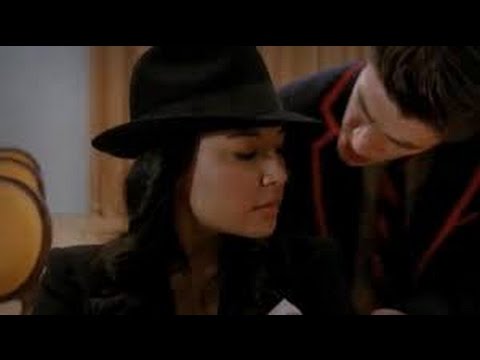
The vocal on the Glee version was performed by Naya Rivera, whose character Santana Lopez was gradually being developed as one of the series' standout voices. Rivera's take on the song was confident and technically assured, drawing on the soul and R&B influences that had informed the Ronson and Winehouse reading while also fitting neatly within the Glee aesthetic of polished, studio-compressed theatrical pop. The arrangement was handled by the series' music production team, who had developed an efficient and consistent house style for adapting contemporary and classic pop hits into the Glee sonic template.
The episode in which "Valerie" appeared during the second season of Glee was part of a run that had kept the show at the top of the cultural conversation. Glee was, at its commercial peak in 2010 and 2011, one of the most significant drivers of music sales on iTunes, capable of sending a covered song back up the charts and introducing catalog material to audiences that had never encountered the original. The show's format, which embedded pop songs within dramatic storylines, created an emotional context for music that pure radio play could not replicate.
The Glee Cast version charted on the Billboard Hot 100, contributing to the extraordinary statistic that the Glee Cast had accumulated more charting entries than almost any act in the chart's history at that point, a consequence of the iTunes single-purchase model that allowed each individual television performance to generate measurable commercial activity. Columbia Records, which served as the label home for the official Glee Cast recordings, worked efficiently to get the tracks into digital retail almost simultaneously with their television broadcast.
The song's performance in the context of the series also helped sustain awareness of Ronson and Winehouse's version among younger audiences who might have missed the original 2007 moment. When Winehouse died in July 2011, the existing landscape of covers and performances of her associated material, including "Valerie," became part of how the cultural conversation around her legacy was conducted. The Glee version was, by then, a minor but genuine part of that ecosystem.
Looking back from a distance, the Glee Cast's "Valerie" stands as a competent and commercially effective entry in a chain of versions that collectively made the song one of the more performed and recorded pop tracks of its era. The series as a whole produced dozens of charting singles between 2009 and 2015, and "Valerie" sits among the better-realized of those recordings, buoyed by Rivera's vocal authority and the song's durable melodic structure.
02 Song Meaning
Valerie — Longing, Absence, and the Weight of a Name
Note: "Valerie" as recorded by the Glee Cast is a cover of the version by Mark Ronson featuring Amy Winehouse, itself a rearrangement of the song originally written and performed by The Zutons. The thematic analysis here addresses the song's meaning as transmitted through that lineage, including what the Glee version brought to the song's emotional identity.
At its core, "Valerie" is a song about absence and the specific kind of longing that follows someone who has left without clear explanation. The narrator addresses a woman named Valerie directly, asking after her whereabouts, her new habits, her changed circumstances, and her emotional state since a separation that the song never fully explains. This elliptical approach to narrative — naming the wound without describing how it was inflicted — is one of the song's most effective structural choices. The listener is invited to project their own experience of departure onto the unnamed backstory.
The name itself carries significant weight in the song's construction. Addressing someone by name in a pop song creates an intimacy that generic pronouns cannot replicate. The repeated invocation of "Valerie" becomes almost an incantation, a way of calling someone back through the act of naming them. This technique connects the song to a long tradition of address-based love songs, from classic soul to 1960s pop, and it is one of the reasons the song translates so effectively across different vocal interpretations.
In the Amy Winehouse version, which the Glee Cast's arrangement closely mirrors, the emotional content of the song is inflected by Winehouse's particular vocal quality: the sense that the longing being expressed is entirely genuine and entirely unresolved. When Naya Rivera performs the Glee version, she brings a different register, one more theatrical and presentational than Winehouse's confessional mode, but the song's fundamental meaning survives the translation because the melodic structure and the lyrical content carry it independently of any single vocal interpretation.
The brass-heavy production of the Ronson arrangement, retained in spirit by the Glee version, adds a paradoxical quality to the song's emotional texture. The music is celebratory and rhythmically buoyant even as the lyrics describe someone clearly pining for a lost connection. This dissonance between musical mood and lyrical content is characteristic of the best neo-soul productions, where grief is dressed in colors that refuse to be purely sad. The result is a song that can be enjoyed at multiple emotional frequencies simultaneously.
For the Glee context specifically, "Valerie" functioned as a character-defining moment for Santana Lopez, the figure Rivera was developing within the series. The song's combination of surface confidence and underlying vulnerability mapped neatly onto Santana's dramatic arc in Season 2, giving the performance a layer of contextual meaning that purely standalone recordings cannot achieve. In this sense, the Glee version added a new meaning to the song, layering television narrative onto pop song mythology.
The song's enduring quality lies in its compression: in under four minutes it conveys an entire relationship's aftermath through a handful of questions addressed to someone who cannot answer. That formal economy, combined with the Ronson arrangement's infectious energy, is why the song has sustained multiple successful lives across multiple artists and contexts. The Glee Cast version extended that life into new audiences and new emotional landscapes, demonstrating that some songs are genuinely larger than any single interpretation of them.
→ More from Glee Cast
View all Glee Cast hits →
→ More from the 2010s File
View all 2010s hits →



Keep digging