The 2010s File Feature
Jorja Interlude
Jorja Interlude — Drake (2017) "Jorja Interlude" is a track from Drake's album More Life, released as a "playlist" on March 18, 2017, through Young Money Ent…
01 The Story
Jorja Interlude — Drake (2017)
"Jorja Interlude" is a track from Drake's album More Life, released as a "playlist" on March 18, 2017, through Young Money Entertainment, Cash Money Records, Republic Records, and OVO Sound. The track features British singer-songwriter Jorja Smith in a prominent collaborative role, and it was among the first widely distributed recorded evidence of a creative partnership between two artists who would both go on to significant commercial prominence in the years immediately following the release.
More Life itself was a landmark commercial event. The album set a single-day streaming record on Apple Music at the time of its release, accumulating over 89 million streams in the United States in its first 24 hours, a figure that underscored how thoroughly Drake had come to dominate the streaming era. The project was conceived and marketed as a "playlist" rather than a traditional album, a framing choice that reflected both the streaming ecosystem's increasingly fluid relationship with format categories and Drake's interest in presenting himself as a curator of musical moods and influences rather than simply a rapper releasing records.
Jorja Smith, born on June 11, 1997, in Walsall, England, was twenty years old when More Life was released and had not yet released her debut album. She had been building a following in the United Kingdom through a series of self-released singles that demonstrated an emotionally sophisticated approach to neo-soul and R&B, drawing comparisons to Amy Winehouse and other British artists who had achieved crossover success by merging Black American musical traditions with distinctly British emotional directness. Her appearance on "Jorja Interlude" brought her to the attention of audiences far larger than any she had previously reached.
More Life debuted at number one on the Billboard 200 and produced a remarkable chart performance, with multiple tracks from the project simultaneously charting on the Hot 100 in the week following its release, a demonstration of the kind of streaming-era chart dominance that Drake had pioneered and that would eventually prompt Billboard to adjust its chart methodology. The project's commercial performance confirmed Drake's position as the most commercially dominant artist in popular music at that moment.
The decision to name the track "Jorja Interlude" gave Smith a degree of visibility that was unusual for a featured artist on a track of this type. Interlude tracks on major rap albums often served as brief mood pieces with featured artists who received less prominent billing than the album's primary performers on the project's main tracks. By naming the piece after Smith, Drake was effectively endorsing her as an artist worthy of the audience's sustained attention rather than simply a voice adding texture to his own presentation.
The production on "Jorja Interlude" occupied a space between Drake's established sonic territory and the more acoustic, emotionally intimate sound that Smith's early material had established as her signature. The arrangement foregrounded her voice in a way that allowed listeners to appreciate her tonal quality and emotional range while still situating the track within the atmospheric soundscape of More Life as a whole. The track's production was credited within the broader More Life production team that included Noah "40" Shebib, whose atmospheric, introspective sound had been central to Drake's aesthetic identity since Take Care.
Critical reception to "Jorja Interlude" was warm, with reviewers noting that Smith's vocal performance was one of More Life's genuine discoveries. British music press outlets that had been following her development were pleased that her talent was receiving validation on a platform with genuine global reach. American audiences who encountered her for the first time through the track frequently went searching for her back catalog, providing her with a meaningful audience expansion at a formative moment in her career.
The track's legacy is partly that of a launching pad. Smith's debut album Lost and Found, released in 2018, became a critical success and confirmed the promise that "Jorja Interlude" had announced to a global audience. Her collaboration with Drake on this track is widely credited as a pivotal moment in her career's development, illustrating how a placement on a major artist's project can operate as a career accelerant in the streaming era, providing immediate access to millions of listeners who might otherwise have taken years to discover a developing artist.
02 Song Meaning
Themes and Meaning in "Jorja Interlude" by Drake
"Jorja Interlude" operates in the emotional register that Drake had made his own across multiple albums: the space between intimacy and detachment, where romantic connection is felt intensely but held at a slight remove, examined rather than simply experienced. The track uses Jorja Smith's voice as both a melodic and a thematic element, allowing her emotional directness to function as a kind of counterweight to Drake's characteristic cool. The interplay between their respective approaches creates a tension that is one of the track's most compelling qualities.
The interlude format that Drake employs here is not incidental. Interlude tracks on his albums have consistently served as emotional pivot points, brief passages where the album's mood shifts or deepens before returning to more conventional song structures. By placing Jorja Smith's voice at one of these pivot points, Drake signals that her perspective and emotional register are necessary to the complete experience of More Life, not decorative but structural. The track does not feel like an addition to the album but like a load-bearing element within it.
Thematically, the track engages the experience of romantic ambivalence and the difficulty of navigating relationships in which both parties feel something genuine but cannot quite translate that feeling into stability or commitment. This is terrain that Drake has explored throughout his catalog, from Take Care through Nothing Was the Same and beyond. What makes "Jorja Interlude" distinctive within that consistent thematic territory is the specific emotional quality that Smith's voice brings to it. Her vocal approach is more overtly vulnerable than Drake's, more willing to expose the cost of the feelings being described, and this openness creates a kind of intimacy that the track's brief running time might otherwise make difficult to achieve.
The naming of the track after Smith rather than after a thematic concept or an abstract emotional state is itself meaningful. Drake's interlude tracks are sometimes named after collaborators, and when they are, it is typically a signal that the named artist's identity is inseparable from what the track is doing. The track is as much about the presence of Jorja Smith, as an artist, as a voice, as a representative of a particular emotional and musical sensibility, as it is about any narrative or lyrical content. Her name in the title functions as both acknowledgment and frame.
More Life as a project was partly about Drake's self-positioning as a global citizen of popular music, someone whose influences and collaborators span geography and genre. The presence of a young British neo-soul artist on the project was part of that positioning, connecting his work to a tradition of British Black music that had shaped R&B and soul internationally. Smith's vocal lineage within that tradition, her connection to artists like Amy Winehouse and Sade through the emotional directness and tonal warmth of her singing, made her a particularly resonant collaborator for a project that was explicitly about reaching across musical categories and national boundaries.
The track's meaning within Drake's catalog is that of a generous moment, one in which the most commercially dominant artist in popular music stepped aside sufficiently to allow a newer, less established voice to occupy the center of a song bearing his name. In the context of a project that was explicitly framed as a playlist, a curation rather than a personal statement, this gesture made artistic sense. But it also demonstrated a quality of Drake's creative practice that is sometimes overlooked in discussions of his commercial dominance: his genuine interest in and affection for other artists, his willingness to use his platform to amplify voices he admires.
→ More from Drake
View all Drake hits →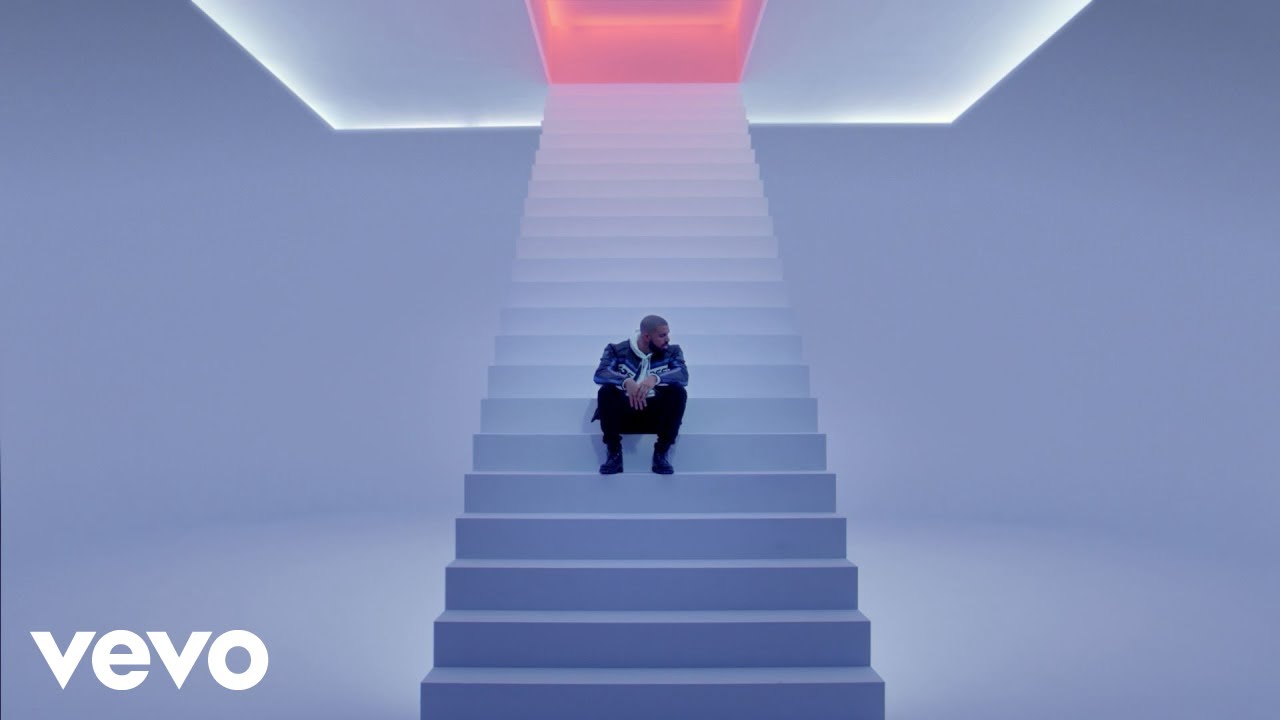



→ More from the 2010s File
View all 2010s hits →



Keep digging