The 2010s File Feature
6 God
6 God — Drake "6 God" arrived as part of Drake's ambitious mixtape If You're Reading This It's Too Late , released on February 13, 2015 , through Young Money…
01 The Story
6 God — Drake
"6 God" arrived as part of Drake's ambitious mixtape If You're Reading This It's Too Late, released on February 13, 2015, through Young Money Entertainment, Cash Money Records, and Republic Records. The project dropped without prior announcement, a deliberate commercial and artistic statement that bypassed traditional promotional cycles and demonstrated Drake's confidence in his own audience reach. The result was immediate and emphatic: If You're Reading This It's Too Late moved the equivalent of 495,000 copies in its first week, making it one of the fastest-selling projects of 2015 and complicating the already complex relationship between mixtape culture and commercial album metrics.
The title track "6 God" established the conceptual vocabulary that would organize much of Drake's public identity for the following years. The "6" referred to Toronto, specifically to the city's 416 area code, though the number had accumulated additional layers of meaning in Drake's personal mythology. "6 God" transformed the local identifier into a grandiose spiritual title, positioning the speaker as a divine authority over his domain rather than merely a successful artist from that location. This move, audacious by any measure, was executed with enough musical and lyrical confidence that it read not as mere boasting but as a coherent artistic statement about local pride and global ambition existing simultaneously.
Production on the track came from Vinylz, one of the producers whose work with Drake had helped define the cold, introspective sound that characterized much of the rapper's mid-decade output. The instrumental carried the signature textures of Toronto-adjacent trap production: spare arrangements with significant space between elements, allowing individual sounds to reverberate and Drake's voice to occupy the center of the mix with maximum clarity. The production aesthetic on If You're Reading This It's Too Late was widely influential, contributing to a broader sonic direction in hip-hop that emphasized atmosphere and emotional texture over density and maximalism.
The mixtape's commercial performance was extraordinary by any standard. If You're Reading This It's Too Late was certified platinum in the United States and reached number one on the Billboard 200, a rare achievement for a project categorized as a mixtape rather than a formal studio album. Billboard made the decision to count it as an album for chart purposes given its commercial release through traditional distribution channels, and the resulting chart position confirmed that Drake had effectively dissolved the boundary between mixtape and album in commercial terms, redefining what an "official" release could mean for a major artist.
The project emerged during a particularly important moment in Drake's competitive position within hip-hop. His ongoing tension with Meek Mill over ghostwriting allegations would dominate summer 2015, but in February the project arrived ahead of that controversy and established him firmly as one of the dominant creative forces in the genre. "6 God" specifically functioned as a statement of artistic sovereignty, positioning Drake as someone who operated by his own rules and answered primarily to his own creative standards rather than industry convention or competitive pressure.
The track's impact on Toronto's cultural self-image was significant and lasting. Drake had been an advocate for his city's cultural identity since his earliest major label output, but If You're Reading This It's Too Late and "6 God" in particular consolidated that advocacy into a mythological framework that gave Toronto a pop-cultural identity it had not previously possessed in hip-hop terms. The city's tourism board and local institutions noted the song and the broader "6" branding as contributors to a newfound global cultural visibility for Toronto, a city that had long existed in the shadow of New York, Los Angeles, and London in popular music geography.
Critical reception of the mixtape was broadly enthusiastic, with reviewers noting the project's tonal consistency and Drake's confidence in operating within a constrained artistic palette. "6 God" was frequently highlighted as one of the more musically cohesive and thematically rich tracks, demonstrating that the project's artistic ambitions matched its commercial ambitions. The NRA for most production, the controlled emotional range, and the precision of Drake's delivery all contributed to a critical consensus that positioned this as one of his strongest releases.
The track's streaming performance over the years following its release reflected its status as one of Drake's signature pieces. It remained a fixture in his most-streamed catalog, regularly appearing on editorial playlists and in year-in-review features about his discography. The "6 God" identity became a lasting component of Drake's public persona, extending well beyond this single project into his subsequent albums, merchandise, and media presence in ways that demonstrated how effectively the track had established its core concept in public consciousness.
02 Song Meaning
Divinity and Territory: The Meaning of "6 God"
"6 God" performs a specific and carefully constructed mythological act: it transforms a geographic identifier into a spiritual title and in doing so transforms Drake's relationship to Toronto from one of origin to one of guardianship. The move from "I am from the 6" to "I am the 6 God" is not merely rhetorical escalation; it is a claim about the nature of creative authority, the idea that an artist who puts a place on the map in cultural terms acquires a kind of custodial relationship to that place that transcends ordinary civic belonging.
The theological register of the title is worth taking seriously rather than dismissing as hyperbole. Drake's catalog has always engaged with the language of divine favor, destiny, and spiritual election in ways that track with the prosperity-gospel and secular-spiritual traditions that permeate contemporary hip-hop. "6 God" is among the more direct expressions of this engagement: the speaker is not merely blessed but constitutively godlike within his domain, operating with an authority that is self-generated rather than bestowed by any external power. This is the theology of radical self-determination, of the self-made individual who has so thoroughly mastered his environment that mastery itself becomes the evidence of divine status.
The song's relationship to Toronto is inseparable from this mythological framing. Drake had spent years building a portrait of his city in his music, depicting its specific neighborhoods, its weather, its emotional texture, and its competitive social dynamics with a journalist's detail and a poet's compression. "6 God" is the culminating statement of that project, the moment where all the accumulated detail transforms into something more cosmic. The city is not merely a background; it is the domain over which the speaker presides, the territory whose identity is inseparable from the artist's own.
The emotional register of "6 God" sits between triumphalism and vigilance. Drake's delivery is confident but not complacent; the speaker knows how precarious the position at the top can be and maintains a quality of alertness even in his moments of greatest self-assurance. This tension, between the god's authority and the man's awareness of threat, is one of the song's more psychologically interesting dimensions. The "6 God" persona is not omnipotent or invulnerable; it is a stance taken in full awareness of the forces that could displace it, which gives it an existential edge that pure bravado would lack.
The track also participates in a broader conversation about artistic ownership that was particularly charged in 2015. Questions about who could legitimately claim to represent Toronto, about the boundaries between personal ambition and community advocacy, and about the commercial uses of local identity in an increasingly global music industry all hover around the song without being explicitly addressed. Drake's response to all of these questions is essentially to absorb them into the mythological frame; the 6 God does not need to justify his relationship to the city because the relationship is constitutive rather than transactional.
Within Drake's catalog, "6 God" functions as one of the clearest statements of his artistic philosophy at mid-career. The project from which it emerged, dropped without warning and immediately certified platinum, was itself a demonstration of the principles the song articulates: confidence in one's own value, operating by self-determined rules rather than industry convention, and understanding that the audience will follow quality wherever it appears. The song describes the posture and the project demonstrates it, creating a formal alignment between content and context that is one of the more elegant aspects of this moment in Drake's discography.
→ More from Drake
View all Drake hits →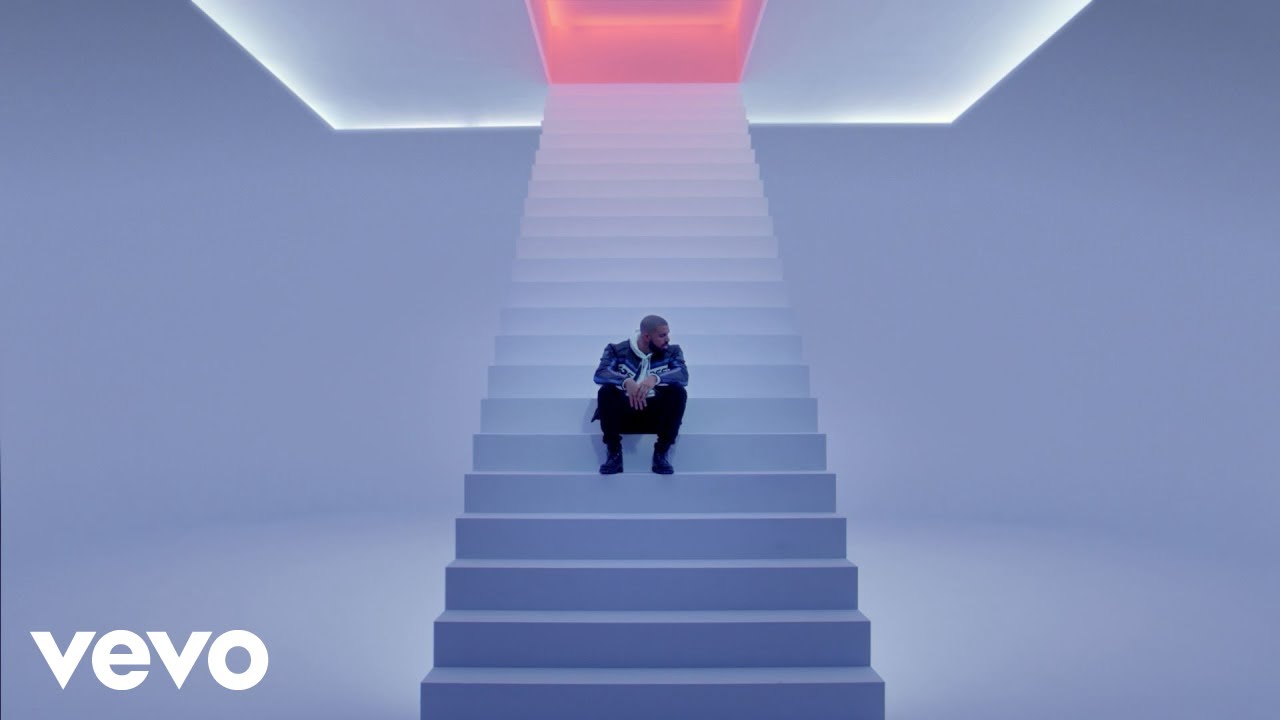



→ More from the 2010s File
View all 2010s hits →



Keep digging