The 2010s File Feature
Don't Get Too High
Don't Get Too High — Bryson Tiller (2017) Bryson Tiller emerged from Louisville, Kentucky with a debut album that redefined the relationship between R&B and …
01 The Story
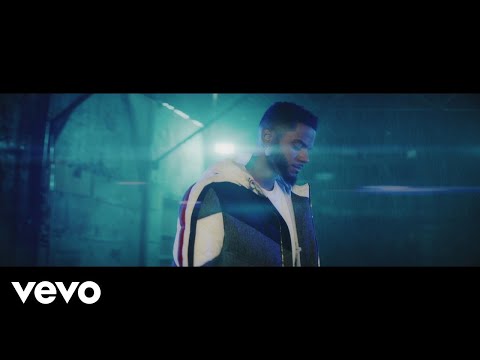
Don't Get Too High — Bryson Tiller (2017)
Bryson Tiller emerged from Louisville, Kentucky with a debut album that redefined the relationship between R&B and hip-hop for a generation of listeners who had grown up with both genres as overlapping rather than distinct categories. His 2015 debut "T R A P S O U L" had been built largely without major label infrastructure, spreading through streaming platforms and SoundCloud before being picked up by RCA Records, and its success demonstrated that the traditional music industry gatekeeping mechanisms were increasingly optional for artists with the right combination of talent, timing, and digital savvy. By the time "Don't Get Too High" arrived in 2017, Tiller was operating with the resources of a major label behind him while attempting to preserve the intimate, introspective quality that had made his independent work so compelling.
The song was released as part of the promotional campaign for Tiller's second studio album "True to Self," which came out in May 2017 on RCA Records. The album had been anticipated with considerable interest given the commercial and critical success of "T R A P S O U L," which had generated over a billion streams across platforms and established Tiller as one of the most commercially significant new R&B voices of the mid-2010s. The pressure to produce a worthy follow-up shaped both the creative choices made on the album and the reception it received from listeners and critics who had developed strong expectations.
"True to Self" debuted at number one on the Billboard 200, making Tiller the first artist from Louisville, Kentucky to achieve that distinction. The album's success reflected the full weight of RCA's promotional apparatus behind an artist who had demonstrated his ability to connect with streaming audiences organically. "Don't Get Too High" functioned as one of the album's more introspective moments, showcasing the melancholy production aesthetic and self-reflective lyrical mode that Tiller had made his signature.
The production on "Don't Get Too High" was characteristic of the trap-soul sound that Tiller had developed, characterized by stuttering hi-hats, spare 808 bass patterns, and atmospheric synth textures that created an emotional environment of muted intensity. The sonic palette drew simultaneously on trap production conventions and the quieter, more confessional end of contemporary R&B, a synthesis that Tiller had pioneered with "T R A P S O U L" and that numerous other artists had subsequently adopted and adapted. Tiller contributed to his own production across much of his catalog, working with collaborators to realize arrangements that matched his vocal aesthetic precisely.
Tiller's vocal approach on the track was typical of his broader style, blending sung melodic phrases with passages that approached rap delivery, moving between modes with a naturalness that suggested the distinction between singing and rapping had become largely irrelevant to the generation of artists he represented. This stylistic fluidity was one of the defining characteristics of the post-Drake R&B landscape that Tiller inhabited, and his comfort with it gave his performances a quality of authenticity that resonated with audiences who had grown up consuming music across genre categories. The album generated over 200 million streams in its first week, a figure that underscored the scale of Tiller's streaming presence and the depth of his audience's investment in his work.
The album's reception, while commercially strong, was more mixed critically than the debut had been, with some reviewers suggesting that "True to Self" spread itself too thin across too many moods and styles to cohere as fully as the more focused debut had. Within this critical context, moments like "Don't Get Too High" were often cited as evidence of Tiller's strengths, particularly his ability to capture emotional ambiguity with precision and his instinct for production that served the lyrical content rather than overwhelming it.
"True to Self" ultimately produced multiple charting singles and demonstrated that Tiller's audience had grown substantially from the grassroots streaming base that had discovered "T R A P S O U L." The album's performance on the Billboard 200 and on genre-specific charts confirmed his status as one of the most commercially significant R&B artists of his generation, with a sound that had been widely imitated but not yet equaled in terms of the specific emotional register it occupied.
02 Song Meaning
The Meaning Behind "Don't Get Too High"
"Don't Get Too High" fits into the emotional autobiography that Bryson Tiller has been constructing across his recordings, a body of work concerned primarily with the psychological complications of romantic relationships: the fear of vulnerability, the gap between desired emotional availability and actual behavior, and the difficulty of reconciling the desire for intimacy with an instinct for self-protection. The song's title functions as advice, caution, or command, directed either at a potential partner or at the singer's own emotional investment, and that ambiguity is central to what the song accomplishes.
The warning embedded in the title is a form of emotional hedging, an acknowledgment that the ecstatic possibilities of early romantic feeling carry within them the seeds of potential devastation. For Bryson Tiller, this awareness of downside risk is never distant from the experience of desire, and his best work sits precisely in that tension between the pull of connection and the fear of what exposure entails. The song articulates a mode of romantic caution that resonated with listeners who had developed their own sophisticated relationship with emotional risk management, a generation for whom romantic disappointment had been processed through social media and group chats as well as through private feeling.
The production aesthetic reinforces the emotional content with precision. The sparse arrangement, built around trap-influenced rhythmic patterns and atmospheric synthesizer textures, creates a sense of contained space that mirrors the emotional guardedness of the lyric. There is room in the production for feeling but not for overflow, which enacts at the sonic level the same calibration of emotional exposure that the words describe. This alignment between sound and meaning was a consistent feature of Tiller's best work and was one reason his trap-soul synthesis felt genuinely new rather than merely hybrid.
The song also participates in the confessional mode that became dominant in R&B during the streaming era, when the absence of a gatekeeper-mediated single-release culture encouraged artists to address their audiences with greater directness and less formal mediation. Tiller's willingness to describe his own emotional limitations as well as his desires gave his recordings a psychological complexity that distinguished them from more straightforwardly romantic material. He was not simply singing about love but examining his own capacity for it.
Within the context of "True to Self" as an album, "Don't Get Too High" represents one of the cleaner expressions of Tiller's core thematic concerns, less elaborate in its construction than some of the album's more ambitious tracks but more precisely focused in what it sets out to achieve. The song's restraint made it one of the more emotionally resonant moments on the record, demonstrating that Tiller's gifts were most effectively deployed when the production and lyrical content worked in careful alignment rather than in competition. It confirmed his status as one of the more psychologically astute songwriters working in contemporary R&B, capable of mapping emotional states with unusual accuracy.
→ More from Bryson Tiller
View all Bryson Tiller hits →



→ More from the 2010s File
View all 2010s hits →



Keep digging