The 2010s File Feature
Hold Up
"Hold Up" — Beyonce Lemonade and the Year of the Visual Album When Beyonce released Lemonade on April 23, 2016, she did so without conventional promotional p…
01 The Story
"Hold Up" — Beyonce
Lemonade and the Year of the Visual Album
When Beyonce released Lemonade on April 23, 2016, she did so without conventional promotional preamble, instead revealing the album simultaneously as a one-hour visual film on HBO and as a streaming-exclusive record on Tidal. The strategic surprise that had characterized the release of her self-titled 2013 album was refined here into something even bolder: a fully realized audio-visual document that announced itself as a work of art before the music industry had time to process what was happening. "Hold Up" was the album's second track, and it arrived in that context as one of its most immediately striking pieces, setting the tone for a record that would define the cultural conversation of 2016 in ways that few albums of any era manage.
Beyonce had spent the preceding years consolidating her position as arguably the most artistically ambitious and commercially successful female artist in popular music. The period between 4 (2011) and Lemonade had seen her build a body of work that consistently raised the expectations placed on blockbuster pop releases. By 2016, the question was not whether a new Beyonce project would matter but in what direction her ambition would take her next.
The Sound of Controlled Fury
"Hold Up" built on a sample of Andy Williams's "Can't Get Used to Losing You" and drew on a wide range of sonic influences to create something that felt simultaneously referential and unprecedented in pop. The production combined reggae-inflected rhythms with a horn-driven arrangement that suggested both tropical warmth and the kind of controlled theatrical energy that Broadway songwriting at its best can generate. The song was written by Beyonce along with a remarkable array of co-writers, including Ezra Koenig of Vampire Weekend, Josh Tillman (known as Father John Misty), Diplo, and several others. That breadth of creative input gave the track its quality of stylistic surprise: it did not sound like anything in Beyonce's prior catalog, and it did not sound quite like anything else in 2016.
The production was deliberate and lush, the arrangement giving the vocal performance room to move through a wide emotional range. The chorus's quality of cheerful fury, the way it combined upbeat production with lyrics that described jealousy and betrayal, created the track's most memorable emotional effect: the cognitive dissonance of feeling something complicated while dancing to something bright.
Number 13 on the Hot 100
"Hold Up" debuted at number 13 on the Billboard Hot 100 on May 14, 2016, the same week that Lemonade's streaming release generated chart action across multiple tracks simultaneously. The track spent fourteen weeks on the chart in total, a sustained run that reflected both the continuing commercial life of the album and the sustained critical and cultural conversation around Lemonade's thematic content. Its peak at 13 in its debut week was a strong showing for what was essentially an album cut released without a conventional single promotional campaign.
The track accumulated around 6.1 million YouTube views as part of the visual album's extraordinary digital presence, though Beyonce's release strategy at this point had prioritized Tidal exclusivity in ways that distributed the record's streaming across multiple platforms rather than concentrating it in any single one.
The Visual and Its Cultural Impact
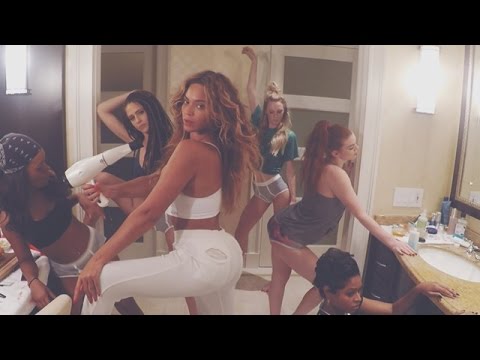
The music video for "Hold Up," directed by Beyonce and Kahlil Joseph as part of the larger Lemonade visual film, became one of the defining images of 2016. The visual of Beyonce in a yellow dress, walking through flooded streets with a bat, smashing car windows and fire hydrants with an expression of serene liberation, was immediately iconic. The image became a cultural touchstone, reproduced in memes, merchandise, and critical discourse in ways that confirmed the video's status as a piece of visual art as much as a promotional tool.
That visual gave "Hold Up" a second life as a cultural reference point beyond the music itself. To invoke the yellow dress and the bat was to invoke a specific emotional state: the feeling of someone who has been wronged deciding not to be quiet about it, the release of accumulated grievance into deliberate, theatrical action.
The Legacy of Lemonade
Lemonade as a whole was received as Beyonce's masterwork by a significant portion of the critical establishment, and "Hold Up" as one of its central tracks shared in that reception. The album's Grammy performance, which saw it nominated for Album of the Year, and its critical placement on multiple "decade's best" lists published in 2019 confirmed that this was a record that the culture intended to keep.
Press play on "Hold Up" and you hear what happens when a maximalist artistic vision finds the right container: a song that is simultaneously too much and exactly enough, a track that should not hold together but does, completely and memorably.
"Hold Up" — Beyonce's singular moment on the 2010s charts.
02 Song Meaning
"Hold Up" — Themes and Legacy
Jealousy as Narrative Structure
The emotional situation "Hold Up" describes is one of the most familiar in romantic music: the awareness that a partner may be unfaithful, and the psychological destabilization that awareness produces. What distinguishes the track's treatment of that situation from more conventional pop handling of jealousy is the way it moves through the emotion rather than simply dwelling in it. The song acknowledges the disorientation of suspicion, the difficulty of reconciling love with distrust, and the question of what self-respect requires in that circumstance. The lyrical movement through those emotional stages gave the track a narrative quality unusual in a three-minute pop song.
The decision to set those lyrics against production that was bright, even exuberant in places, created the track's most sophisticated effect. The dissonance between the music's surface energy and the complexity of what it was describing was not a mistake but a choice, one that made the emotional experience of listening to "Hold Up" stranger and more interesting than the premise alone would suggest.
Female Anger and the Permission Question
One of the reasons "Hold Up" resonated so widely beyond its immediate commercial context was the frankness with which it treated female anger as a legitimate emotional response to romantic betrayal. The cultural conversation around the track immediately engaged with the way Beyonce was framing an emotional state, jealousy and rage, that popular culture has historically been ambivalent about in women. The visual of the bat-wielding figure in the yellow dress was received by many listeners as an image of permission: the representation of anger not as something to be managed or apologized for but as something to be inhabited fully and on one's own terms.
That reading gave the song a dimension of cultural commentary that extended well beyond its immediate subject matter, and it was part of why Lemonade generated the academic, journalistic, and activist engagement it did in the months and years following its release.
Intertextuality and the Listening Experience
The range of musical references embedded in "Hold Up" rewarded listeners with wide genre awareness. The reggae rhythmic elements connected the track to a Caribbean musical tradition with its own long engagement with themes of betrayal and resilience. The horn arrangements carried echoes of soul and R&B production from the 1970s. The Andy Williams sample placed the song in dialogue with a very different era of American popular music, and the contrast between the source material and the track's emotional content generated a productive irony. A song about losing someone became the raw material for a song about refusing to lose yourself.
These intertextual layers were consistent with Lemonade's broader approach to musical history: an album that treated genres and eras as shared material rather than fixed categories, and that positioned Beyonce's own voice and experience as the through-line that could hold those disparate elements together.
Why It Endures
"Hold Up" has maintained a presence in cultural memory beyond the usual lifespan of a chart hit because it was doing something more than charting. Its combination of formal sophistication, emotional honesty, and visual impact placed it in a tradition of songs that function as more than entertainment: songs that change the frame around an emotional experience and leave listeners with a different relationship to it than they had before. The track remains on playlists, in critical essays, and in the cultural vocabulary of a generation that received it as evidence that mainstream pop music could hold that kind of weight.
Its themes of love, betrayal, and the complicated question of what to do with grief and anger have not diminished in relevance, and neither has the music that carries them.
→ More from Beyonce
View all Beyonce hits →
→ More from the 2010s File
View all 2010s hits →


Keep digging