The 2000s File Feature
Hit The Floor
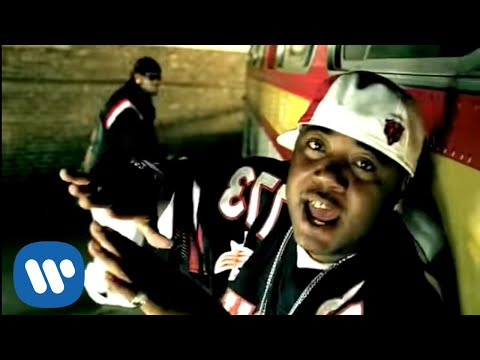
Hit The Floor — Twista Featuring Pitbull (2005) By 2005, Twista had established himself as one of the most technically distinctive voices in hip-hop, his rap…
01 The Story
Hit The Floor — Twista Featuring Pitbull (2005)
By 2005, Twista had established himself as one of the most technically distinctive voices in hip-hop, his rapid-fire delivery having earned him recognition as one of the fastest rappers in the world. His 2004 breakthrough with "Slow Jamz" alongside Kanye West and Jamie Foxx had brought him to genuine mainstream prominence after years of respected but commercially modest work in the Chicago underground. The challenge that followed "Slow Jamz" was one faced by many artists who achieve sudden commercial peaks: how to build upon that momentum with a follow-up that retained one's artistic identity while sustaining a broadened audience.
"Hit The Floor" was part of Twista's response to that challenge. Released in 2005 on Atlantic Records, the track brought together the Chicago rapper's signature velocity and technical precision with the Miami energy and club-focused appeal of Pitbull, who at that point in his career was building his reputation as a featured artist across hip-hop and urban radio formats. The collaboration was a logical one from a commercial standpoint: Twista brought lyrical credibility and an established audience in the hip-hop community, while Pitbull contributed a crossover-friendly hook sensibility and access to Latin urban and Southern hip-hop radio markets.
The production underpinning the track was designed for club and radio use, featuring a propulsive beat construction that married the kinetic energy of Chicago drill's predecessors to Miami bass and hip-hop production conventions of the mid-2000s. The tempo and sonic architecture made clear from the outset that "Hit The Floor" was targeting the same dance-floor and radio territory that Twista had explored on his most commercially successful material.
Pitbull's contribution to the track reflected his own developing commercial profile. Still several years before he would achieve the global pop-crossover success that would define the later portion of his career, Pitbull in 2005 was an energetic presence in hip-hop who traded in the brash, charismatic persona that would eventually carry him to international commercial dominance. His verse on "Hit The Floor" showcased those qualities and helped give the record the multicultural appeal that its producers were seeking.
The single received radio airplay on hip-hop and rhythmic pop stations and benefited from Twista's existing profile in the genre. Following "Slow Jamz" and the success of the Kamikaze album, Twista had a platform that gave his releases automatic visibility in the hip-hop market. "Hit The Floor" appeared on the Adrenaline Rush 2007 project as Twista continued to release material through his Atlantic Records deal, though the single itself was released and promoted as a standalone effort targeting the summer club market.
The track's sonic character was rooted firmly in the energy-driven, crowd-oriented hip-hop production that dominated radio and nightclub culture in the mid-2000s. Production of this type prioritized momentum and impact over lyrical complexity, creating a framework within which Twista's rapid delivery could land with maximum physical effect on a dance floor. The contrast between his machine-gun cadence and the more melodic, hook-oriented contributions from Pitbull created a structural dynamism that kept the track engaging across its radio-edit duration.
Contextually, "Hit The Floor" existed within a moment when hip-hop was still powerfully dominant in American popular music culture, with radio formats that programmed hip-hop and R&B reaching some of their highest audience figures. The mid-2000s represented the commercial peak of many of the trends that had been building through the late 1990s and early 2000s, including the centrality of the club anthem as a commercial format within hip-hop. Tracks like "Hit The Floor" were designed specifically to function within that ecosystem, engineered to work in multiple commercial contexts simultaneously.
For both artists involved, the collaboration was commercially strategic as well as creatively complementary. Atlantic Records had invested in Twista as a commercial property following his mainstream breakthrough and was working to establish him as a durable hit-maker rather than a one-album phenomenon. The pairing with Pitbull was part of that strategy, connecting Twista's established hip-hop audience with Pitbull's growing presence in crossover markets. That kind of cross-genre collaboration was standard practice in the mid-2000s major label approach to maximizing a hip-hop artist's commercial reach.
The legacy of "Hit The Floor" within both artists' catalogs is that of a period-representative collaboration, a track that captures the specific sound and ambition of mid-2000s commercial hip-hop while showcasing the complementary skills of two performers who occupied distinct but adjacent commercial spaces. For Twista, it represented a continuation of the commercial ambition that "Slow Jamz" had opened up. For Pitbull, it was one of many collaborations in this era that were steadily building his industry reputation as a reliable commercial presence.
02 Song Meaning
What "Hit The Floor" Is About — Energy, Function, and Club Culture
"Hit The Floor" belongs to a specific and important tradition within hip-hop: the club anthem, a track whose primary purpose is functional and collective rather than confessional or narrative. Understanding the song's meaning requires understanding that tradition, because the semantic content of tracks designed for dance-floor deployment is always partly secondary to their sonic and physical effect on a crowd.
The song's subject matter is, at one level, straightforward. It is an invitation to dance, to abandon inhibition, and to participate in the collective experience of the club or party. The title itself is a direct physical instruction, and that directness is entirely consistent with the genre conventions of mid-2000s hip-hop anthems. Twista's contribution wraps this invitation in his characteristic rapid-fire delivery, which creates its own physical effect on the listener, a kind of breathless forward momentum that mirrors the energy the song is designed to generate on a dance floor.
Pitbull's role in the song is to provide the melodic and hook-oriented counterbalance to Twista's velocity. His contribution emphasizes the celebratory, inclusive character of the track, extending its invitation to a broader and more multicultural audience. Pitbull's appeal at this stage of his career was rooted in his ability to bridge hip-hop and Latin urban audiences, and on "Hit The Floor" he serves that bridging function through his delivery and his hook construction.
The track's meaning is also partly about masculine confidence and the self-presentation rituals of the club environment. Hip-hop anthems of this type frequently position the performer as an aspirational figure within the social space of the party, someone whose skill, charisma, and presence command the room. The competitive and demonstrative energies of hip-hop culture, which run through its entire history from freestyle battles onward, are here transposed into a club context where the demonstration takes the form of performance itself rather than explicit lyrical combat.
For Twista specifically, the song carries an additional layer of self-referential meaning. His speed is not merely a technical attribute; it is his artistic identity and his primary commercial distinction. When Twista performs at his maximum velocity on a dance-floor-oriented track, the performance itself becomes part of the meaning, a demonstration that technical virtuosity and commercial accessibility need not be in conflict. The club context gives his speed a social function, making the display of skill not self-indulgent but genuinely crowd-serving.
Within the broader catalog of both artists, "Hit The Floor" represents the commercial center of the period, the place where artistic identity and market demand most directly overlapped. For listeners, the track's meaning is experiential rather than primarily intellectual: it is music designed to change the physical and emotional state of the person hearing it, to translate them from contemplation into movement. That function is not trivial in the history of popular music. The ability to move bodies is among the oldest and most fundamental powers that music possesses, and "Hit The Floor" is a competent and energetic expression of that power within the specific conventions of its era and genre.
→ More from Twista Featuring Pitbull
View all Twista Featuring Pitbull hits →



→ More from the 2000s File
View all 2000s hits →

Keep digging