The 2000s File Feature
Girl Tonite
Girl Tonite — Twista Featuring Trey Songz (2005) "Girl Tonite" arrived in 2005 as one of Twista's most commercially accessible singles, pairing the Chicago r…
01 The Story
Girl Tonite — Twista Featuring Trey Songz (2005)
"Girl Tonite" arrived in 2005 as one of Twista's most commercially accessible singles, pairing the Chicago rapper's extraordinary technical speed with the smooth R&B vocals of a then-emerging Trey Songz in a configuration that demonstrated Twista's consistent ability to find melodic partners who could give his technically demanding rapping a popular accessibility it might not otherwise achieve. The song represented a continuation of the commercial formula that had made Twista one of the most recognizable names in mainstream hip-hop the previous year.
Carl Terrell Mitchell, who performs as Twista, had spent much of the 1990s building a reputation as one of the fastest rappers in the world, a distinction confirmed when he was certified by the Guinness Book of World Records as the fastest rapper in existence. His early career was characterized by critical admiration for his technical facility and modest commercial success, but the extraordinary breakthrough of "Slow Jamz" in early 2004, his collaboration with Kanye West and Jamie Foxx, transformed his commercial trajectory entirely.
"Slow Jamz" reached number one on the Billboard Hot 100 in February 2004 and became one of the biggest songs of the year, simultaneously launching Kanye West's solo career and providing Twista with his first major mainstream hit after more than a decade in the industry. The album Kamikaze, which contained "Slow Jamz," debuted at number one on the Billboard 200 in early 2004 and established Twista as a commercially viable mainstream artist rather than merely a respected underground figure.
"Girl Tonite" was released as part of Twista's follow-up album The Day After, released by Atlantic Records in 2005. The album was designed to capitalize on the commercial momentum generated by Kamikaze and the ongoing popularity of the hip-hop/R&B crossover format that had proven so effective for "Slow Jamz." The pairing with Trey Songz, who was in the early stages of his own career development as an R&B artist on Atlantic, reflected the label's interest in cross-promoting two of its developing artists.
Trey Songz, born Tremaine Aldon Neverson in Petersburg, Virginia, had released his debut album I Gotta Make It in 2005 and was working to establish himself as a legitimate R&B presence at a label that already had significant investment in his development. His contribution to "Girl Tonite" gave him exposure to the hip-hop audience that followed Twista while allowing him to demonstrate the smooth, melodic vocal style that would eventually make him one of the more commercially successful R&B artists of the late 2000s and early 2010s.
The production on "Girl Tonite" follows the mid-2000s hip-hop/R&B crossover template effectively, with a smooth, melodic beat that accommodates both Twista's rapid-fire verses and Trey Songz's more sustained vocal contributions. The track occupies a party and romance-oriented register, its subject matter centered on nightlife and romantic pursuit, a thematic territory well-suited to radio play and club environments simultaneously.
The song charted on the Billboard Hot 100 and performed on the Hot R&B/Hip-Hop Songs chart, demonstrating the crossover appeal that the collaboration was designed to generate. Twista's post-"Slow Jamz" commercial profile meant that his name carried genuine radio credibility, and the presence of Trey Songz provided the melodic hook infrastructure that mainstream R&B radio required.
Twista's contribution to "Girl Tonite" demonstrates his ability to modulate his delivery for a more accessible context. His fastest performances can be almost overwhelming in their technical density, but in collaborations designed for mainstream radio, he has consistently shown the ability to maintain his speed and technical precision while making the overall experience more immediately enjoyable rather than primarily impressive. The balance between technical virtuosity and accessibility is a real creative skill, and Twista navigated it effectively on this track.
The song's release came at a moment when the hip-hop/R&B crossover format was at the height of its commercial dominance. Acts like Usher, Nelly, and Ludacris had spent the previous several years demonstrating that rap and R&B could be combined in ways that generated enormous mainstream appeal, and the wave of singles that followed this blueprint, including "Girl Tonite," reflected how thoroughly this formula had become the commercial standard for mainstream Black popular music in the mid-2000s.
For Twista's career trajectory, "Girl Tonite" represented part of the sustained push to maintain commercial relevance following the unlikely blockbuster of "Slow Jamz." The challenge facing any artist who achieves a major breakthrough single is replicating enough of that success to sustain a commercial career at the same level, and "Girl Tonite" was part of the effort to establish Twista as a reliable hit-maker rather than a one-time phenomenon. The song achieved respectable commercial results without generating the extraordinary cultural impact of its predecessor, a common fate for follow-up material in the wake of a genuine crossover phenomenon.
Trey Songz's participation proved prescient in retrospect. He would go on to achieve multiple Billboard Hot 100 entries and become one of the more commercially consistent R&B artists of the following decade. His appearance on "Girl Tonite" stands as an early marker of talent that was still in the process of finding its full commercial expression, a useful reminder that the careers of significant artists rarely arrive fully formed and that early collaborations often tell important stories about where an artist was in their development at a particular moment.
02 Song Meaning
The Meaning of "Girl Tonite" by Twista Featuring Trey Songz
"Girl Tonite" occupies the celebratory, night-out-oriented space in hip-hop and R&B that was a commercial staple of the mid-2000s, songs designed to capture the specific emotional register of social spaces and romantic pursuit within them. The song is not primarily a vehicle for deep lyrical content but rather a well-executed piece of mood music, a track that functions as a kind of soundtrack for the environment it describes and that succeeds on the terms of that more modest but genuinely useful ambition.
Twista's verses demonstrate his characteristic approach to lighter material: the speed and technical complexity of his delivery are maintained, but they serve the party context rather than demanding that listeners focus on them as ends in themselves. The effect is of effortless technical virtuosity in the service of a social occasion, which is itself a meaningful artistic statement about the relationship between skill and context. The most impressive technical performances are often those in which the technique disappears into the function, and Twista's best commercial work achieves this integration effectively.
Trey Songz's contribution establishes the song's R&B emotional core. His vocals serve as the melodic anchor for a track that might otherwise be primarily rhythmic, and they give the song the romantic dimension that distinguishes it from purely party-focused material. The object of the narrator's attention is not just a person at a club but someone with whom a genuine connection is being sought, however briefly and in however commercially conventional a framing. This distinction between pure party rap and romantic party rap is small but meaningful in terms of the emotional register the song creates.
The title's deliberate misspelling of "tonight" as "tonite" is a marker of the mid-2000s hip-hop and R&B aesthetic that embraced phonetic spellings as a form of casual intimacy, a signal that the communication is direct and informal rather than formal or literary. This orthographic convention carried social meaning about authenticity and street-level credibility, connecting the song to an audience that read such choices as signs of genuine cultural membership rather than performed appropriateness.
For Trey Songz's developing artistic identity, the collaboration illuminates the kind of material he was being asked to contribute to early in his career. His role on "Girl Tonite" is fundamentally supportive: he provides melodic infrastructure and romantic credibility while Twista's verses carry the primary lyrical content. This is a common entry point for R&B artists collaborating with established rappers, and Songz executed it with the technical competence that would eventually anchor a much more prominent solo career.
The song's thematic content, attraction in a nightlife setting and the proposition of companionship, is among the oldest in popular music. What gives it specific character is the musical context in which it appears and the particular artists who execute it. Twista's presence guarantees a technical dimension that pure R&B would not provide, while Trey Songz's vocals guarantee an emotional warmth that pure rap would likely lack. The combination is the point.
In terms of what the song means for its listeners rather than its creators, "Girl Tonite" functions as an experience as much as a text. Songs that work in social settings often operate differently from songs primarily designed for headphone listening: they create shared emotional environments, synchronize attention and energy, and produce the sense of collective participation that is one of music's most powerful social functions. By these standards, "Girl Tonite" was well-designed for its intended context and purpose.
The song also reflects the mid-2000s commercial reality in which hip-hop and R&B had become so thoroughly intertwined that the distinction between them was more administrative than musical. Tracks like "Girl Tonite" were not hybrid experiments but straightforward expressions of what mainstream Black popular music sounded like at that moment, evidence of a completed synthesis that had been decades in the making and that defined the commercial mainstream as thoroughly and completely as any popular genre has ever done in American music history. Twista and Trey Songz were participants in that synthesis, their collaboration a small but representative piece of a very large and consequential musical moment.
→ More from Twista Featuring Trey Songz
View all Twista Featuring Trey Songz hits →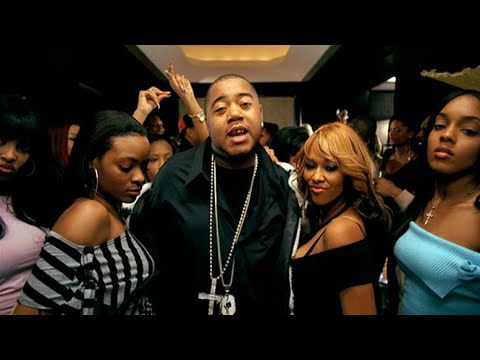



→ More from the 2000s File
View all 2000s hits →
Keep digging