The 2000s File Feature
Drive
Drive: Incubus and the Long Road to Their Biggest Moment California Alt-Rock at the Turn of the Decade Calabasas, California is not the place most people wou…
01 The Story
Drive: Incubus and the Long Road to Their Biggest Moment
California Alt-Rock at the Turn of the Decade
Calabasas, California is not the place most people would associate with the searching, introspective rock of "Drive." The suburb is better known now for its celebrity residents and its adjacency to Los Angeles's sprawl, but in the late 1990s it was simply where Incubus had grown up and learned to play together. By 2000, the band consisting of Brandon Boyd, Mike Einziger, Alex Katunich, Chris Kilmore, and Jose Pasillas had already released three albums and spent years touring with a ferocity that built them a dedicated following. Make Yourself, their 1999 release, was the record where their sound crystallized into something genuinely distinctive: funky grooves meeting post-grunge guitar work meeting Boyd's melodic sensibility and an interest in introspective, almost philosophical lyrics. "Drive" was the track that brought all of that together for the widest possible audience.
The Making of a Quiet Giant
The song sits apart from the louder, more kinetically charged material on Make Yourself. Where some of that album's tracks lean into the funk-metal energy that characterized the band's earlier work, "Drive" is restrained, even spare. The guitar work is clean and melodic rather than aggressive. The rhythm section provides foundation without muscle-flexing. Boyd's vocal sits forward in the mix, intimate and direct, and the lyric it carries is one of genuine self-questioning: an examination of the habit of outsourcing one's own happiness and direction to external forces.
Brandon Boyd has spoken in documented interviews about the song's origins in personal observation, specifically the recognition that fear of taking control of one's own life can dress itself up as spiritual openness. The song gently questions that posture while refusing to condemn it. The result is an invitation to self-examination rather than a lecture, which is one reason it resonated so widely with listeners navigating the anxieties of early adulthood.
An Extraordinary Chart Run
"Drive" debuted on the Billboard Hot 100 on February 17, 2001, entering at number 75. What followed was one of the longer and more sustained chart runs of that year. The song climbed gradually, dipping in some weeks and recovering in others, demonstrating the kind of resilience in airplay that comes from a track listeners want to hear repeatedly rather than just once or twice. It peaked at number 9 on July 28, 2001, and remained on the chart for a remarkable 39 weeks total. That near-year-long presence on the Hot 100 transformed "Drive" from a rock radio success into a genuine crossover moment, reaching audiences that had never tracked Incubus before.
The song also performed strongly on the Modern Rock Tracks chart, which was its native habitat, but the Hot 100 longevity told a different story: this was a song that had escaped its genre and found listeners who simply recognized something true in it.
The Band's Creative Context
Understanding what "Drive" meant for Incubus requires some understanding of where the band had come from. Their early albums placed them adjacent to the nu-metal wave that produced Korn, Limp Bizkit, and Deftones, and while they shared certain sonic touchstones with those acts, their intellectual ambitions and melodic instincts always pointed elsewhere. Make Yourself was the record that confirmed their independence from that scene, and "Drive" was its clearest statement. The song has none of the aggression or distorted despair that characterized much nu-metal; its register is entirely different, and its success on mainstream pop radio proved that the register was communicable to a massive audience.
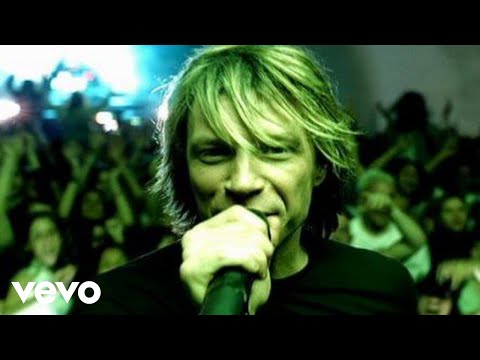
The music video, featuring Boyd and his bandmates performing against stark visual backdrops, captured the song's stripped quality and circulated heavily on MTV and VH1 during a period when music video still drove discovery. The visual economy matched the sonic economy perfectly.
A Song That Lasts Because It Tells the Truth
Part of "Drive"'s durability is that it does not date. The question it poses, about whether you are steering your own life or being steered by fear, is not specific to 2001. It is not even specific to a decade or a generation. The song keeps finding new listeners because the territory it covers is evergreen, and because Boyd's vocal carries the question with a gentleness that makes people willing to sit with it rather than turn away.
There is no better occasion to revisit this song than the present moment, whatever your present moment happens to be. Let it ask its question. See what answer surfaces.
"Drive" — Incubus's singular moment on the 2000s charts.
02 Song Meaning
Drive: Fear, Autonomy, and the Question at the Wheel
The Passenger as Metaphor
The central image of "Drive" is both literal and metaphorical in the most economical way. Someone is in a vehicle, and the lyric circles a simple question: who is actually in control? The narrator addresses someone who seems to be drifting, allowing fear rather than intention to determine direction, and gently challenges them to consider whether the posture of going wherever the wind blows is courage or its opposite. The road, in this reading, is a life, and the driver's seat belongs to the self that has decided to show up and steer.
The Spiritual Subtext
The song engages, with notable care, with the question of surrender. There is a tradition in both spiritual practice and countercultural philosophy of valorizing surrender to larger forces, of treating the release of personal control as a virtue. "Drive" does not dismiss this tradition; it interrogates it. The lyric asks whether what looks like spiritual openness might actually be fear wearing a philosophical costume. This is a more complex argument than it first appears, and the song delivers it without hostility, genuinely curious about the distinction rather than condemning the listener who might be caught in it.
The early 2000s were a moment when various forms of spiritual searching were popular in the American mainstream, from the wellness culture that was beginning its long expansion to the more diffuse spirituality of yoga and meditation practices entering middle-class life. "Drive" spoke to listeners who were genuinely engaged with those questions, treating them as capable of handling nuance.
Fear as the Hidden Driver
The recurring examination in the lyric is whether fear is the thing actually in the driver's seat. This is one of the song's most honest moves: naming fear not as an obvious villain but as a subtle presence that can masquerade as acceptance, as going with the flow, as open-mindedness. Brandon Boyd's lyrical approach identifies the emotion precisely without dramatizing it. Fear here is not something terrifying; it is something ordinary and persistent, the kind of quiet anxiety that prevents people from making choices rather than the kind that announces itself loudly.
That ordinariness made the song accessible to an enormous range of listeners. You did not need a dramatic personal history to recognize the feeling the lyric was describing. Most people, at most stages of adult life, have had the experience of allowing circumstances to make decisions for them because the alternative felt too exposed or too risky. The song meets that experience where it lives.
Why the Gentleness Matters
The musical arrangement's restraint is not just aesthetic; it is argumentative. A song about the wisdom of self-determination delivered in an aggressive, confrontational sonic package would undercut its own message. "Drive" earns the right to ask its question by asking it quietly, without pressure, in the exact tone that the lyric recommends: not fearful, not forceful, but genuinely open and inviting. The song's extraordinary 39-week run on the Billboard Hot 100, peaking at number 9 in July 2001, suggests that listeners responded to that tone precisely because it was rare in the rock landscape of the period.
"Drive" — Incubus's singular moment on the 2000s charts.
→ More from the 2000s File
View all 2000s hits →

Keep digging