The 2000s File Feature
It's My Life
"It's My Life": Bon Jovi's Declaration for a New Generation The Band That Refused to Stay in the Past The year 2000 felt like a hinge in time. The rock world…
01 The Story
"It's My Life": Bon Jovi's Declaration for a New Generation
The Band That Refused to Stay in the Past
The year 2000 felt like a hinge in time. The rock world that had made Bon Jovi superstars in the 1980s had shifted dramatically, and the band spent much of the 1990s navigating the wreckage that grunge left behind. Jon Bon Jovi and his New Jersey bandmates had sold tens of millions of records across the previous decade, yet the cultural tailwinds that once pushed them effortlessly up the charts had died down. When they returned with Crush in the summer of 2000, the expectation in some corners of the industry was polite nostalgia at best.
What nobody expected was a song capable of competing in the same radio landscape as Destiny's Child and Eminem.
The Sound of Defiance with a Melodic Hook
Produced by Luke Ebbin alongside Jon Bon Jovi and Richie Sambora, "It's My Life" arrived sounding nothing like the power ballads that had defined the band's commercial peak. The track opens with a synthetic pulse that plants it firmly in 2000, yet underneath that modern texture runs the same guitar muscle and arena-sized ambition that built the Bon Jovi name. The chorus is an absolute broadside: short, punchy, and designed to be sung by 60,000 people at once. The production team understood that the song needed to feel contemporary without abandoning what made the band distinct, and that balance is precisely what it achieves.
The track's bridge nods to Frank Sinatra's "My Way," a deliberate wink that connects the rock anthemic tradition to an older lineage of self-determination songs. Whether you catch the reference or not, the song carries that weight without spelling it out.
Climbing the Billboard Hot 100
On the Billboard Hot 100, "It's My Life" debuted at number 64 on August 12, 2000 and steadily climbed through the late summer heat. It peaked at number 33 on September 30, 2000, spending a full 20 weeks on the chart. Those numbers do not tell the complete story: across alternative, mainstream rock, and adult contemporary formats, the song was an across-the-board performer. Internationally, it reached the top ten in multiple European markets and became one of the defining radio staples of that year globally, cementing a commercial comeback that surprised even the band's most loyal supporters.
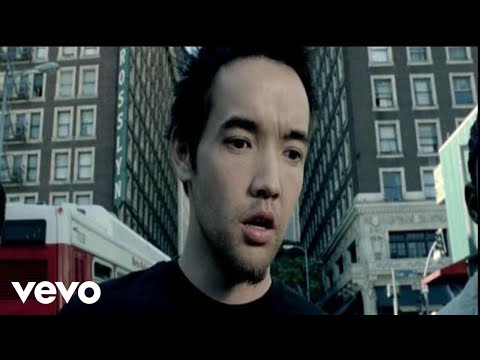
The music video, set in a frenetic urban chase sequence, received heavy MTV rotation and introduced Bon Jovi to younger viewers who had not grown up with Slippery When Wet or New Jersey.
A Legacy That Keeps Compounding
Few songs from the 2000 rock landscape have had the cultural longevity of "It's My Life." The track has accumulated over 1.6 billion YouTube views, a number that speaks to continuous discovery across generations rather than a single wave of nostalgia. It became a staple of sports arenas, movie trailers, talent competition shows, and any cultural moment requiring a soundtrack of personal resolve. That ubiquity is not accidental: the lyric is universal enough to be claimed by virtually anyone at any turning point in their life, which is the rarest and most valuable quality a pop-rock song can have.
For Bon Jovi as a band, "It's My Life" accomplished something that eludes most acts from the 1980s: it made them relevant to people who were not yet born when "Livin' on a Prayer" topped the charts. The album Crush went platinum in multiple countries on the song's momentum, proving the band's commercial instincts were fully intact entering a new decade.
Why It Still Lands
There is a quality in great rock anthems where the production can date, but the emotional core does not. "It's My Life" has held up because its central argument, the insistence on living on your own terms rather than someone else's script, does not get less compelling with time. If anything, it gets more so. Turn it up loud the next time you need it, because it delivers every single time.
"It's My Life" — Bon Jovi's singular moment on the 2000s charts.
02 Song Meaning
"It's My Life": The Anthem of Autonomous Living
A Manifesto in Verse
At its core, "It's My Life" is a refusal. The lyrics push back against passivity, against letting your years slip by following someone else's script or surrendering your ambitions to fear. The song addresses a specific kind of listener: someone standing at a crossroads, feeling the pressure of conformity, and weighing whether to take the road that leads somewhere genuinely their own. That scenario is universal across generations, which explains why the song continues to find new audiences decades after its release.
Jon Bon Jovi and Richie Sambora wrote the track with a directness that bypasses metaphor almost entirely. The emotional content is right on the surface, delivered without irony or ambiguity. In an era that often celebrated detached cool, that sincerity was its own form of courage.
Standing on the Shoulders of Self-Determination
The song's lyrical nod to the spirit of Frank Sinatra's "My Way" is not subtle, and it was intentional. By invoking that tradition, Bon Jovi places "It's My Life" in a lineage of songs about facing the world on your own terms. The connection links a rock anthem aimed at millennials to a mid-century crooner's meditation on mortality and regret, suggesting that the human need to declare ownership of your own story is timeless rather than generational. The bridge makes this kinship explicit, honoring those who have walked before while insisting the sentiment remains urgent today.
The Tommy and Gina Thread
The lyrics return to Tommy and Gina, the working-class protagonists who first appeared in "Livin' on a Prayer" back in 1986. Revisiting these characters gave the song an immediate emotional resonance for longtime fans while also functioning perfectly well for listeners encountering them fresh. Tommy and Gina had become shorthand for a certain kind of striving, ordinary-life determination, and bringing them back in the context of "it's my life" added weight to what could otherwise have been a generic declaration. These are people who made it through difficulty, and the song credits their persistence without sentimentalizing it.
Why It Hit the Way It Hit
The year 2000 was culturally anxious in specific ways. The optimism of the late 1990s boom was already beginning to fray, and conversations about work, identity, and what the new millennium actually meant were everywhere. A song that said simply: own your choices, own your time, do not waste the years you have, arrived at exactly the right cultural moment. It peaked at number 33 on the Billboard Hot 100, but its reach on rock radio and internationally far exceeded that pop chart placement, reflecting how broadly the message translated across formats and territories.
Young listeners heard it as permission. Older listeners heard it as validation. That two-directional resonance is what separates an anthem from a mere hit single.
The Enduring Claim
More than two decades on, the song's core claim, that your life belongs to you and the clock is running, lands with the same force it carried on first listen. It has survived arenas, commercials, television talent shows, and more cover versions than most songs accumulate in a century. Each new context strips away a little of the specific 2000 production patina and reveals the bare emotional truth underneath. That is the mark of a lyric written with real intention rather than formula.
→ More from the 2000s File
View all 2000s hits →

Keep digging