The 2000s File Feature
Lost
Lost — Gorilla Zoe (2009) "Lost" is a track from Gorilla Zoe , the Atlanta rapper born Alonzo Mathis, released in 2009 as part of the follow-up activity to h…
01 The Story
Lost — Gorilla Zoe (2009)
"Lost" is a track from Gorilla Zoe, the Atlanta rapper born Alonzo Mathis, released in 2009 as part of the follow-up activity to his debut studio album "Don't Feed Da Animals," which had appeared in 2008 on Block Entertainment/Bad Boy Records. The song represented one of the stronger moments in Gorilla Zoe's attempt to consolidate his commercial position following a debut album that had demonstrated genuine potential without fully delivering on it.
Gorilla Zoe had first come to significant public attention through his association with Young Jeezy and the broader Snowman-era Atlanta rap ecosystem. His early mixtape work, including the track "Hood Nigga," had established him as a figure with real regional credibility and a distinctively gritty vocal style that set him apart from the more melodic approaches gaining prominence in Atlanta during the same period. His voice carried an unusual roughness and depth that gave his recordings an immediate textural identity, making him recognizable within seconds of any given track beginning.
"Don't Feed Da Animals" had been a commercially respectable debut, supported by the promotional muscle of Bad Boy Records' distribution arrangement and Gorilla Zoe's existing regional fanbase. The album produced charting singles and introduced him to a national audience that had previously known him primarily through mixtape circulation and guest appearances. The follow-up period that included "Lost" was designed to sustain that momentum while Gorilla Zoe worked on his second studio album.
The production on "Lost" reflects the Atlanta trap aesthetic of the late 2000s, characterized by crisp hi-hat patterns, heavy bass, and a generally dark melodic atmosphere that suited Gorilla Zoe's vocal style and lyrical subject matter. The track demonstrated his ability to work within the established commercial framework of Southern rap while bringing enough individual personality to avoid sounding generic within a crowded field.
The song charted on the Billboard Hot 100 in 2009, a period when Atlanta rap was exercising enormous influence over the commercial direction of hip-hop more broadly. Artists like T.I., Lil Wayne (who was operating partly out of Atlanta's commercial ecosystem despite his New Orleans roots), and Young Jeezy were dominating the charts, and Gorilla Zoe's musical proximity to that world gave his work commercial viability that might not have been available in a different regional or stylistic context.
The thematic territory of "Lost" connects to a strand of Southern rap that was particularly prominent in the late 2000s: the exploration of disorientation, moral complexity, and the psychological costs of life in economically desperate circumstances. Unlike the pure celebration of outlaw success that characterized some contemporaneous trap music, this strand acknowledged ambivalence and difficulty, presenting narratives that were more complicated than simple triumph or simple defeat.
Gorilla Zoe's career would continue to develop through the early 2010s, with additional albums and mixtape releases, but he never quite achieved the crossover breakthrough that his early success suggested might be possible. "Lost" remains one of the stronger individual tracks from his catalog, a song that captures his abilities at a moment when his commercial trajectory still felt genuinely open-ended.
Within the broader context of late 2000s Atlanta hip-hop, "Lost" stands as a credible entry in a competitive field, representing a moment when the city's dominance of commercial rap was so complete that even artists operating at the second tier of its ecosystem could generate nationally charting music. Gorilla Zoe was precisely such an artist: not the genre's defining figure, but a genuine presence with real skills and a sound that contributed meaningfully to the period's musical landscape.
The song has aged reasonably well as a period document, capturing something specific about the emotional texture of late-2000s Southern rap that the more celebrated recordings of the era sometimes express less directly. Where the dominant commercial rap of the period frequently celebrated success with minimal acknowledgment of the psychological costs involved, tracks like "Lost" from artists who had not yet fully crossed into the highest tier of mainstream success often carried a rawer, less resolved quality that now reads as genuinely informative about what the era felt like from the inside. Gorilla Zoe's subsequent career, which included mixtape releases and continued regional activity through the early 2010s, never produced another moment of comparable commercial visibility, but "Lost" remains a track that rewards revisiting as a document of an artist and a scene at a specific, historically interesting point of development.
02 Song Meaning
What "Lost" Means
"Lost" engages with a state of disorientation that has specific resonance within the context of the life circumstances that Atlanta trap music most consistently addresses. The condition of being lost is not presented here as a temporary navigational confusion but as something more fundamental: a psychological and moral state in which the ordinary reference points for making decisions and understanding one's own life have ceased to function reliably. The narrator knows he is lost but that knowledge does not automatically provide the means of finding direction.
For Gorilla Zoe, whose musical identity is grounded in the rough textures of street life and the specific emotional conditions of economic precarity, the "lost" state connects to a larger narrative about what happens to individuals navigating environments that offer limited legitimate options. The song does not moralize about this condition or offer easy solutions; it simply inhabits it with the kind of unsentimental honesty that distinguishes the best work in the Atlanta trap tradition from more commercially calculated content.
The emotional register of "Lost" is notably bleak without being despairing. There is an underlying resilience in the song's presentation of difficulty, a sense that the narrator's ability to articulate his condition clearly, to name it as lostness and describe its qualities, is itself a form of agency even when other forms of agency feel unavailable. This is a quality common to blues music and its descendants: the act of singing truthfully about suffering as a way of asserting control over it.
The Atlanta trap context in which Gorilla Zoe operates gives "Lost" its specific cultural coordinates. The song belongs to a tradition of Southern rap that has always been partly about bearing witness to the conditions of life in America's most economically disadvantaged communities, a documentary function that operates alongside and sometimes in tension with the music's entertainment and aspirational dimensions. "Lost" leans more toward the documentary function, using the directness of its title and its narrator's self-assessment to create something closer to reportage than celebration.
The production's dark atmospheric quality reinforces the song's thematic content in ways that are characteristic of the genre at its best. The music does not contradict or undercut the lyrical subject matter with incongruously cheerful sonics; it creates an environment in which the narrator's lostness feels both plausible and immersive. The listener is invited into the emotional landscape rather than simply being told about it from a safe observational distance.
The song's title functions as both a statement and a question. Being lost implies the prior existence of a known location, a sense of where one belongs or where one was going before the disorientation set in. The tension between that implied prior orientation and the current state of confusion drives much of the song's emotional energy, suggesting that the narrator's difficulty is not simply about not knowing where to go but about the loss of a framework within which going somewhere made sense.
In the broader landscape of late 2000s hip-hop, "Lost" represents the strain of the genre most interested in emotional authenticity over commercial calculation, the strand that treated rap as a medium for exploring real psychological and social conditions rather than simply constructing aspirational fantasies. That strain has always been present in hip-hop alongside its more triumphalist counterpart, and Gorilla Zoe's contribution to it is genuine, grounded in the specific textures of a life and a place he clearly knows from the inside.
→ More from Gorilla Zoe
View all Gorilla Zoe hits →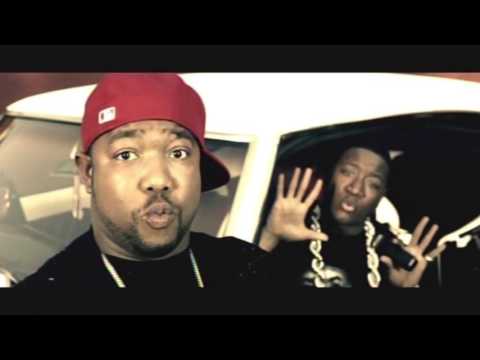

→ More from the 2000s File
View all 2000s hits →



Keep digging