The 2000s File Feature
Echo
Echo — Gorilla Zoe: Chart History and Commercial Context "Echo" by Gorilla Zoe stands as one of the more distinctive rap singles to emerge from the Atlanta s…
01 The Story
Echo — Gorilla Zoe: Chart History and Commercial Context
"Echo" by Gorilla Zoe stands as one of the more distinctive rap singles to emerge from the Atlanta scene during the late 2000s, a period when the city's influence on mainstream hip-hop was at its most expansive. Released through Block Entertainment, Bad Boy South, and Atlantic Records, the track arrived in 2009 during a moment when Auto-Tune processing had moved from a relatively novel production choice to a genuinely contested element of mainstream rap's identity. The song's heavy, deliberate use of pitch correction placed it squarely within a trend that was simultaneously celebrated by some artists and denounced by others, most famously by Jay-Z's "D.O.A. (Death of Auto-Tune)" released in the same year.
Gorilla Zoe, born Alonzo Mathis, had established himself as a fixture in the Atlanta rap ecosystem through his association with Boosie Juice and his earlier mixtape work before securing major-label distribution via the Bad Boy South imprint, which was Diddy's southern-focused sublabel. The Bad Boy South connection gave Zoe's material access to promotional infrastructure that independent Atlanta acts often lacked, and "Echo" was positioned to take advantage of that reach. The single reached the top 40 of the Billboard Hot 100, reflecting its genuine commercial traction at a moment when Atlanta rap was producing an unusually high volume of charting singles.
The production on "Echo" is defined by a cyclical, hypnotic quality. The beat builds around a looping instrumental motif that reinforces the song's titular concept, with the repetitive structure of the track mirroring the repetitive, reverberant quality of an echo itself. This was not merely a conceptual conceit but a functional production choice: repetitive, loop-based hip-hop was particularly effective on radio formats because its hooks embedded themselves quickly into listener memory. The producers understood that in an era of compressed radio playlist windows, a song had seconds to establish its identity, and "Echo" used its cyclical structure to accomplish that immediately.
Auto-Tune had become a genuinely polarizing topic in hip-hop criticism by 2009, and "Echo" was frequently cited in discussions about the technique's commercial applications. T-Pain had popularized the heavily processed vocal effect as a deliberate aesthetic choice rather than a corrective tool, and a generation of southern rappers had adopted it, adapting it to their own regional and stylistic contexts. Gorilla Zoe's use of the effect on "Echo" was particularly pronounced, with the pitch correction shaping not just individual phrases but the overall melodic architecture of the track. This approach gave the song an almost hypnotic, dreamy quality that distinguished it from more straightforward rap records of the period.
The chart performance of "Echo" reflected the particular dynamics of hip-hop radio in 2009. The track spent multiple weeks on the Hot 100 and performed strongly on the Hot R&B/Hip-Hop Songs chart, where it was a consistent presence during its run. Its performance on rhythmic radio added to its overall chart strength, as the song translated effectively across multiple format contexts. Urban radio in particular gave the track substantial rotation, helping build the kind of cumulative audience that sustained a multi-week chart presence.
Gorilla Zoe's artistic identity at the time of "Echo" was defined by his regional specificity. He was unambiguously an Atlanta product, and his stylistic approach reflected the influence of the Dungeon Family tradition, the crunk movement that had defined the early 2000s, and the emergent trap aesthetic that was beginning to coalesce around producers like Lex Luger and Zaytoven. "Echo" sat at a productive intersection of these influences, incorporating enough melodic softness to reach pop-adjacent audiences while retaining the regional identity markers that made it credible within the Atlanta hip-hop ecosystem.
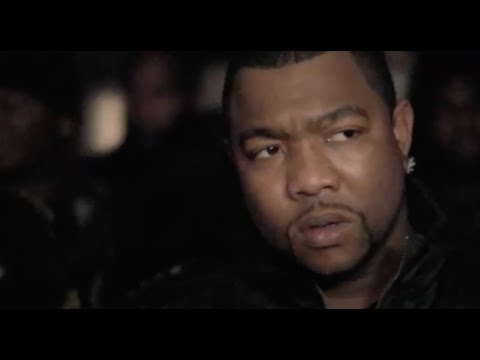
The music video for "Echo" received significant rotation on BET and other urban-format channels, extending the track's visibility beyond its radio life and helping it reach audiences who consumed music primarily through video. This visual component was particularly important for an artist at Gorilla Zoe's career stage, as music video exposure provided a platform for building the kind of name recognition that translated into live performance bookings and sustained commercial activity.
In the larger narrative of late-2000s Atlanta hip-hop, "Echo" represents the moment when Auto-Tune ceased to be a production novelty and became a structural element of the genre's sound. The debate over its artistic legitimacy, which was very much alive in 2009, now seems somewhat distant: pitch processing has become so thoroughly integrated into hip-hop production norms that the arguments of that period feel like historical artifacts. "Echo" was one of the records that normalized that integration for mainstream audiences.
The Bad Boy South imprint gave "Echo" a promotional context that situated it within a longer tradition of southern hip-hop commercialization, but the track's aesthetic DNA was specific to Atlanta in a way that even the label's broader reach could not fully dilute. Gorilla Zoe remained most credible as a regional artist, and "Echo" represented the high-water mark of his national commercial exposure. The track's chart performance has made it the most recognizable entry in his recorded catalog, the single most likely to surface in retrospective discussions of the 2009 rap landscape.
02 Song Meaning
Echo — Gorilla Zoe: Themes and Artistic Meaning
"Echo" by Gorilla Zoe operates on multiple thematic registers simultaneously, using its central sonic metaphor to explore ideas about repetition, consequence, and the cyclical nature of both ambition and struggle in the context of street life. The song's title is not merely a production conceit but a thematic anchor: the notion that actions and words reverberate, returning to their source in altered forms, shapes much of the lyrical content and emotional tone of the track.
At its most accessible level, "Echo" functions as a statement of endurance and persistence. Gorilla Zoe's vocal approach across the track carries a quality of declarative confidence, positioning the narrator as someone who has survived difficult circumstances and emerged with a clear sense of purpose and identity. The repetitive, looping structure of the production reinforces this thematic insistence: the song itself enacts the idea of returning to the same point, testing it against new experience, and finding it unchanged. This structural reinforcement of the lyrical content was one of the track's more sophisticated artistic qualities, demonstrating a degree of conceptual unity between the production and the performance that is not always present in similarly commercial rap records.
The Auto-Tune processing on the track contributes to its thematic meaning in ways beyond mere stylistic fashion. The pitch correction creates a voice that sounds simultaneously human and slightly abstracted, intimate and yet mediated. This quality of altered voice, of natural sound passed through a technological filter and returned in modified form, is itself a kind of echo in the metaphorical sense the song invokes. The production choice and the thematic content were more coherent together than they might appear in isolation.
Gorilla Zoe's lyrical perspective on "Echo" draws from the Atlanta street experience that has informed much of his recorded output. The song addresses the dynamics of recognition and survival in environments where both are contingent and contested, where reputation is built through accumulation of demonstrated commitment and where the consequences of choices echo across time and relationship networks. This thematic territory was very much part of the tradition Gorilla Zoe was working within, connecting his work to a broader lineage of southern rap that had explored similar territory.
The emotional register of "Echo" is notably complex for a commercial single. The track is not simply celebratory or simply mournful; it occupies an in-between space that reflects the ambivalence of its central metaphor. An echo is both a confirmation and a reminder, both presence and absence. Gorilla Zoe's performance captures this ambivalence by moving between more assertive and more reflective moments, giving the song a texture that rewards repeated listening in ways that more purely aggressive or purely sentimental records do not.
In the context of Gorilla Zoe's catalog, "Echo" represents the moment when his regional stylistic identity intersected most successfully with the conventions of mainstream commercial hip-hop. The track demonstrated that the specific aesthetic of late-2000s Atlanta rap, with its emphasis on melodic repetition, processed vocals, and hypnotic rhythmic structures, could reach audiences well beyond the regional base from which it emerged. For listeners encountering the Atlanta sound through "Echo," the song served as an introduction to a regional tradition with roots stretching back through T.I., Ludacris, OutKast, and the foundational work of the Dungeon Family producers.
The song's meaning within the broader landscape of 2009 hip-hop is also tied to its position in the Auto-Tune debate. While Jay-Z and others were arguing that pitch correction represented a degradation of hip-hop's foundational vocal values, artists like Gorilla Zoe were demonstrating through records like "Echo" that the technique could be deployed in service of genuine emotional and thematic content rather than merely as a crutch for limited singers. The song's commercial success made it a data point in that cultural argument, evidence that audiences were willing to accept and even embrace the processed aesthetic when it was used with consistent artistic purpose.
→ More from Gorilla Zoe
View all Gorilla Zoe hits →
→ More from the 2000s File
View all 2000s hits →

Keep digging