The 2000s File Feature
Let's Make Love
Let's Make Love: Faith Hill and Tim McGraw at the Crossroads of Country and Pop Country Music's Power Couple By the summer of 2000, Faith Hill and Tim McGraw…
01 The Story
Let's Make Love: Faith Hill and Tim McGraw at the Crossroads of Country and Pop
Country Music's Power Couple
By the summer of 2000, Faith Hill and Tim McGraw were not simply two of country music's biggest names; they were the genre's most visible love story. They had met on tour in 1996 and married that same year, and the personal chemistry that made their relationship a tabloid fixation had already begun to find its way into their music. Collaborating on record was almost inevitable. "Let's Make Love" arrived at a moment when both artists were operating at the peak of their commercial power, and the timing felt less like a calculated move than a natural outgrowth of what they had built together. Country radio was eager for the collaboration, and pop radio had been watching Faith Hill's crossover momentum with genuine interest since the Breathe album had demonstrated her ability to move beyond format boundaries.
Where Each Artist Stood
Hill had just recorded Breathe, the album that would sell over eight million copies in the United States and produce some of the era's most enduring crossover hits. McGraw was riding his own extraordinary run, stacking number-one country singles with a consistency that suggested he had found a formula that was also, somehow, not a formula at all: each hit sounded like it came from the same person, but none of them sounded quite like any of the others. Together, they had already achieved something unusual in country music: a marriage that generated coverage in mainstream celebrity media as well as in the genre press, bringing a kind of national attention to country music that the format rarely received.
The Song and Its Warmth
The record inhabits a particular emotional register that was rare in mainstream country at the time: unguarded domestic intimacy, the kind that does not dramatize or complicate itself with narrative conflict. There is no crisis or reunion in "Let's Make Love." It is simply an invitation, delivered with warmth and complete sincerity. The production supports that mood without ever overloading it: the arrangement breathes, the tempo stays unhurried, and both vocalists get enough space to color their lines individually before blending into the choruses. The fact that Hill and McGraw were genuinely married when they performed this song added a layer of authenticity that would have been impossible to manufacture with two artists who were simply professional collaborators.
The Chart Journey
The single debuted on the Billboard Hot 100 on August 12, 2000, entering at number 83. Its climb was gradual and patient, the kind of ascent that radio formats reward when a song stays in steady rotation rather than burning through its lifespan in a single week. It peaked at number 54 on October 21, 2000, and held on the chart for fourteen weeks. On the country charts, where its true home was, the song performed even more emphatically, and its crossover pop traction added a dimension that extended its reach well beyond the traditional country audience. This was a record that country radio embraced without reservation and that pop programmers found they could place without friction, a combination that produces sustained chart presence.
The Grammy Moment
The song's visibility extended well beyond its radio run. "Let's Make Love" won the Grammy Award for Best Country Collaboration with Vocals in 2001, an acknowledgment that the performance had achieved something genuinely distinguished within a crowded field. Awards attention of that kind tends to refresh a song's cultural presence; it gave the track a second wave of recognition that cemented its place in both artists' highlight reels. For listeners who had followed either Hill or McGraw separately, the Grammy moment confirmed what radio had already established: this was not a promotional stunt but a genuine artistic pairing that had delivered on its promise.
A Lasting Warmth
Country music has always had a strand of domesticity running through its catalog, but tracks that celebrate ordinary love without theatrical tension are rarer than the genre's reputation suggests. "Let's Make Love" belongs to that rarer category, and its durability reflects how much appetite there is for material that simply affirms. Twenty-three million YouTube views confirm an audience that keeps returning long after the chart run. Put the song on and let the effortlessness of the performance do its work; the warmth is real because the relationship behind it was, and that reality comes through every time.
"Let's Make Love" — Faith Hill's singular moment on the 2000s charts.
02 Song Meaning
Intimacy Without Apology: The Meaning of "Let's Make Love"
The Quiet Radicalism of Simplicity
In a pop landscape that often rewards complexity, confession, and narrative drama, "Let's Make Love" stakes out a different position: it is a song that means exactly what it says, and it carries no embarrassment about that directness. The lyrics do not reach for metaphor or complication. They extend an invitation that is warm, adult, and entirely confident in its own emotional register. That simplicity, rather than limiting the song, gives it a particular kind of staying power. There is nothing to decode or reinterpret; the emotional work the track does is immediate and unambiguous, which makes it accessible to any listener regardless of their relationship with country music specifically.
Married Love and Country Tradition
Country music has long provided space for songs about committed love, the kind that does not need the scaffolding of longing or separation to generate feeling. "Let's Make Love" belongs squarely in that tradition. The fact that Faith Hill and Tim McGraw were genuinely married when they recorded and performed this song adds a layer that listeners responded to viscerally. The music is not asking you to imagine a relationship; it is documenting one. That documentary quality is central to why the collaboration felt so different from a conventional duet: the chemistry on record had roots in something real, and audiences could hear that realness without needing to be told it was there.
The Emotional Register of Desire
The song occupies a place on the spectrum of desire that pop music often skips past in favor of either innocence or explicitness. It is neither coy nor provocative; it is simply adult and at ease with itself. The shared verses and harmonies between Hill and McGraw enact the song's meaning rather than just describing it: two voices that know each other, that have developed a particular ease of communication, moving together through a piece of music the way people move together in a long relationship. The performance is the argument, and the argument is self-evidently won. This is music that trusts its audience to meet it at the level of emotional maturity it occupies.
Why It Resonated Then and Now
The summer of 2000 was a moment when pop radio was busy with maximalism: big productions, stadium-scaled choruses, elaborate narrative conceits. "Let's Make Love" arrived with a different energy, unhurried and warm, and that contrast was part of its appeal. It offered permission to slow down and inhabit a simpler feeling. Country audiences recognized it as an authentic expression of something they valued in the genre; pop crossover listeners found something restful in its confidence. The Grammy recognition in 2001 confirmed what listeners had already demonstrated through sustained chart presence: the performance had genuine distinction, and the song's meaning holds precisely because it never asks for more than what it gives.
"Let's Make Love" — Faith Hill's singular moment on the 2000s charts.
→ More from the 2000s File
View all 2000s hits →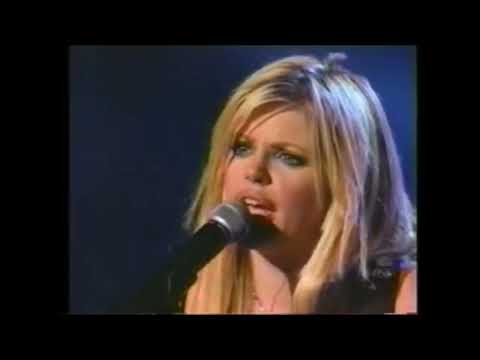


Keep digging