The 1980s File Feature
The Medicine Song
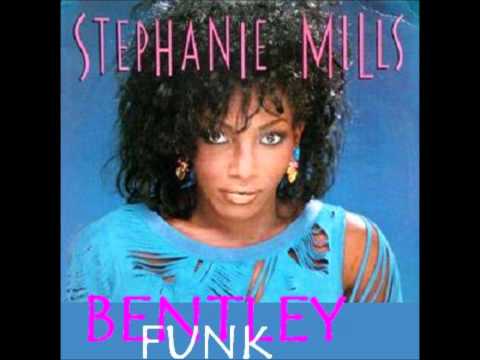
"The Medicine Song" — Stephanie Mills and the Healing Power of 1984 R the vocal performance alone repays the attention. "The Medicine Song" — Stephanie Mills…
01 The Story
"The Medicine Song" — Stephanie Mills and the Healing Power of 1984 R&B
Broadway's Daughter on the Dance Floor
By 1984, Stephanie Mills had lived multiple musical lives. She had become a teenage Broadway star by winning the role of Dorothy in the original 1975 production of The Wiz, a role that introduced her voice to audiences who would never have encountered it through radio. She had then built a significant recording career through the late 1970s and early 1980s, developing a fan base that followed her from the theatrical world into the terrain of R&B and dance music. The transition had not been without its turbulences, but by the mid-1980s she was an established presence on R&B charts and in the consciousness of listeners who valued her combination of vocal power and emotional authenticity.
The Sound of 1984 R&B
The fall of 1984 was an extraordinary moment to be making R&B records. Michael Jackson's Thriller had reshaped commercial expectations, and producers across the genre were reckoning with its synthesis of rock guitar, synthesizer sophistication, and precision rhythm programming. At the same time, the street-level appeal of new jack swing's predecessors was building, and artists who could work in the space between polished pop production and genuine R&B grit were particularly well positioned. Stephanie Mills's recordings in this period navigated this terrain with considerable skill, offering vocal performances of genuine power supported by production that understood both the commercial requirements of the moment and her specific strengths as a singer.
Six Weeks on the Hot 100
The single entered the Billboard Hot 100 on October 13, 1984, debuting at position 84. The record climbed through the fall weeks, reaching its peak of number 65 on November 3, 1984, and spent six weeks on the Hot 100 in total. The chart run was relatively brief by the standards of her more sustained R&B hits, but it represented genuine pop crossover activity for a record that found its most committed audience in the R&B format. The peak at number 65 reflected the song's particular appeal to a core audience rather than broad pop radio penetration, which was an honest reflection of where Mills's commercial strength resided in 1984.
The Casablanca and MCA Years
Mills's recording career in the early-to-mid 1980s involved navigation through the label landscape that characterized the music industry's ongoing consolidation and format fragmentation during the period. Her work in this era benefited from collaborators who understood how to showcase her voice within contemporary production frameworks without overwhelming it. The combination of her Broadway-trained vocal power and R&B production sensibility gave her records a distinctive quality, a sense of theatrical commitment brought to a genre that valued emotional directness. "The Medicine Song" belonged to this tradition, using the metaphor of healing to frame an emotional message with both personal and communal resonance.
The R&B Album That Contained It
Like most R&B singles of the mid-1980s, "The Medicine Song" existed in the context of an album that served as the primary artistic statement, with singles drawn from it serving the dual purpose of radio promotion and retail traffic generation. Mills's albums in this period were crafted to showcase her range, mixing uptempo dance tracks with slower showcase pieces that allowed her theatrical vocal training to be applied fully. The dance-oriented material, of which this track was a representative, benefited from production approaches that were increasingly drum-machine-driven and synthesizer-textured, reflecting the broader shift in R&B production away from live rhythm sections toward the electronic frameworks that would define the later 1980s sound. Mills navigated this transition without losing the qualities that had defined her earlier recordings.
A Career That Spanned Decades
The significance of any individual chart entry in Stephanie Mills's career must be understood within the context of that career's remarkable breadth. From teenage Broadway star to R&B artist to gospel performer, she traversed categories that most artists choose among rather than combining. "The Medicine Song" represents one moment in a long and genuinely distinguished journey, a piece of evidence that her commercial instincts in the mid-1980s remained sharp even as the genre around her was evolving rapidly. The six weeks it spent on the Hot 100 were earned by a record that gave its audience a genuine reason to keep returning, not simply the momentum of a promotional push. The record stands up to revisiting with fresh ears; the vocal performance alone repays the attention.
"The Medicine Song" — Stephanie Mills's singular moment on the 1980s charts.
02 Song Meaning
Healing, Rhythm, and Love as Remedy: The Meaning of "The Medicine Song"
Love as Prescription
The metaphor of love as medicine has a long history in popular music, but it carries particular resonance within the R&B tradition, which has always understood music itself as a healing force. When Stephanie Mills deployed this metaphor, she was drawing on a well of meaning that extended well beyond the simple comparison. In the Black church and community traditions from which R&B grew, the idea that sound and love and communal experience could do the work of healing was not merely poetic; it was a practical belief about how people sustained themselves through difficulty. The song participated in that belief while translating it into a secular romantic context.
The Dance Floor as a Place of Restoration
By 1984, the connection between R&B, dance music, and emotional release was deeply established. The disco era had given way to a more diversified dance music landscape, but the essential proposition remained: that moving together, that surrendering to rhythm in a communal space, was restorative. "The Medicine Song" worked within this proposition, offering its therapeutic metaphor in a musical frame that encouraged the physical response that would make the metaphor feel true. A song about healing that makes you want to move is enacting its own argument. The body's response to the groove becomes a form of confirmation.
Stephanie Mills and Theatrical Commitment
Mills's Broadway background gave her a relationship to lyrics that differed from many of her R&B contemporaries. Theatrical performance training emphasizes the delivery of text with full comprehension of its meaning and full commitment to its emotional implications, which meant that Mills approached every lyric as something to be inhabited rather than merely performed. This quality of total commitment gave even relatively conventional material an additional dimension, because the listener felt that the singer genuinely believed what she was saying. A song about love as medicine requires that quality of conviction to work at all.
Mid-1980s R&B's Social Context
The fall of 1984, when this record appeared on the Hot 100, was a moment when the Black American community was navigating a complex social landscape. The Reagan administration's policies were producing significant economic pressure on lower-income communities, and the AIDS crisis was beginning to register as a specific threat. In this context, music that offered the idea of healing and remedy, even in the context of romantic rather than social medicine, spoke to needs that went deeper than any individual relationship. R&B's capacity to provide comfort and solidarity in difficult times was one of its essential social functions, and the song participated in that function whether its audience articulated the connection or not.
A Reliable Emotional Transaction
The enduring appeal of songs that use the medicine or healing metaphor for love rests on the metaphor's accuracy. Love does, in fact, do things that medication does: it alters brain chemistry, changes pain thresholds, provides comfort during illness, and gives people reasons to continue when circumstances argue against it. Mills's performance communicated a full understanding of these stakes, treating the metaphor not as wordplay but as genuine description. The result was a record that offered its audience something more than entertainment: a form of musical validation for a belief about human connection that the audience already held.
→ More from Stephanie Mills
View all Stephanie Mills hits →


→ More from the 1980s File
View all 1980s hits →



Keep digging