The 1980s File Feature
Never Knew Love Like This Before
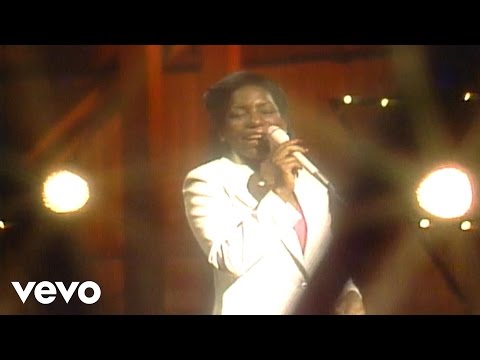
Never Knew Love Like This Before — Stephanie Mills: A Grammy-Winning Triumph on the Hot 100 Stephanie Mills arrived at "Never Knew Love Like This Before" wit…
01 The Story
Never Knew Love Like This Before — Stephanie Mills: A Grammy-Winning Triumph on the Hot 100
Stephanie Mills arrived at "Never Knew Love Like This Before" with a biography already remarkable enough for an artist twice her age. She had originated the role of Dorothy in the Broadway production of "The Wiz" in 1975 at the age of fifteen, received a Tony Award nomination for her performance, and established herself as a major theatrical talent before her recording career had properly begun. The journey from Broadway to the upper reaches of the Billboard Hot 100 was not automatic, but by 1980 she had navigated it with considerable success, and "Never Knew Love Like This Before" was the recording that placed her definitively at the front rank of R&B performers.
The song was written by James Mtume and Reggie Lucas, the production team whose names appeared on some of the most commercially successful R&B recordings of the period. Mtume and Lucas had developed a sophisticated approach to soul and R&B production that combined melodic accessibility with rhythmic sophistication, creating records that worked simultaneously on dance floors and on the radio. Their production sensibility was particularly well matched to Mills's vocal abilities; she had the kind of voice that could carry melodic material of real weight while maintaining the energy required for effective R&B production.
The recording was released on 20th Century Records and entered the Billboard Hot 100 in 1980. It climbed to number six on the Hot 100, making it one of the highest-charting singles of Mills's career and one of the significant R&B crossover achievements of the year. On the R&B chart, it performed even more strongly, reaching the top positions and spending multiple weeks in the upper reaches. The combination of pop crossover success and R&B dominance reflected the record's ability to work across different listening contexts, from the radio to the dance floor to the home listening environment.
The single earned Mills the Grammy Award for Best R&B Vocal Performance, Female at the 23rd Grammy Awards in 1981, a recognition that confirmed the recording's standing as among the most accomplished R&B performances of the year. The Grammy win was particularly meaningful for an artist who had been working in the music industry for several years without quite achieving the level of recognition that her talent seemed to warrant. The nomination and win established her credibility within the recording industry in a way that chart success alone, while significant, did not fully accomplish.
The production on the record was characteristic of the Mtume-Lucas approach: warm, well-layered, and rhythmically precise without ever losing the melodic warmth that allowed the vocal to take center stage. The arrangement gave Mills enough support to project the emotional content of the material fully while avoiding the kind of production overcrowding that can diminish the impact of a strong vocal performance. This balance between production richness and vocal space was one of the distinguishing features of the best R&B production of the period, and Mtume and Lucas achieved it here with considerable expertise.
Mills's vocal performance on the recording demonstrated the range of her abilities in ways that purely theatrical work had not fully revealed to a general audience. Broadway singing required specific technical skills related to projection and clarity in a live acoustic environment; recording-studio singing rewarded different qualities, including the kind of intimate expressiveness that microphone technique enabled. Mills had clearly mastered the studio context by 1980, and "Never Knew Love Like This Before" showcased a vocal maturity and technical command that placed her among the leading R&B vocalists of her generation.
The commercial context in which the recording appeared was favorable for this style of production. The late 1970s and early 1980s were a period in which smooth, melodically sophisticated R&B was performing extremely well commercially, as the post-disco landscape settled into formats that rewarded production quality and vocal craft. Artists like Patti LaBelle, Anita Baker in her early period, and Stephanie Mills occupied a space in which the production values of soul and R&B were applied to material of real melodic sophistication, producing records that appealed to listeners who might not have been drawn to harder-edged R&B or to the more disco-oriented production that had dominated the late 1970s.
The recording's success launched a period of sustained commercial activity for Mills, who continued to release albums and singles through the 1980s with considerable success. Her profile as a performer extended across recordings, live appearances, and continued engagement with the theatrical world that had first brought her to public attention. "Never Knew Love Like This Before" remained the commercial and critical peak of this phase of her career, the recording against which subsequent work was inevitably measured, and one that held up under that comparison as a genuinely distinguished achievement in the R&B tradition.
02 Song Meaning
Never Knew Love Like This Before — Joy, Discovery, and the Fullness of New Love
"Never Knew Love Like This Before" inhabits the emotional territory of discovery, the specific experience of encountering a romantic love so complete and transformative that it makes all previous experience of emotion seem incomplete by comparison. This is a familiar subject in popular music, but the song approaches it with a particular quality of genuine wonder that elevates it above the formulaic. The central claim is not that the protagonist has found love, which would be unremarkable, but that love at this intensity and depth was something she did not know was available to her before the present relationship revealed it.
The thematic distinction matters because it gives the song a quality of emotional humility alongside its celebration. The protagonist is not claiming superiority of past feeling; she is acknowledging a limitation in her prior experience and expressing gratitude for having that limitation exceeded. This quality of grateful wonder is one of the defining emotional registers of the recording, and Stephanie Mills's vocal performance conveys it with a specificity that makes the emotion feel genuine rather than performed. Her background in theatrical performance gave her tools for emotional communication that purely pop-trained vocalists sometimes lack.
The production by James Mtume and Reggie Lucas supported this emotional register with arrangements that were warm and enveloping without becoming cloying. The sonic environment they created for Mills was one of gentle richness, a musical world that felt like the setting for an emotion of this quality rather than a commercial product designed to simulate one. This distinction between feeling authentic and feeling manufactured is difficult to articulate precisely but is immediately perceptible to listeners, and the recording's commercial success reflected the audience's recognition of something genuine in both the production and the performance.
The song's treatment of love as discovery also places it in a tradition of R&B that valued emotional testimony, the first-person account of an emotional reality that the listener is invited to recognize and share. Soul and R&B music of the 1970s and early 1980s developed this tradition with considerable sophistication, producing records in which the vocal performance functioned as a form of witness, one person testifying to an emotional truth in a way that invited collective recognition. "Never Knew Love Like This Before" participates in this tradition with genuine authority.
For Stephanie Mills as an artist, the song's meaning extends beyond its lyrical content to its function as a demonstration of her full range as a recording performer. Her Broadway career had established her as a vocalist of exceptional ability, but Broadway ability and recording ability are related but distinct skills, and the song proved that she had mastered both. The Grammy Award for Best R&B Vocal Performance, Female that she received for the recording confirmed that her peers in the recording industry recognized the achievement. For a young artist navigating the transition from theatrical to recording success, that kind of industry recognition had concrete value in terms of how future projects would be perceived and funded.
The lasting significance of the recording in her catalog is the way it captures a particular quality of emotional openness and gratitude that is not easily manufactured. Songs that celebrate love at the moment of its fullest recognition are common; recordings that actually communicate that emotion with the specificity and sincerity that "Never Knew Love Like This Before" achieves are considerably rarer. That rarity is what has kept the recording in active conversation with subsequent generations of listeners and what gives it a significance within the R&B tradition that its chart numbers alone do not fully explain.
→ More from Stephanie Mills
View all Stephanie Mills hits →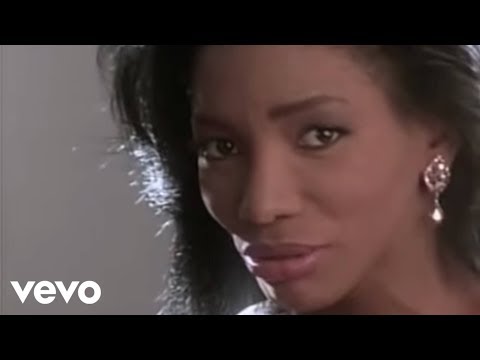



→ More from the 1980s File
View all 1980s hits →

Keep digging