The 1980s File Feature
I Wish I Had A Girl
I Wish I Had A Girl — Henry Lee Summer's 1988 Breakout The Heartland Rock Moment There is a particular quality to the late 1980s American rock radio landscap…
01 The Story
I Wish I Had A Girl — Henry Lee Summer's 1988 Breakout
The Heartland Rock Moment
There is a particular quality to the late 1980s American rock radio landscape that is easy to forget now: it was genuinely vast and diverse in ways that the dominant narrative of that decade sometimes obscures. Yes, there were synthesizers and big reverb drums and MTV-sculpted pop-metal stars, but there was also a current of scrappier, more rootsy American rock that found its audience outside the glossy mainstream. Henry Lee Summer emerged from Indianapolis, Indiana, in 1988, and "I Wish I Had A Girl" became his introduction to that national audience, a warmly received single from an artist who had been paying his dues in the Midwest club circuit for years before anyone in the wider music industry took notice.
Summer had been recording and performing throughout the mid-1980s without breaking through nationally. He had an independent spirit that kept him working regional venues and building a loyal following, the kind of artist who develops his craft in front of real audiences rather than in showcase showcases for industry gatekeepers. When "I Wish I Had A Girl" finally found national traction in early 1988, it felt like a reward for that sustained labor.
The Sound and the Song
The track draws on a blend of guitar-driven rock and radio-friendly melodicism that placed it comfortably in the heartland rock tradition that John Mellencamp and others had established earlier in the decade. The production had a warm, uncluttered quality that contrasted with the more lavishly produced pop-rock dominating MTV at the time. There is something almost deliberately modest about it, a commitment to sound and song over sonic spectacle that gave it a different kind of appeal.
Lyrically, the song inhabits the universal territory of romantic longing, a narrator imagining the relationship he wants, describing its qualities in detail, while acknowledging that such a connection remains elusive. The emotional register is more wistful than desperate, which gave it broad appeal across demographic lines. Radio listeners who had grown slightly weary of power ballads and arena-rock bombast responded to something that felt a little more grounded.
A Patient Rise on the Hot 100
The single debuted on the Billboard Hot 100 on February 13, 1988, entering at number 90. Its trajectory over the following weeks was encouraging: 72, then 62, then 53, demonstrating the kind of consistent upward movement that reflects genuine radio and retail traction rather than a promotional blip. By the end of April 1988, it had reached its peak position of number 20 on April 30, a top-20 showing that certified Summer as a genuine chart presence rather than a novelty act.
Eighteen weeks on the Hot 100 was a substantial run that spoke to the song's durability on radio. Programming directors were finding that "I Wish I Had A Girl" held up over repeated plays, the test that separates genuine hits from one-week wonders. The peak at number 20 was Summer's highest-charting single and the achievement that defined his commercial career.
The Album and the Context
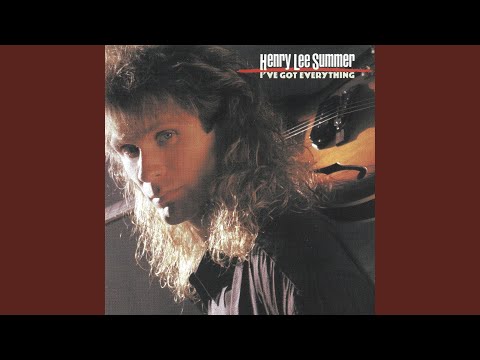
The track appeared on Summer's album Henry Lee Summer, his major-label debut on CBS Records, a release that introduced him to an audience that had not had the chance to discover him through the regional circuit. The album placed him squarely in a lineage of Midwestern rock performers who wrote about ordinary life with directness and unpretentious craft. In 1988, that kind of straightforward rock storytelling occupied an interesting space, respected by audiences but sometimes undervalued by critics who found it less conceptually ambitious than the alt-rock and college radio sounds that were beginning to gain critical prestige.
Summer followed this success with additional albums, never quite replicating the chart peak of "I Wish I Had A Girl" but maintaining a committed following in the heartland markets where his music felt most naturally at home. The single's success gave him a platform he used productively, even if the wider breakout that number 20 might have promised did not fully materialize.
A Modest Classic of Its Moment
What makes "I Wish I Had A Girl" worth remembering is precisely what made it successful in 1988: a complete absence of pretension, a song that knew exactly what it wanted to say and said it with warmth and a strong melody. The late 1980s produced plenty of rock music that strained for significance or drowned its ideas in production excess. Summer's single did neither. It was the sound of a working musician from Indianapolis writing honestly about something everyone recognizes, and finding, for a few weeks in the spring of 1988, a genuinely national audience for that honesty. Press play and rediscover what heartland rock felt like when it was just getting out of the garage.
"I Wish I Had A Girl" — Henry Lee Summer's singular moment on the 1980s charts.
02 Song Meaning
I Wish I Had A Girl — Longing, Simplicity, and the Midwest Rock Tradition
The Poetry of Ordinary Longing
There is a long tradition in American popular music of songs that take an utterly familiar emotional situation, the desire for romantic connection, and give it just enough specific detail to make it feel personal rather than generic. "I Wish I Had A Girl" belongs to this tradition. The song's power comes from its directness, from the willingness to articulate a yearning that most adults recognize without dressing it in irony or metaphorical distance. The narrator is not performing emotional complexity; he is simply stating what he wants and acknowledging its absence.
This kind of lyrical plainness requires a certain courage in a rock context, where ambiguity and coolness are often valued above sentiment. Henry Lee Summer's willingness to be uncool in this sense, to say directly "I want this and I don't have it," gave the song an emotional accessibility that more guarded songwriting cannot achieve.
Midwestern Values in the Music
The heartland rock tradition that Summer inhabited in 1988 had particular values embedded in it: a preference for emotional honesty over stylistic posturing, a connection to working-class experience and geography, a suspicion of coastal sophistication. These values are audible in the song's production and performance, in the unadorned guitar tones, in the absence of ironic distance, in the way Summer's voice carries the lyric without theatrical decoration.
For listeners in markets outside the major coastal cities, this kind of music felt like an acknowledgment of their own experience. The late 1980s mainstream was often dominated by sounds and images that felt imported from Los Angeles or New York, and a song from Indianapolis that spoke in a plainly American voice had a different relationship to its audience's geography and self-image.
Romantic Idealism and Its Discontents
The song engages with romantic idealism in an interesting way. The narrator constructs a kind of imaginary beloved, describing the relationship he is longing for in enough detail that it takes on a specific shape. This act of imaginative longing is both charming and slightly melancholic; it suggests someone who has thought very carefully about what he wants from love and has not yet found it. The gap between the imagined ideal and the narrator's present reality gives the song its emotional texture.
Late-1980s pop culture was saturated with images of romantic fulfillment, from music videos to teen movies to advertising. A song that acknowledged the gap between aspiration and reality, that admitted to longing without guaranteeing resolution, offered something slightly more honest than most of what surrounded it on the radio.
Why It Resonated Beyond Its Moment
Summer's track earned 18 weeks on the Billboard Hot 100 because it found a genuine emotional frequency and stayed on it. Songs about wanting love, written with enough specificity to feel personal and enough generality to feel universal, have an unusually long shelf life. They do not depend on references that date them, and they do not require listeners to share specific cultural knowledge. They simply require the ability to recognize a familiar feeling.
Decades later, the song holds up as a document of what mainstream American rock radio valued in the late 1980s: directness, melody, warmth, and an emotional subject matter broad enough to reach across regional and demographic lines. It is a modest achievement by any grand historical measure, but in the category of songs that connected honestly with a large audience in their moment, it earns its place.
→ More from Henry Lee Summer
View all Henry Lee Summer hits →


→ More from the 1980s File
View all 1980s hits →



Keep digging