The 1980s File Feature
Hands On The Radio
Henry Lee Summer's "Hands On The Radio": Heartland Rock's Brief Chart Moment Indiana's Favorite Son Arrives The late summer of 1988 was a crowded moment on t…
01 The Story
Henry Lee Summer's "Hands On The Radio": Heartland Rock's Brief Chart Moment
Indiana's Favorite Son Arrives
The late summer of 1988 was a crowded moment on the Billboard Hot 100. Hair metal and glossy pop were trading chart positions at the top, while in the mid-tier of the chart, all manner of sounds competed for the diminishing middle ground of radio attention. Into this field walked Henry Lee Summer, an Indianapolis-born singer-songwriter whose brand of unpretentious heartland rock had been building a regional following long before he attracted national attention. His debut album for CBS Records arrived with a distinctive lack of artifice: here was a performer who seemed genuinely uninterested in the image machinery of late-1980s pop, focused instead on songs and performances that connected on a straightforwardly human level.
"Hands On The Radio" was drawn from Summer's self-titled debut album, released in 1988. The track arrived on the Billboard Hot 100 on September 17, 1988, debuting at number 85. That debut position was also the peak, marking the high-water mark of the song's chart run before it began a gentle decline over the following two weeks.
The Music and the Approach
Summer's musical identity drew on a tradition of American rock that valued directness and feel over production sophistication. The sound of "Hands On The Radio" leans into this: the arrangement is guitar-centered and built for straightforward delivery, without the kind of elaborate production architecture that defined much of the era's mainstream rock output. Summer's vocals carry a roughness that suits the material, projecting the personality of someone more interested in communicating than impressing.
The song's subject matter, the relationship between a radio listener and the music coming through the speakers, gave it an immediately relatable frame of reference. Radio in 1988 was still the dominant medium through which most listeners encountered new music; the experience of turning a dial and finding a song that spoke directly to you was universal in ways that later generations of streaming listeners would find harder to reconstruct. The song tapped into that intimacy.
Three Weeks and a Lesson in Commercial Reality
The chart trajectory for "Hands On The Radio" was short. After debuting at 85, it fell to 93 the following week, then to 96 before exiting the chart. The three-week run documented the challenge facing any regional act breaking into the national market for the first time: without the radio promotion budget and industry infrastructure that major label priority acts received, maintaining chart momentum required either an exceptional organic moment of audience connection or substantial promotional investment. Summer's debut landed somewhere between those two requirements.
The brevity of the chart run did not reflect the quality of the recording or the reception in Summer's home market of the Midwest, where he had developed a loyal following through years of live performance. Regional success and national chart performance were often loosely correlated at best in the pre-streaming era, and Summer's situation illustrated that gap clearly.
Subsequent Success and Lasting Presence
Summer's chart story did not end with "Hands On The Radio." His follow-up single "I Wish I Had a Girl" reached the top 20 on the Hot 100 in 1989, proving that the debut charting had laid genuine groundwork even if the first single had not broken through on its own. Summer's ability to sustain and build on his initial national exposure demonstrated the value of his years of live performance experience, which had given him the tools to convert radio attention into lasting audience relationships.
His subsequent albums continued to find audiences in the heartland rock territory, and his live reputation remained strong through the following decade. The Indianapolis music scene that produced him took pride in his national visibility in ways that the chart numbers alone could not capture.
A Document of Heartland Ambition
Heard today, "Hands On The Radio" is an honest, unpretentious piece of work that captures a particular mode of American rock that has always existed in productive tension with the commercial mainstream. Summer was not trying to sound like the glossy pop of 1988; he was trying to sound like himself, which is a harder and more admirable thing. The song's brief chart presence is less important than what it represented: a regional artist of genuine talent getting a moment of national exposure and using it to lay the foundation for something more durable. Turn it up and you can hear the Midwest in it.
"Hands On The Radio" — Henry Lee Summer's singular moment on the 1980s charts.
02 Song Meaning
Radio, Connection, and the Meaning Behind "Hands On The Radio"
The Radio as Sacred Object
In 1988, the radio was still the primary technology through which most Americans encountered new music. The physical act of reaching out and turning a dial, of scanning through static and fragments until something landed, was a deeply personal ritual that connected individual listeners to a shared cultural stream. "Hands On The Radio" understood this intimacy and made it the explicit subject of its emotional argument. The radio here is not background noise; it is a lifeline, a companion, a source of the kind of connection that the song implies is harder to find in the immediate human environment.
The central image of hands on the radio carries a tactile specificity that grounds the song's abstract feelings in physical reality. Hands suggest agency, desire, and presence. Placing them on the radio suggests a kind of supplication, a reaching toward something that can deliver what the immediate world is not providing. The emotional resonance of that gesture was immediately legible to listeners in 1988, for whom the radio's ability to deliver the right song at the right moment was a genuine, often surprising experience.
Loneliness and the Saving Power of Music
The emotional core of the song is the experience of feeling alone and finding in music an antidote to that aloneness. This is one of the most foundational themes in popular music, the reason the medium exists in something like its current form: songs provide company, recognition, and the sense of being understood by something outside the self. Summer's lyrical approach to this theme is direct and unself-conscious, which gives it a disarming quality in an era when ironic distance was increasingly fashionable in rock songwriting.
The heartland rock tradition from which Summer emerged had always placed a premium on emotional sincerity, tracing a lineage from artists like John Mellencamp and Tom Petty who wrote about ordinary American experience without condescension or pretension. "Hands On The Radio" fits comfortably in that tradition, taking the listener's experience seriously and writing about it without irony or detachment.
The Midwest as Emotional Landscape
Summer's Indianapolis background is audible in the song's sensibility. The Midwest of popular culture is a place of particular emotional associations: wide open spaces, working-class pride, a certain stoic relationship to hardship and joy alike. Music from this landscape tends toward the communal and the direct, valuing shared emotional experience over individual artistic display. "Hands On The Radio" operates within these values, constructing an emotional scenario that most listeners can recognize from their own experience without requiring any specialized cultural knowledge.
The summer of 1988 was a moment when that kind of directness was not at the center of commercial pop culture but was not invisible either. The chart success that Summer found with subsequent releases demonstrated that there was an audience for his particular brand of emotional honesty, even in an era dominated by more polished sounds.
A Small Song About a Big Feeling
The modesty of "Hands On The Radio" is part of its appeal. It does not reach for epic proportions or manufacture the kind of dramatic intensity that would feel out of proportion to its subject. Instead, it stays close to the human scale of the experience it describes: a person, a radio, a moment of connection. That human scale is appropriate to the emotional territory, and Summer's instinct to keep it there rather than inflate it reflects a songwriting maturity that the brief chart run alone might not suggest.
The song endures, modestly, as a record of what it felt like to need music and to find it on the radio, to have that small piece of technology serve as the door between isolation and connection. That experience, in various technological forms, is as current as any streaming playlist.
→ More from Henry Lee Summer
View all Henry Lee Summer hits →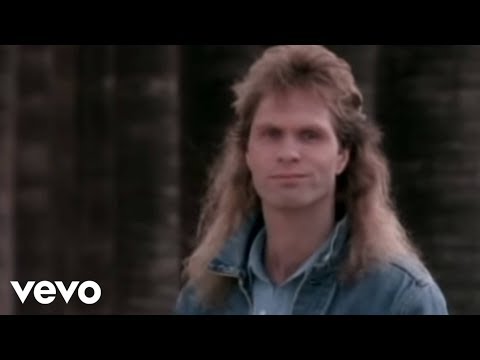



→ More from the 1980s File
View all 1980s hits →

Keep digging