The 1970s File Feature
Wild Night
Wild Night — Van Morrison Lights Up the 1970s Hot 100 There is a quality in Van Morrison's best work that is almost impossible to describe without recourse t…
01 The Story
"Wild Night" — Van Morrison Lights Up the 1970s Hot 100
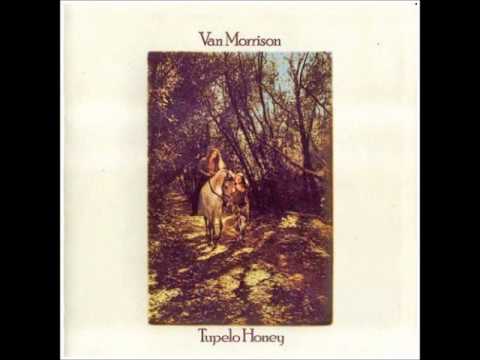
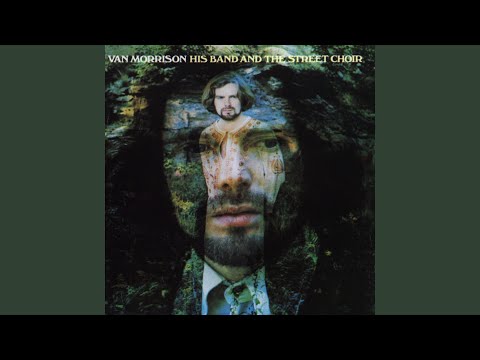
There is a quality in Van Morrison's best work that is almost impossible to describe without recourse to the word alive, the sense that the music is not simply played but inhabited, that the performer is inside the song rather than performing it from a distance. By the autumn of 1971, that quality had been audible on records for years: in the ecstatic sprawl of Astral Weeks, in the grounded warmth of Moondance, and in the increasingly expansive explorations of his subsequent albums. "Wild Night," drawn from the Tupelo Honey album released that year, captured a specific and joyful register within that larger body of work, one that proved immediately accessible to radio audiences in a way that some of his more inward recordings had not.
Morrison in His Early-Seventies Prime
The period roughly bracketed by Astral Weeks in 1968 and Veedon Fleece in 1974 represents one of the most remarkable sustained creative runs in the history of American popular music, and Van Morrison was its architect. He was working with unusual consistency and depth, drawing on an increasingly personal synthesis of Celtic folk, gospel, blues, jazz, and the kind of mystical lyricism that resisted easy categorization. By 1971, Morrison had established himself as one of the most singular and uncompromising artists in rock, someone whose critical reputation was secure but whose relationship with mainstream commercial success remained somewhat unpredictable. "Wild Night" was a record that brought those two worlds into unusually close alignment.
The Sound and Feel of the Track
Where some of Morrison's work from this period could feel dense or deliberately difficult for pop radio, "Wild Night" runs with a directness and physical energy that communicates immediately. The rhythm section is propulsive, the arrangement creates genuine momentum, and Morrison's vocal performance rides the groove with evident enjoyment. There is a celebratory quality to the track, a sense of the world opening up on a specific kind of night, that gives it an infectious quality rather different from the inward contemplation of his more introspective work. The horns and the rhythm section work together to create a feeling of forward motion that makes the song easy to inhabit even on a first listen.
Eleven Weeks and a Peak at Number 28
"Wild Night" debuted on the Billboard Hot 100 on October 9, 1971, entering at number 83 and beginning a determined climb through the fall chart weeks. It moved from 83 to 77, then 63, 55, 43, ascending steadily as radio play accumulated. The single reached its peak position of number 28 on December 4, 1971, and spent eleven weeks on the chart in total. A top-30 finish in late 1971 was genuine mainstream success for an artist who had not always found the pop chart receptive to his particular vision, and it confirmed that Morrison's work could reach a broad audience when the right song arrived.
The Hot 100 in the Fall of 1971
The charts in the autumn of 1971 were in the middle of one of the more eclectic periods in Hot 100 history. Soul music was at a creative peak, country crossover was becoming a significant commercial force, and rock in all its varieties was fighting for position against a pop mainstream that was still figuring out which of the late-sixties' innovations would translate into sustainable commercial formats. For a Van Morrison track to crack the top 30 in that environment was a confirmation of his ability to connect across genre boundaries when the material was right.
Legacy: A Song That Keeps Finding New Ears
The enduring life of "Wild Night" was considerably extended in 1994 when John Mellencamp and Me'Shell Ndegeocello took the song to number 3 on the Hot 100, introducing a new generation to the track and sending listeners back to the original. Morrison's version retains its vitality as the source, the one that established what the song's energy actually was before anyone else got their hands on it. Its 173,000 YouTube views represent a steady stream of listeners finding their way to the original, some for the first time and some returning with renewed appreciation for where it all began.
Play the original and you will understand immediately why it has been worth returning to for more than fifty years.
"Wild Night" — Van Morrison's singular moment on the 1970s charts.
02 Song Meaning
The Meaning Behind "Wild Night" by Van Morrison
Van Morrison has spent a career writing about the ordinary world transfigured: the street, the river, the radio, the specific sensory textures of a particular time of day or season, all rendered in language that turns the familiar into something charged with significance. "Wild Night" operates in this mode with unusual accessibility, taking the specific experience of a night that feels alive with possibility and rendering it in imagery vivid enough to be immediately felt by anyone who has ever walked out into a city at night and found the air itself buzzing with something they could not quite name.
The City as Charged Landscape
The opening of the song's lyrical world places the listener on the streets: people moving, music coming through windows, the sensory texture of a city on an evening when something unnamed but significant seems to be in the air. Morrison's gift for placing listeners inside a specific moment is fully operative here. You do not simply hear about the wild night; you are made to feel it, through accumulations of sensory detail that are specific enough to be real and general enough to accommodate the listener's own particular memories of nights that felt this way. That combination of specificity and accessibility is one of the central techniques of the best popular songwriting.
The Excitement of Pure Possibility
What makes the wild night "wild" in the song's framework is not anything that happens; the excitement is in what might happen, in the sense of potential that hangs in the air before the evening has committed to any particular course. The feeling the song captures is anticipatory rather than retrospective, the heightened attention of someone who senses that something significant is available but has not yet arrived. This emotional state is extremely difficult to sustain in a three-to-four minute record without tipping into vagueness, and Morrison's achievement is to keep it vivid and specific throughout.
The Joyful Body in Morrison's World
Morrison has always been a physically engaged singer, someone whose relationship with music is rooted in the body's response to rhythm and groove as much as in any purely intellectual or emotional engagement. "Wild Night" reflects this sensibility: it is a song meant to be felt as much as understood, and the physical pleasure of the groove is inseparable from the lyrical content. The night is wild partly because the body is alive to it, because the senses are open and the rhythm has a hold. This integration of the physical and the experiential is central to Morrison's best work and gives his records a quality of aliveness that purely cerebral songwriting rarely achieves.
The Social Energy of the Song
Unlike much of Morrison's more inward work, "Wild Night" is outward-facing in its orientation: it is interested in the world beyond the narrator's interior, in the people on the streets, the music from the windows, the collective buzz of a city on a particular kind of night. This social dimension gives the song a warmth and generosity that connects it to the soul and R&B traditions it draws from, musical forms deeply invested in the communal experience of music and dance. Morrison's roots in those traditions are audible in the track's energy and in its willingness to share its excitement rather than contain it.
A Song That Lasts
What keeps "Wild Night" returning to listeners across decades is its emotional accuracy about a specific kind of experience. The feeling of a night that seems to vibrate with possibility, that asks you to be present and alive to it rather than retreating into routine, is one that recurs in lives of all kinds. Morrison caught it in a form that has outlasted its original context and continues to deliver the feeling it promises, which is the highest thing a song can do.
→ More from Van Morrison
View all Van Morrison hits →
→ More from the 1970s File
View all 1970s hits →




Keep digging