The 1970s File Feature
Blue Money
"Blue Money" — Van Morrison's Street-Level Soul The Belfast Mystic in Early 1971 There is something almost counterintuitive about Van Morrison placing a song…
01 The Story
"Blue Money" — Van Morrison's Street-Level Soul
The Belfast Mystic in Early 1971
There is something almost counterintuitive about Van Morrison placing a song called "Blue Money" on the Billboard Hot 100 in 1971. By that point, Morrison had already delivered Astral Weeks, the 1968 album that critics would eventually place among the most transcendent recordings in popular music history, and Moondance, the 1970 breakthrough that had finally given his singular vision commercial traction. He was understood as an artist who dealt in the ineffable, in the spiritual and the mystical, in jazz-inflected soul that reached toward something beyond ordinary lyrical content.
"Blue Money" was something different within his catalog: a groove-driven, lyrically worldly track that rooted itself firmly in the material, in cash, in the exchanges of ordinary life. It appeared on the album His Band and the Street Choir, released in November 1970, an album that positioned Morrison in an earthier, more populist mode than Astral Weeks had suggested was possible.
Street Choir and the New Sound
His Band and the Street Choir marked Morrison working with a larger ensemble than he had used previously, incorporating horn arrangements and a funkier rhythm section approach alongside his more familiar jazz and folk inflections. The album had already generated his biggest American hit, "Domino," which reached number 9 on the Hot 100 and demonstrated that Morrison could crack the mainstream without sacrificing his artistic personality. "Blue Money" arrived as the follow-up single, attempting to sustain the commercial momentum that "Domino" had established.
The production on "Blue Money" has a lightness and forward momentum that distinguished it from the more atmospheric work Morrison had been known for. The horn section drives the track with a soul-influenced energy, and the rhythm section keeps the groove tight without constraining the vocalist's improvisational tendencies.
Twelve Weeks on the Hot 100
The single debuted on the Billboard Hot 100 on February 6, 1971, entering at position 79. What followed was a slow, steady climb that demonstrated genuine radio traction. Over the ensuing weeks, the track moved through 62, 52, 44, 39, and continued upward before reaching its peak of number 23 on the chart dated April 3, 1971. The record spent 12 weeks on the chart. A top-25 performance over 12 weeks represented one of Morrison's strongest American chart showings, confirming that the commercial approach of His Band and the Street Choir was working.
Twelve weeks was a significant chart run for any single, and for an artist of Morrison's particular temperament, reaching number 23 on the mainstream pop chart was an unusual achievement that his most devoted followers might have considered slightly beside the point, but that his record label certainly celebrated.
Morrison's Relationship with Commercial Success
Van Morrison's relationship with mainstream commercial success has always been complex. He has never hidden his ambivalence about the promotional apparatus of the music industry, about the expectations and obligations that come with chart success. The 1971 period represents the closest he came to sustained mainstream commercial traction, with "Domino" and "Blue Money" establishing him briefly as an artist who could compete on radio terms with the era's more overtly commercial acts.
That period produced genuine tension between Morrison's instincts as an artist and the industry's expectations of him as a hit-maker. The trajectory of his subsequent recordings shows him pulling back from the populist mode of His Band and the Street Choir toward the more interior, spiritual explorations that define the bulk of his catalog.
The Song's Place in a Remarkable Catalog
"Blue Money" is an outlier in Morrison's body of work in the best possible sense: evidence that the artist who made Astral Weeks could, when he chose to, build a groove, work a horn chart, and deliver something with the irresistible forward motion of genuine soul music. The track demonstrates the range of his musical intelligence, his ability to operate in modes that seemed at odds with his established identity without losing his essential character as a performer.
Put it on and hear Morrison at the intersection of the transcendent and the thoroughly earthbound, the mystical voice finding its way through a groove that will not let you stand still.
"Blue Money" — Van Morrison's singular moment on the 1970s charts.
02 Song Meaning
"Blue Money" — Commerce, Longing, and the Material World in Morrison's Universe
Money as Subject in Soul and R&B
The word "blue" in song titles often signals a modality: blue as in sad, melancholy, longing. Combined with "money," it creates a phrase that immediately implies a particular kind of dissatisfaction, not the simple absence of wealth but something more complicated, the feeling that money and what it represents are somehow tinged with longing or loss. Van Morrison's track plays with these associations while rooting the song in a groove that physically contradicts any simple sadness, the body moving even as the lyric contemplates the difficulties of the material world.
Money as a lyrical subject in soul and R&B has a long tradition. The genre's roots in African American experience meant an honest engagement with economic realities: how money is earned, how it is withheld, what it costs emotionally to pursue it, what it means when it arrives or fails to arrive. Morrison's engagement with this subject brought an outsider's perspective, a working-class Northern Irish sensibility applied to a genre built by Black American artists.
The Earthy and the Transcendent in Morrison's Work
"Blue Money" represents the earthward pull in Morrison's artistic personality, the counterweight to the mystical elevation of Astral Weeks and later work. Morrison's artistry has always balanced the ecstatic and the mundane, the vision of transcendence alongside the texture of ordinary life: the street, the pub, the regular rhythms of working existence. Songs like "Blue Money" provide the gravitational anchor for an artistic vision that might otherwise float free of recognizable human reality.
The material world in Morrison's songs is never merely dull. His Belfast background inflects his descriptions of ordinary life with a kind of rueful appreciation, a sense that even the grind of making money and navigating the material world contains its own odd vitality.
The Groove as Emotional Argument
One of the most interesting things about "Blue Money" is the tension between its lyrical content and its musical setting. The lyric deals with the world's commercial pressures and the complications of desire for money and what it can buy, but the music is buoyant, driven, kinetic. Morrison and his band make the song feel good even as the words articulate something difficult, and that gap between form and content creates its own meaning.
This was a technique Morrison shared with the great soul recordings he drew on: the capacity to make music that felt celebratory even when the subject matter was painful or ambiguous. The groove carries you through the complications of the lyric, suggesting that life's difficulties can be survived, even danced through.
Why the Song Reached Its Audience
The top-25 Billboard performance of "Blue Money" reflected its capacity to reach beyond Morrison's established critical audience. The track's soul-influenced production gave radio programmers and listeners an accessible entry point that some of his more idiosyncratic work did not provide. Listeners who might have found Astral Weeks too abstract or demanding could hear in "Blue Money" a more familiar genre language, the horn-driven R&B that was part of the standard diet of American radio in 1971.
For those listeners, the song offered something genuine: a voice with real character, a groove with real momentum, and a lyrical perspective that acknowledged the everyday without reducing it to cliche. That combination proved broadly appealing and earned the song its respectable chart life.
"Blue Money" — Van Morrison's singular moment on the 1970s charts.
→ More from Van Morrison
View all Van Morrison hits →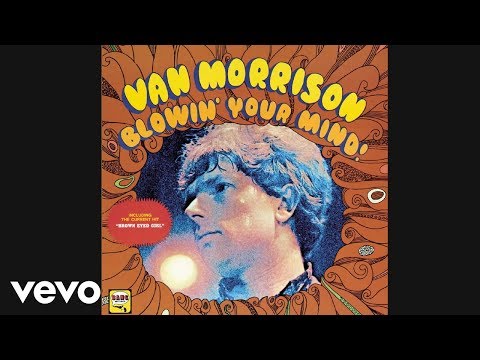



→ More from the 1970s File
View all 1970s hits →




Keep digging