The 1970s File Feature
Domino
"Domino" — Van Morrison's Joyful Departure The Man Who Wouldn't Stand Still By the time Van Morrison recorded "Domino," he had already made Astral Weeks , on…
01 The Story
"Domino" — Van Morrison's Joyful Departure
The Man Who Wouldn't Stand Still
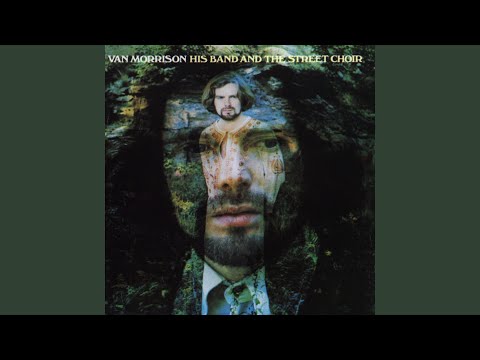
By the time Van Morrison recorded "Domino," he had already made Astral Weeks, one of the most critically revered records in the entire corpus of popular music, and followed it with Moondance, which had made him a commercial presence as well as an artistic one. The question facing him in 1970 was not whether he could make great music, but what kind of great music he would make next. Morrison has never been an artist who repeats himself, and "Domino" represented a decisive pivot toward something looser, more physical, and more joyously uncategorizable than the jazz-inflected soul poetry that had preceded it. It arrived as the lead single from His Band and the Street Choir, an album whose very title signaled an embrace of communal, spontaneous musical energy.
The Record's Sound
"Domino" is built on groove. Where Astral Weeks had created its atmosphere through restraint, modal jazz structures, and Morrison's ability to sustain a meditative emotional state across long stretches, "Domino" simply wants to move. The arrangement is tight and direct: organ, piano, guitar, a rhythm section keeping authoritative time, and horns punctuating at strategic moments. The track was recorded with a live ensemble energy that distinguishes it from more carefully constructed studio productions, and Morrison's vocal performance matches that energy, flexible and expressive and clearly having a tremendous amount of fun. The word "domino" in the context of the song functions more as a sound than a concept, a syllabic percussion element as much as a word with semantic content.
A Commercial Surprise
Van Morrison was not, in 1970, primarily thought of as a singles artist. His albums were the primary medium through which his music was experienced, and the idea of charting on the Billboard Hot 100 alongside the pop and soul acts of the day might have seemed incongruous with his reputation as a serious artist working at some distance from commercial formulas. "Domino" proved that the Hot 100 had room for his particular kind of exuberant, genre-blurring music. The track debuted at number 85 on November 14, 1970, and climbed steadily through the winter months, moving from 64 to 47 to 27 to 22 and continuing upward as radio play accumulated and listeners discovered the record.
Reaching the Top Ten
The peak of number 9 arrived on January 2, 1971, after 12 weeks on the chart, making "Domino" the highest-charting Hot 100 single of Van Morrison's career. The achievement was genuine and somewhat unexpected: Morrison had never positioned himself as a chart contender, and the organic nature of the single's climb suggested that radio programmers and listeners were responding to the track's intrinsic energy rather than to heavy promotional infrastructure. Twelve weeks on the chart culminating in a top-ten position is a significant commercial achievement by any measure, and it demonstrated that Morrison's appeal extended well beyond the core audience that had championed Astral Weeks.
Legacy: The Joyful Side of Genius
In the larger context of Van Morrison's career, "Domino" occupies an interesting position. His most celebrated work tends to be his more ruminative, mystically inclined material, the records where his Celtic soul sensibility and his spiritual preoccupations create something genuinely visionary. "Domino" is a reminder that the same artist contained an entirely different mode: celebratory, groove-oriented, and capable of infectious pop energy. The track demonstrates the range of Morrison's musical personality in a way that deepens the understanding of his more serious work rather than contradicting it. An artist capable of this kind of joyful release is also an artist whose capacity for depth has been chosen and earned, not simply absorbed by temperament.
Put on "Domino" and hear what Van Morrison sounded like when he simply wanted to make people move their feet.
"Domino" — Van Morrison's singular moment on the 1970s charts.
02 Song Meaning
"Domino" — Groove, Spirit, and the Freedom of Not Explaining
Music That Precedes Its Own Meaning
Some songs announce their intentions through their lyrics before the music is absorbed; others communicate their meaning through sound before language has a chance to intervene. "Domino" belongs emphatically to the second category. The record generates its emotional effect through rhythm, vocal texture, and ensemble energy rather than through the semantic content of its words. The lyric itself is loosely assembled, more impressionistic than narrative, built around repeated phrases and a central image whose meaning resists definitive interpretation. This refusal to explain is entirely characteristic of Van Morrison at his most liberated, a quality that connects "Domino" to his more overtly mystical work even as the surface sound differs dramatically.
The Celtic Soul Spirit
Van Morrison's creative identity has always been shaped by his Belfast origins and his immersion in American blues and soul music, and he has spent his career in productive tension between those two inheritances. The genre-crossing that produced Astral Weeks also produced "Domino," in the sense that both records reflect an artist who refuses to limit himself to a single tradition's expectations. "Domino" draws on the spirit of American R&B and gospel music, that tradition of using music as a vehicle for communal uplift and physical release, and passes it through a sensibility formed partly on the other side of the Atlantic. The result is groove music that feels simultaneously rooted in Black American tradition and unmistakably marked by the particular consciousness of its creator.
Spontaneity as a Value
The emotional meaning of "Domino" is partly communicated through its apparent spontaneity. The track sounds like a group of musicians who have found something together in the room and are exploring it in real time, responding to each other with the kind of instinctive musical communication that develops only through extensive shared experience. That quality of mutual musical responsiveness has its own emotional content, communicating the pleasure of collective creative play, the specific joy that comes from making something with other people that none of you could have made alone. For the listener, even one unaware of the recording circumstances, that quality is audible and infectious.
Joy as Spiritual State
In the context of Van Morrison's larger body of work, "Domino" takes on an additional dimension. Morrison has consistently been preoccupied with the relationship between musical experience and spiritual awareness, the idea that certain kinds of music can produce states of consciousness that transcend ordinary experience. His more explicitly mystical records approach this through contemplation and sustained emotional intensity. "Domino" arrives at something similar through the opposite route: pure physical release, the kind of joy that empties the mind of preoccupation and returns consciousness to the simple fact of being alive in a body that can dance. The record's meaning is, in the end, that meaning is not always what music is for.
"Domino" — Van Morrison's singular moment on the 1970s charts.
→ More from Van Morrison
View all Van Morrison hits →

→ More from the 1970s File
View all 1970s hits →




Keep digging