The 1970s File Feature
Nathan Jones
Nathan Jones: The Supremes Chart a New Course Without Diana Ross When Diana Ross departed the Supremes in January 1970 to pursue her solo career, the group f…
01 The Story
Nathan Jones: The Supremes Chart a New Course Without Diana Ross
When Diana Ross departed the Supremes in January 1970 to pursue her solo career, the group faced an existential question that few acts have successfully answered: could a legendary ensemble survive the loss of its defining voice? Berry Gordy and the Motown organization placed their bet on Jean Terrell, a relatively unknown singer from Texas whose vocal range and emotional directness offered something genuinely different from Ross's polished elegance. "Nathan Jones," released in the spring of 1971 and peaking at number 16 on the Billboard Hot 100 during a ten-week chart run, provided one of the most convincing early answers to that question.
The song was written and produced by Nickolas Ashford and Valerie Simpson, the songwriting and production team whose work at Motown had already yielded major successes for Marvin Gaye and Tammi Terrell, as well as for the Supremes themselves in earlier configurations. Ashford and Simpson brought to "Nathan Jones" a sophisticated pop-soul architecture that suited the new Supremes lineup while honoring the group's established identity. The production was lush and orchestrated in the classic Motown manner, but with a slightly harder rhythmic drive that reflected how soul music was evolving at the start of the new decade.
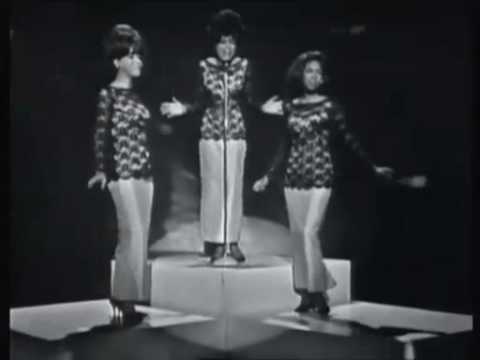
The new Supremes lineup consisted of Jean Terrell as lead vocalist alongside Mary Wilson and Cindy Birdsong. Wilson had been a founding member of the group and provided continuity and institutional knowledge during the transition. Birdsong had herself joined in 1967, replacing Florence Ballard, so the group had navigated lineup changes before. But the departure of Ross was categorically different in scale and public visibility, and every chart performance the reconstituted group achieved was measured against both its predecessor and the ascending solo career of the woman who had left.
The Supremes had released their debut album with the new lineup, Right On, in 1970, and had charted with "Up the Ladder to the Roof" and "Stoned Love," the latter reaching number three on the pop chart. "Nathan Jones" continued that commercial momentum, demonstrating that the group could sustain hits without Ross. The single was released in both the United States and the United Kingdom, where it performed even more strongly, reaching number five on the UK Singles Chart and introducing Terrell to British audiences who had loved the Supremes through the 1960s.
Terrell's vocal on "Nathan Jones" was widely praised for its natural ease and emotional authenticity. While Ross had projected a certain cool glamour, Terrell's style was warmer and more openly expressive, and Ashford and Simpson's production gave her ample space to demonstrate that range. The song's narrative of a woman addressing a man named Nathan Jones, exploring themes of departure and longing, suited Terrell's particular gifts for emotional directness without tipping into melodrama.
Motown's promotional machinery worked effectively on behalf of the post-Ross Supremes, though the label was simultaneously investing heavily in Diana Ross's solo campaign. The tension between supporting both entities without one cannibalizing the other was a genuine management challenge, and the fact that both Ross and the new Supremes charted consistently through 1971 speaks to the depth of Motown's promotional resources and the quality of the material being released under both names.
Looking back at "Nathan Jones" from the perspective of Motown history, the song stands as an important transitional document. It proved that the Supremes name retained commercial value and that Jean Terrell was a genuinely accomplished artist rather than merely a placeholder. The song's success helped legitimize the continuing Supremes as an independent entity rather than a Diana Ross tribute act, and it gave the group the confidence to pursue a creative identity that was genuinely its own. The ten-week chart run and number 16 peak were solid enough results to justify Motown's confidence in the new configuration, even if they fell short of the number-one peaks the group had reached so frequently in the preceding decade.
02 Song Meaning
The Meaning Behind "Nathan Jones": Longing, Loss, and the Courage to Move On
"Nathan Jones" addresses the emotional aftermath of a relationship in which one person has been left behind, speaking directly to the departed figure with a mixture of grief, confusion, and ultimately gathering resolve. The song belongs to a tradition of soul music that takes emotional honesty as its primary value, using a specific interpersonal situation as the vehicle for exploring feelings universal enough to reach across the particularity of names and circumstances. Jean Terrell's delivery gives those feelings a warmth and immediacy that make the song feel personal rather than formulaic.
The name "Nathan Jones" functions as a device for specificity rather than a reference to any real individual. By naming the absent figure, the song creates the illusion of an ongoing conversation, as if the listener is overhearing one side of a dialogue that has been interrupted by abandonment. This technique was common in soul music of the period, rooted in a gospel tradition of direct address to a listener whose presence must be imaginatively conjured. The effect is one of emotional proximity; the singer is not describing loss in the abstract but speaking to its source with all the ambivalence that entails.
The Ashford and Simpson composition explores the specific psychology of being the one who stays. There is hurt in the lyric, but also a kind of bewildered tenderness, as if the singer cannot entirely stop caring even while acknowledging that she has been left. This emotional complexity, the refusal to collapse into simple anger or simple forgiveness, is what distinguishes the song from more generic treatment of romantic loss. Soul music at its best has always understood that real emotional experience resists clean resolution, and "Nathan Jones" honors that understanding.
The song's setting in the early 1970s gives it additional resonance. The post-civil rights era brought new pressure on Black communities to define progress and self-determination in ways that extended beyond political representation into personal and emotional life. Soul music of the period often grappled with questions of loyalty and abandonment, whether within romantic relationships or as metaphors for broader social dynamics. The Supremes, as one of the most prominent Black female groups in American popular music, brought a particular visibility to those themes that gave even a relatively personal song like "Nathan Jones" a larger cultural frame.
There is also a subtle undercurrent of self-assertion in the song that becomes more audible on repeated listening. The singer's willingness to speak directly, to name the person who has left and to articulate what that loss has meant, is itself an act of dignity. Rather than dissolving into silence or resentment, she maintains her voice and her capacity for emotional expression even in the face of abandonment. This emphasis on emotional articulacy as a form of strength was consistent with what Nickolas Ashford and Valerie Simpson brought to their best compositions, a sense that the ability to feel deeply and express that feeling honestly is not weakness but one of the fundamental human capacities worth celebrating.
"Nathan Jones" ultimately endures because its emotional core, the complex mixture of hurt and love and stubborn dignity that attends being left, is one that listeners across generations have recognized as true to their own experience. The Supremes delivered that truth with grace and assurance at a moment when both the group and its audience needed proof that beauty and feeling could survive even the most disruptive changes.
→ More from The Supremes
View all The Supremes hits →



→ More from the 1970s File
View all 1970s hits →




Keep digging