The 1960s File Feature
You Can't Hurry Love
You Can't Hurry Love — The Supremes (1966) By the summer of 1966, the Supremes had already established themselves as the most commercially successful act in …
01 The Story
You Can't Hurry Love — The Supremes (1966)
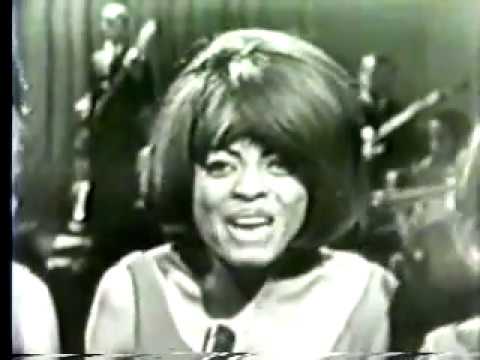
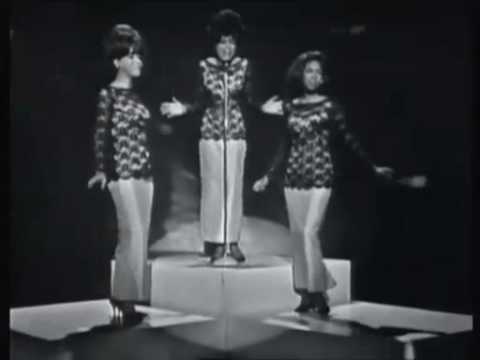
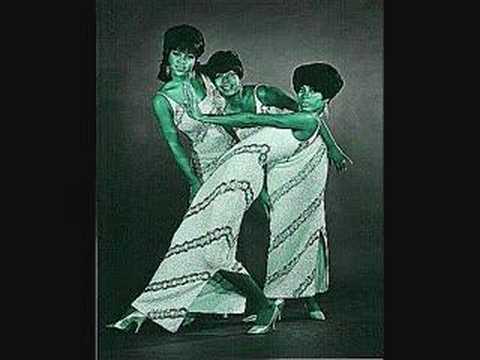
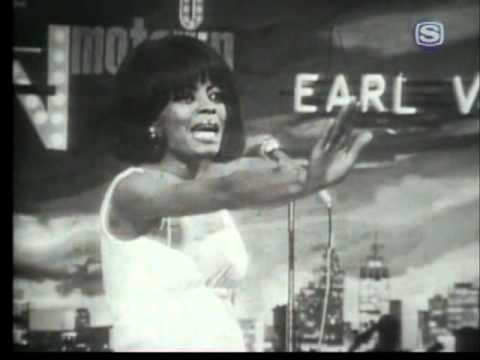
By the summer of 1966, the Supremes had already established themselves as the most commercially successful act in the history of Motown Records, with five consecutive number-one singles between 1964 and 1965 representing a feat virtually without precedent in the history of the American pop chart. "You Can't Hurry Love" arrived in that context as a continuation of a remarkable run rather than a breakthrough, and its production, songwriting, and commercial execution reflected the extraordinary level of craft that the Motown operation had developed by the mid-point of the decade.
The song was written by Holland-Dozier-Holland, the songwriting and production team of brothers Brian and Eddie Holland and Lamont Dozier, who were responsible for an extraordinary proportion of Motown's commercial output during this period. The team had written and produced the majority of the Supremes' biggest hits, including "Where Did Our Love Go," "Baby Love," and "Stop! In the Name of Love," and their working relationship with lead singer Diana Ross had developed into one of the most productive creative partnerships in popular music. For "You Can't Hurry Love," they drew on the gospel music tradition, specifically on the song "You Can't Hurry God (He's Right on Time)" by the gospel group the Dixie Hummingbirds and Edwin Hawkins, adapting its structures and emotional vocabulary for a secular pop context.
The recording was made at Motown's Hitsville U.S.A. studio in Detroit, the converted house on West Grand Boulevard that served as the creative and commercial hub of Berry Gordy's operation throughout the 1960s. The Funk Brothers, Motown's house band of studio musicians, provided the musical foundation, and the arrangement by Paul Riser and other Motown staff arrangers gave the track the combination of rhythmic drive and harmonic sophistication that characterized the label's best work of the period. Ross's lead vocal was recorded with the group's signature polish, and the background harmonies of Mary Wilson and Florence Ballard provided the ensemble warmth that had become part of the Supremes' commercial identity.
Motown released "You Can't Hurry Love" in July 1966, and the record entered the Billboard Hot 100 on August 13, 1966, at position 66. The chart ascent was rapid and assured, moving through the top 30 and top 10 in successive weeks. On September 10, 1966, "You Can't Hurry Love" reached number 1 on the Billboard Hot 100, where it remained for two consecutive weeks. The record spent 13 weeks total on the Billboard Hot 100, performing strongly across both the pop and rhythm and blues charts, where it also reached the top position.
The record arrived at a moment when the Supremes' relationship with Holland-Dozier-Holland was producing some of its most sophisticated work. The team had developed a production style that combined the rhythmic drive of rhythm and blues with the melodic accessibility of pop, orchestrated with a discipline and precision that reflected the Motown operation's explicit aspiration to reach the broadest possible American audience. "You Can't Hurry Love" exemplified this approach, being simultaneously rooted in the African-American gospel and rhythm and blues tradition and accessible to the mainstream pop audience that the label was aggressively pursuing.
The commercial performance of "You Can't Hurry Love" was significant even by the Supremes' elevated standards. The single sold in quantities that made it one of the best-performing Motown releases of 1966, and it was accompanied by a successful album release that continued the group's dominance of the album as well as the singles chart. The record's success confirmed that the Holland-Dozier-Holland formula retained its commercial effectiveness even after several years of intensive deployment, and it set the stage for the further hits that followed before the songwriting team's acrimonious departure from Motown in 1967.
The song's most prominent second life came through Phil Collins's 1982 cover version, which reached number 1 in the United Kingdom and number 10 in the United States, introducing the song to a generation of listeners who had not been present for the original. Collins's version was a faithful homage that preserved the arrangement's essential character while reframing it through the post-disco production aesthetic of the early 1980s. The success of that cover sparked renewed interest in the original Supremes recording and contributed to the growing critical reassessment of Motown's 1960s catalog as one of the essential bodies of work in American popular music.
The Supremes' original recording has been inducted into the Grammy Hall of Fame and continues to appear in critical surveys of the most significant recordings of the 1960s. Its place in the Motown catalog and in the Holland-Dozier-Holland songwriting legacy is secure, representing one of the most complete realizations of everything the Motown sound aspired to achieve during its most commercially dominant period.
02 Song Meaning
What "You Can't Hurry Love" Means
"You Can't Hurry Love" articulates a philosophy of patience in romantic life, arguing against the imposition of artificial timelines on emotional experience. The lyric presents a scenario in which the narrator is urged by a maternal figure to wait for love rather than forcing it prematurely, and this counsel of patience becomes the song's central message. At a surface level, the song is simply an expression of received wisdom about the timing of romantic attachment. At a deeper level, however, it engages with questions about agency, expectation, and the relationship between desire and fulfillment that give the lyric a resonance extending beyond its immediate pop context.
The gospel music roots of the composition are essential to understanding its full meaning. Holland-Dozier-Holland drew on the tradition of gospel music that frames patience in emotional and spiritual life as an active virtue rather than a passive resignation. In the gospel context from which the underlying musical ideas derived, waiting for God's timing was understood as an act of faith and trust rather than mere inaction. Transplanted to the secular pop context, that framework transforms the counsel to wait for love from a platitude into something more substantive: a genuine argument that the experience of love cannot be manufactured or forced but must be allowed to arrive in its own time.
Diana Ross's vocal performance is central to the song's meaning in ways that go beyond the delivery of the lyric. Her voice embodies both the impatience and the acceptance that the song describes, conveying simultaneously the emotional state of someone who wants love now and who is learning, through the advice she is receiving, to accommodate a different temporal framework. This duality in the performance, the tension between desire and counsel, between urgency and patience, gives the recording its emotional complexity and prevents it from settling into mere reassurance.
The Motown production context adds another dimension to the song's meaning. By 1966, the Supremes were the most commercially successful act at a label whose explicit mission was to bring African-American musical traditions into the mainstream American pop market. "You Can't Hurry Love" drew on gospel music, one of the oldest and most deeply rooted of those traditions, and placed its spiritual emotional vocabulary into a pop format accessible to the broadest possible audience. The song thus participated in the ongoing project of translating Black cultural expression into commercial pop without evacuating its emotional authenticity, which was the central tension and the central achievement of the Motown operation throughout the 1960s.
The maternal advice framework of the lyric, in which the narrator receives counsel from a mother figure about how to approach romantic life, also carries cultural weight specific to the African-American community in which the Motown tradition was rooted. The intergenerational transmission of wisdom, and specifically the counsel of elder women to younger ones about matters of the heart, is a recurring theme in African-American folk and musical tradition, and "You Can't Hurry Love" participates in that tradition while translating it into the language of mainstream pop. This dual cultural citizenship is part of what gave the song its commercial breadth and its emotional depth simultaneously.
Phil Collins's 1982 cover version added a retrospective dimension to the original's meaning by demonstrating that the song's core emotional and philosophical content could be communicated effectively across very different cultural and production contexts. Collins's version was not simply an homage but an appropriation of the song's meaning into a new context, proving that the wisdom the lyric offered about patience and the timing of love was not bounded by the specific cultural moment of its original production. The success of that cover contributed to the understanding of the original as a genuinely durable piece of popular songwriting rather than merely a period artifact.
Within the Supremes' catalog and within the larger Holland-Dozier-Holland songwriting legacy, "You Can't Hurry Love" occupies a central position as a demonstration of what the Motown aesthetic could accomplish when it connected commercial sophistication with genuine emotional depth. The song's Grammy Hall of Fame induction reflects an institutional acknowledgment of this achievement, and its continued presence in popular culture more than five decades after its initial release confirms that the patience it counsels has been rewarded by a durability that more urgent, impatient recordings of the same era did not always achieve.
→ More from The Supremes
View all The Supremes hits →
→ More from the 1960s File
View all 1960s hits →




Keep digging