The 1960s File Feature
I Hear A Symphony
"I Hear A Symphony" — The Supremes and the Sound of 1965 Motown at Full Power In the autumn of 1965, the Motown Records operation in Detroit was running at a…
01 The Story
"I Hear A Symphony" — The Supremes and the Sound of 1965
Motown at Full Power
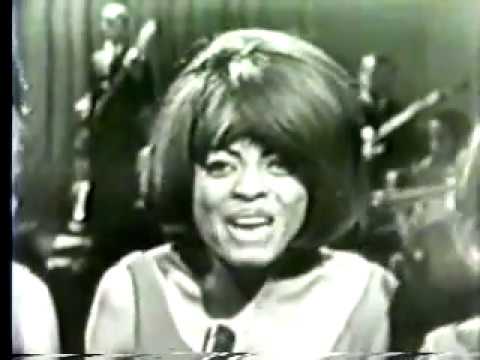
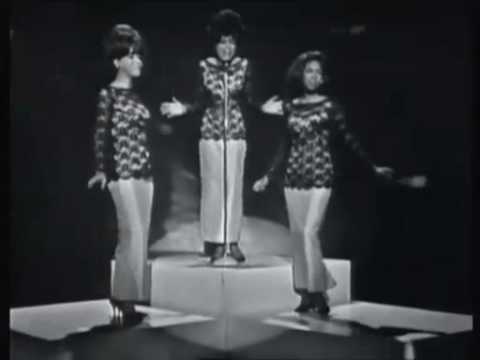
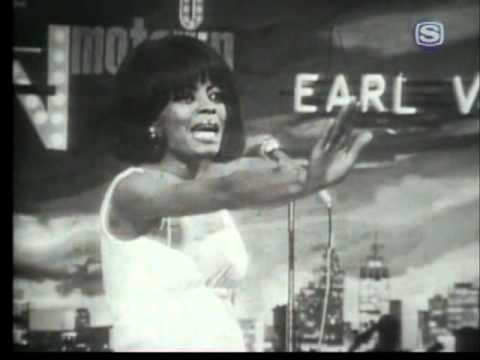
In the autumn of 1965, the Motown Records operation in Detroit was running at a velocity that had no real precedent in American pop music. The label had built a production assembly line of extraordinary sophistication, and the Supremes were its most visible and reliable product. Diana Ross, Mary Wilson, and Florence Ballard had already placed five consecutive singles at number one on the Billboard Hot 100 before "I Hear A Symphony" arrived, and the question was not whether they could do it again but simply how quickly.
The Supremes were the most commercially successful American act of the mid-1960s, competing head-to-head with the Beatles for chart dominance at the exact moment when British Invasion fever was at its height. The fact that a Detroit pop group was holding its own against that cultural tidal wave said something about the quality of the songs, the production, and the performers delivering them.
The Holland-Dozier-Holland Machine
Like so many of the Supremes' defining hits, "I Hear A Symphony" was the product of the songwriting and production team of Brian Holland, Lamont Dozier, and Eddie Holland, the triumvirate that essentially defined Motown's commercial sound during the label's peak years. Holland-Dozier-Holland had a remarkable instinct for combining pop melody with soul rhythm in ways that worked equally well on black radio and mainstream pop stations, a crossover balance that was genuinely difficult to achieve.
The arrangement on "I Hear A Symphony" leaned toward the orchestral, with string lines that gave the production a sweeping quality appropriate to the song's theme of romantic wonder. The Funk Brothers, the house band at Hitsville U.S.A., provided the rhythmic engine underneath, as they did on virtually every Motown record of the era. Their contribution, often uncredited on original releases, was central to the particular way a Motown record felt in the body, light on its feet even at slow tempos.
A Rocket Climb to the Top
The chart trajectory of "I Hear A Symphony" was swift and convincing. The single debuted on the Billboard Hot 100 on October 30, 1965, at number 39, an impressive opening position that suggested strong radio pickup from the first week. It moved to 12 in its second week, then to 5 in its third, an acceleration that reflected the Supremes' ability to convert radio airplay into sales almost immediately.
By November 20, 1965, the record had reached number one, where it stayed for two consecutive weeks. The entire Hot 100 run lasted ten weeks, a focused and efficient chart campaign that delivered the number one peak the Supremes had come to make look routine. The record became the group's sixth chart-topping single, an achievement that placed them alongside the most decorated acts in the history of the Billboard Hot 100 to that point.
Diana Ross at the Center
Ross's vocal on the record is one of her most assured performances of the mid-1960s period. Her voice was never the most technically powerful instrument in the Motown roster, but she had a clarity and a directness that translated perfectly on radio, cutting through the orchestral arrangement without competing with it. The emotion she conveyed was specifically calibrated to the song's premise, which described the state of being so fully in love that the sensation resembled experiencing great music.
The Wilson and Ballard harmonies served the track with characteristic precision, providing a cushion beneath the lead vocal that deepened the overall sound without drawing attention away from the central performance. The Supremes had developed this triangular vocal relationship over years of professional work, and by 1965 it functioned with the ease of long practice.
The Sixth Consecutive Crown
The historical weight of "I Hear A Symphony" lies partly in what it represented numerically. Six consecutive number one singles was not merely impressive; it was a record that placed the Supremes in a category with very few peers in the entire history of American pop. The run demonstrated a consistency that went beyond luck or timing, reflecting instead a systematic approach to song selection, production quality, and artist development that Motown had refined to something approaching a science.
The song holds up today partly because of its own qualities and partly because of what it stood for: a specific, unrepeatable moment when a group of young Black women from Detroit were the most commercially dominant act on American radio. Press play and the 1965 pop landscape rushes back, fully formed and alive.
"I Hear A Symphony" — The Supremes' singular moment on the 1960s charts.
02 Song Meaning
"I Hear A Symphony" — Love, Wonder, and the Language of Music
When Love Becomes Music
There is a specific variety of romantic feeling that "I Hear A Symphony" is trying to capture: the state of being so completely overtaken by love that ordinary sensory experience transforms into something orchestral and vast. The song does not describe a relationship in concrete terms, with meetings and conversations and shared history. Instead, it describes what romantic feeling does to perception, turning the everyday world into something that sounds like a full orchestra playing at its most expansive.
The central metaphor, love as a symphony, was not new in 1965, but Holland-Dozier-Holland understood how to freshen it through placement and performance. By giving the metaphor to the Supremes at the height of their cultural moment, surrounded by an arrangement that genuinely supported the claim with real orchestral sweep, the writers made an old idea feel immediately true.
The Emotional Vocabulary of Motown
The song belongs to a specific tradition in Motown's output during the mid-1960s: the ecstatic love proclamation. Where other genres were beginning to explore romantic ambiguity and complication in their lyrics, the Motown house style tended toward celebration, toward capturing the peak moment of romantic feeling rather than its uncertainties or aftermath. This was a deliberate choice, and it was commercially correct for the moment.
Listeners in 1965 were purchasing music that made them feel something immediate and positive, and the Supremes delivered that feeling with extraordinary reliability. "I Hear A Symphony" represented the style at its most polished, a pure expression of romantic joy that asked nothing complicated from the listener in return.
Gender, Race, and Pop Aspiration
Beneath the song's surface glamour runs a current that carries more weight than the lyrical content alone might suggest. The Supremes were young Black women performing music that was deliberately designed to cross racial market boundaries, presented in gowns and with choreography that aligned with mainstream American notions of elegance and aspiration. Their success with records like this one was a form of cultural negotiation conducted in real time, in front of a national audience.
The language of symphonies and orchestras, traditionally associated with European high culture, appearing in a Motown pop record performed by Black artists from Detroit, carried a silent argument about cultural access and sophistication. The Supremes were claiming the vocabulary of aspiration and universality, demonstrating that those qualities belonged to no single tradition.
Why the Song Still Travels
Decades after its 1965 number one run, "I Hear A Symphony" retains a quality of pure pleasure that is genuinely rare among records of its era. Many of its contemporaries have dated in production or lyrical content; this one still opens with a sense of arrival that bypasses nostalgia and goes straight to the emotional proposition. The Holland-Dozier-Holland melody is so well constructed that it rewards repeated listening without diminishing, which is the basic test any pop song must pass to survive its own era.
The song also travels because it speaks to a feeling that does not belong to any particular decade. Being overwhelmed by love, finding that the emotion seems to transcend ordinary experience, is not a 1965 condition. It is a permanent human condition. The Supremes gave it a sound that remains one of the most persuasive descriptions of that state in the entire pop catalogue.
→ More from The Supremes
View all The Supremes hits →

→ More from the 1960s File
View all 1960s hits →




Keep digging