The 1970s File Feature
It's Impossible
"It's Impossible" — The New Birth A Soul Arrangement for the Early 1970s Soul music in the autumn of 1971 was reaching for new registers of expression. The g…
01 The Story
"It's Impossible" — The New Birth
A Soul Arrangement for the Early 1970s
Soul music in the autumn of 1971 was reaching for new registers of expression. The genre had spent the late 1960s producing some of the most urgently political and emotionally devastating recordings in American popular music, and as the new decade began, there was a palpable desire in some corners of the soul world to find beauty and optimism without abandoning the depth and craft that had made the preceding years so remarkable. The New Birth, a large ensemble from Louisville, Kentucky, arrived with something specific: an approach to the vocal group format that combined the sweeping romanticism of orchestral soul with a commitment to groove that kept their records off the easy-listening shelf and on the dance floor.
"It's Impossible" was a cover of a song that had achieved significant success in a very different context. The song, written by Armando Manzanero with English lyrics by Sid Wayne, had been a major international hit for Perry Como in 1970 and 1971, reaching number 10 on the Hot 100 in a lush, traditionally arranged version. The New Birth's decision to record it represented a deliberate recontextualization: taking a song associated with an older pop tradition and finding within it the emotional material for something distinctly contemporary in its feel.
The New Birth and Their Sound
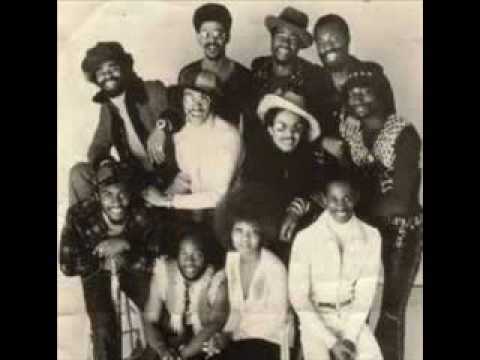
The New Birth was an unusual entity in early 1970s soul, operating as both a large vocal ensemble and a self-contained band at a time when most soul acts depended on either dedicated session musicians or house bands at major studios. Founded and directed by Harvey Fuqua, a significant figure in rhythm and blues history as a former member of the Moonglows and a producer who had worked at Motown, the group brought considerable institutional knowledge to their recordings. Fuqua understood the mechanics of vocal group production at a deep level, and his direction gave The New Birth a disciplined quality that their more sprawling format might otherwise have lacked.
The ensemble included both male and female vocalists, a configuration that allowed for a range of textural combinations not available to single-gender groups. This flexibility was one of their key sonic assets, and on "It's Impossible" the interplay between different vocal voices gave the recording a richness that the Perry Como version, however accomplished, could not replicate. The production also incorporated contemporary funk-influenced rhythmic elements that anchored what might have been a merely pretty song in something more physical.
The Chart Journey
The single entered the Billboard Hot 100 on October 9, 1971, debuting at number 81. Its climb through the chart over the following weeks was steady, reaching its peak position of number 52 on November 20, 1971, after nine weeks on the chart. That performance placed it solidly in the mid-chart range, the territory occupied by records that found a genuine audience without breaking through to the pop crossover that would have meant mainstream radio ubiquity.
The R&B chart performance, which tracked a more specific audience than the Hot 100, gave a clearer picture of where the record connected most deeply. The New Birth had a consistent R&B presence through the early and mid-1970s that demonstrated the strength of their following within that specific market, even as their crossover reach remained partial rather than comprehensive.
Covering Perry Como — The Reinterpretation Strategy
The decision to cover a Perry Como hit in 1971 was a more considered artistic choice than it might initially appear. Como represented a specific lineage of American popular singing, the post-crooner tradition of polished, undemonstrative romantic balladry, and "It's Impossible" had been received as a late-career success for an artist who had largely been associated with the pre-rock era of pop. By reinterpreting the song within a soul framework, The New Birth were making an implicit argument: that the emotional content of the material was universal enough to transcend its original stylistic context, that the feeling could be recovered and renewed in a different musical language.
This kind of cross-genre recontextualization had a long history in American popular music. Soul artists had been finding emotional resonance in pop standards for decades, and the New Birth's version of "It's Impossible" sat within that tradition while bringing a contemporary early 1970s sensibility to the material.
Harvey Fuqua and the Institutional Memory of R&B
The presence of Harvey Fuqua behind the New Birth gave the group access to a deep institutional memory of how Black vocal music had evolved from the late 1940s through the 1960s. Fuqua had been there at multiple crucial moments: in the Moonglows during the doo-wop era, at Motown during its golden period, and now guiding a new generation of vocal performers in the early 1970s. That historical perspective shaped how the New Birth approached their recordings, giving them a sense of where they fit in a longer tradition even as they pursued contemporary sounds.
Press play and let the ensemble swell around you; few soul productions of 1971 balanced orchestral ambition and rhythmic grounding quite this successfully.
"It's Impossible" — The New Birth's singular moment on the 1970s charts.
02 Song Meaning
"It's Impossible" — Themes and Legacy
Love's Impossible Arithmetic
The central conceit of "It's Impossible," a song that runs through a series of genuinely impossible things and uses them as evidence that asking someone to stop loving is equally impossible, belongs to a tradition of romantic poetry that predates popular music by centuries. The rhetorical move, cataloging the impossible to make an argument about the nature of feeling, draws on the kind of logical paradox that love poetry has always found productive. The song's durability across multiple languages and multiple generations of recordings speaks to the universality of its central insight: that emotional attachment operates by its own logic, independent of rational decision-making.
The New Birth's version brought this material into a soul context that gave the impossibility claim a different emotional texture than the Perry Como original. Where Como's reading was warm and assured, the soul arrangement introduced elements of yearning and physical urgency that complicated the romantic certainty. The feeling was less settled, more actively engaged with the difficulty that the song's title acknowledges.
The Vocal Ensemble as Argument
One of the things that makes "It's Impossible" function differently as recorded by a large vocal ensemble than as performed by a single singer is the way the group sound changes the implied relationship between the speaker and the beloved. A solo voice makes an individual claim; a chorus makes a collective one. When multiple voices assert that something is impossible, the claim takes on the quality of communal wisdom rather than personal testimony.
Harvey Fuqua understood this dynamic intuitively, having spent his career working within and directing vocal groups. The New Birth's arrangement used the ensemble in ways that reinforced the song's central argument, building to moments of collective vocal affirmation that felt less like a single person declaring love and more like a community endorsing it.
The Song's International Life
The original "Somos Novios," written by Armando Manzanero, was a significant success in the Spanish-speaking world before Sid Wayne's English lyrics made it available to a broader international audience under the title "It's Impossible." The song's capacity to travel across linguistic and cultural contexts reflected the universality of its romantic subject matter, and the multiple versions recorded in the early 1970s demonstrated that genuinely good popular songs could sustain multiple reinterpretations without losing their essential quality.
The Perry Como version's success at number 10 on the Hot 100 established the English-language version's commercial viability, and subsequent recordings by other artists, including The New Birth, explored what else the material could do when approached from different stylistic angles. This pattern of multiple successful versions was more common in the pre-album era and in the early years of the album era than it would later become, reflecting a market structure in which a good song was understood as a template that multiple artists could legitimately claim.
Early 1970s Soul in Context
Soul music in 1971 was processing the tension between its politically engaged late-1960s peak and the commercial pressures that pulled it toward accessibility and crossover. Artists who chose romantic material over explicitly social content were not necessarily retreating from engagement; they were often making an argument that love and community were themselves forms of resistance, that maintaining the capacity for warmth and connection in difficult times was itself a meaningful act.
The New Birth's reading of "It's Impossible" in this context carried that implicit argument. By bringing orchestral soul production values to a song about the impossibility of not loving someone, they were participating in the tradition of soul music as affirmation, as a genre that declared the endurance of human feeling against whatever pressures sought to diminish it.
→ More from The New Birth
View all The New Birth hits →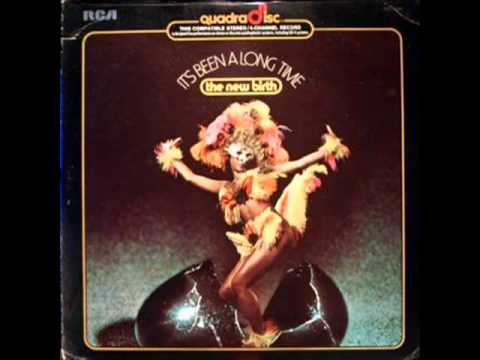

→ More from the 1970s File
View all 1970s hits →




Keep digging