The 1970s File Feature
Hand Me Down World
Hand Me Down World: The Guess Who's Dark Turn Into the Counterculture By the summer of 1970, The Guess Who occupied a paradoxical position in North American …
01 The Story
Hand Me Down World: The Guess Who's Dark Turn Into the Counterculture
By the summer of 1970, The Guess Who occupied a paradoxical position in North American rock. The Winnipeg-bred band had just scored one of the most politically charged hits of the year with "American Woman," a thundering anti-war broadside that nonetheless climbed to number one on the Billboard Hot 100 in May of that year. Having made a statement that resonated from college campuses to AM radio, the group faced a challenge that has confronted successful rock acts across every decade: how do you follow a song that defined a cultural moment without simply repeating it? The answer they arrived at was "Hand Me Down World," a brooding, mid-tempo piece that traded the fuzz-guitar swagger of its predecessor for a more introspective, socially weighted tone.
The song was written by guitarist and primary creative force Kurt Winter, who had joined the band in early 1970 along with fellow guitarist Greg Leskiw. Winter's arrival shifted the group's sonic palette considerably. Where co-founder Randy Bachman had provided a hard-rock foundation rooted in British Invasion influences, Winter brought a darker, more meditative sensibility. "Hand Me Down World" became one of the clearest expressions of his writing approach: a song more interested in asking uncomfortable questions than delivering the kind of celebratory rock hook that radio programmers preferred.
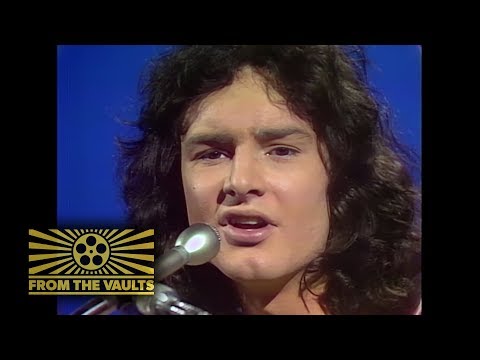
The recording was produced by Jack Richardson, the Toronto-based producer who had shepherded the band's rise to international prominence through a series of albums on the RCA Victor label. Richardson understood how to capture the group's live energy while maintaining commercial polish, and the production of "Hand Me Down World" reflects that balance. The arrangement is deliberate and measured, allowing the lyrics to carry the weight rather than burying them in layers of instrumentation. Burton Cummings's vocal delivery is restrained compared to the extroverted performances that characterized earlier Guess Who material, matching the song's tone of quiet despair.
Released as a single in the summer of 1970, the track debuted on the Billboard Hot 100 on July 18 of that year at position 89. Its climb was steady if not spectacular: by August 1 it had reached 49, by August 8 it stood at 35, and it ultimately peaked at number 17 during the week of September 5, 1970, spending eleven weeks on the chart in total. Those numbers placed it well below the commercial ceiling the band had established with "American Woman" but represented a respectable performance for a song that offered radio listeners considerably less immediate gratification than the group's biggest hits.
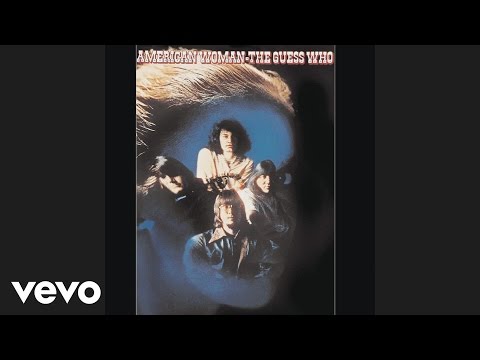
The track appeared on "American Woman," the album of the same name, which RCA Victor issued in early 1970. The album itself was a commercial and critical success, and "Hand Me Down World" served as a tonal counterpoint to the title track's more aggressive posture. While "American Woman" channeled outward aggression at a symbolic target, "Hand Me Down World" turned the lens inward and outward simultaneously, examining the inheritance of social failure across generations. That thematic complexity may account for both its artistic strength and its relative chart underperformance: radio listeners in 1970 had demonstrated an appetite for the Guess Who's harder edge, and the more subdued "Hand Me Down World" asked them to meet the band in a different register.
The song's position within the broader Guess Who catalog has grown in estimation over the decades. Rock historians who study the period often cite it as an early example of the band stretching beyond the constraints of its commercial identity, anticipating the more eclectic directions the group would explore as the 1970s progressed. Kurt Winter's writing demonstrated that the band contained creative energies beyond what the singles market had revealed, and "Hand Me Down World" gave those energies their first significant public airing.
By the autumn of 1970, the Guess Who were navigating personnel changes that would eventually reshape the group entirely. Randy Bachman departed in July of that year for personal and professional reasons, his exit coinciding with the period when "Hand Me Down World" was ascending the charts. The song therefore occupies a transitional moment: it arrived as one era of the band was closing and another, less certain one was opening. Bachman would go on to form Bachman-Turner Overdrive; the remaining members, led by Cummings, would continue under the Guess Who banner through several more chart appearances and lineup shifts.
The cultural context of summer 1970 gave the song's themes particular resonance. The Kent State shootings had occurred in May, deepening the sense among young Americans and Canadians that the social contract was fraying in ways that would not easily be repaired. "Hand Me Down World" captured that exhaustion without offering false consolation. Its eleven weeks on the Hot 100 were weeks in which the United States was processing the most turbulent spring in a generation, and the song's measured sorrow fit the mood of an audience already saturated with upheaval.
02 Song Meaning
What "Hand Me Down World" Says About Inherited Failure and Social Responsibility
"Hand Me Down World" by The Guess Who operates as a rebuke directed at a civilization that passes its worst qualities from one generation to the next without acknowledgment or accountability. The song's central metaphor is embedded in its title: the world as a used, degraded object, passed along to successive generations not as a gift but as a burden, already worn and compromised by those who held it before. Kurt Winter's lyrical framework treats social dysfunction not as an accident or aberration but as a structural inheritance, something deliberately or negligently handed down rather than corrected.
The tone throughout the recording is one of weary accusation rather than revolutionary fervor. Where "American Woman," the track that preceded it in the band's run of successful singles, delivered its social critique through amplified aggression, "Hand Me Down World" approaches similar territory from a position of quiet moral exhaustion. This shift in delivery significantly alters the emotional impact: rather than inciting the listener to anger, the song invites reflection on complicity. The world being described is not one being actively destroyed by villains so much as one being neglected by ordinary people who accept deteriorating conditions as normal.
Burton Cummings's vocal performance reinforces this interpretive direction. His delivery is understated relative to his most theatrical recordings, a choice that aligns the singer's voice with the subject matter. The restraint signals that the narrator is not an outside agitator but someone speaking from within the situation being described, someone who understands the problem from the inside and finds conventional outrage insufficient to address it. That positioning gives the song an unusual psychological texture: it criticizes without fully exempting its own narrator from the critique.
The timing of the song's release in mid-1970 lent its themes additional weight. The preceding months had brought the expansion of the Vietnam War into Cambodia and the National Guard killings at Kent State University, events that intensified a generational sense that the adults managing institutions had failed in their most fundamental obligations. "Hand Me Down World" did not reference these events directly but spoke to the underlying condition they exemplified: a civilization willing to sacrifice its young on behalf of positions and conflicts it refused to honestly examine.
The phrase "hand me down" carries specific class and cultural connotations in North American usage, referring to clothing or objects passed from older children to younger siblings within families that cannot afford new goods. By applying this phrase to the world itself, the song elevates a domestic reality of material scarcity into a metaphor for civilizational failure. The world the young are receiving is second-hand not because of poverty but because of moral and political negligence; it has been used up and passed along without repair or improvement.
Understood in the context of the Guess Who's larger catalog, the song represents a maturation of the band's social commentary. Earlier records had traded in more direct forms of teenage rebellion and romantic assertion. By 1970, under the influence of Winter's writing, the group was engaging with questions of collective responsibility and generational continuity that required more nuanced handling. "Hand Me Down World" is evidence that the band was capable of sustaining that nuance, even at the cost of the immediacy that drove chart performance. Its peak of number 17 on the Hot 100 indicated an audience willing to engage, even if fewer were drawn to this mode of address than to the band's more visceral work.
→ More from The Guess Who
View all The Guess Who hits →


→ More from the 1970s File
View all 1970s hits →




Keep digging