The 1960s File Feature
These Eyes
These Eyes — The Guess Who "These Eyes" was the commercial breakthrough that transformed The Guess Who from a well-regarded Canadian rock band into a genuine…
01 The Story
These Eyes — The Guess Who
"These Eyes" was the commercial breakthrough that transformed The Guess Who from a well-regarded Canadian rock band into a genuine force on the American pop and rock charts. Released in early 1969 on RCA Records, the single announced the band's arrival in the United States with a sound that blended rock instrumentation with soulful, emotionally direct vocals in a way that set them apart from both the heavier British Invasion acts and the lighter pop groups of the period. It remains one of the defining singles of the late 1960s rock era and a landmark in Canadian popular music history.
The song was written by keyboardist and vocalist Burton Cummings and rhythm guitarist Randy Bachman, the creative partnership at the heart of the band's most productive period. Bachman supplied a chord progression and basic musical framework, while Cummings shaped the melody and lyrics into a sustained plea from a narrator whose romantic relationship is dissolving. The recording was produced in a manner that showcased Cummings's remarkable vocal range, giving him space to move between tenderness and intensity within a single performance. The result was a performance that felt emotionally raw even within the polished production aesthetic of the era.
The single climbed the Billboard Hot 100 throughout the spring of 1969, reaching number six and spending a substantial run on the chart. It crossed over effectively between rock and pop audiences, appearing not only on the Hot 100 but registering strongly with radio programmers in multiple formats. The success was significant not only for the band but also for RCA, which had signed The Guess Who after their Canadian success and was investing in breaking them to a broader North American audience. The single validated that investment decisively and opened the door to the sustained American chart presence that followed.
The Guess Who had formed in Winnipeg, Manitoba, in the early 1960s under various names before settling on their final identity and lineup. By the time "These Eyes" was recorded, the band had been working professionally for several years and had developed a sophisticated understanding of arrangement and production. The track featured organ work from Cummings that gave it a distinctive texture, sitting prominently in the mix in a way that was uncommon for pop singles of the period and contributed substantially to the record's memorable sonic identity.
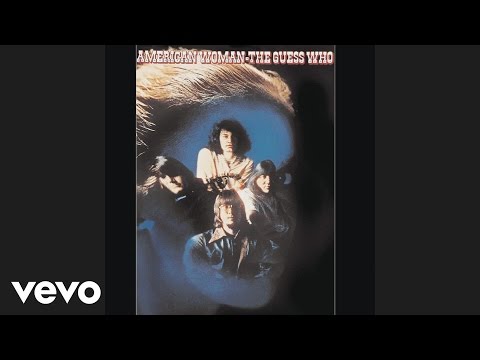
The commercial success of "These Eyes" was followed in rapid succession by additional major hits, including "Laughing," "Undun," and the enormously successful "American Woman," which reached number one on the Billboard Hot 100 in 1970. The trajectory from "These Eyes" to "American Woman" represents one of the more impressive commercial ascents in the history of Canadian rock, accomplished in roughly eighteen months of sustained chart presence. "These Eyes" is properly understood as the foundation on which that entire run was built, establishing the audience and the commercial credibility that subsequent releases could leverage.
Critics at the time noted the song's unusual emotional directness for a rock band of the period, and that quality has made it durable across subsequent decades. Radio stations have continued to program the track in classic rock and oldies formats, and it has appeared in numerous films and television programs seeking music to evoke the specific emotional texture of the late 1960s. The combination of Cummings's vocal performance and the song's melodic sophistication gave it a shelf life that many commercially successful singles of its era have not enjoyed.
The Guess Who's legacy in Canadian popular music is substantial, and "These Eyes" occupies a central place in it. The band was inducted into the Canadian Music Hall of Fame in 1987, and their breakthrough singles from 1969 to 1971 are considered canonical achievements in the development of Canadian rock as a commercially and artistically significant force. The fact that the band achieved major American chart success from a Winnipeg base without relocating to a major American music center was itself a notable accomplishment and a source of national pride that has only grown with the passage of time.
The song's arrangement has been analyzed as a template for the kind of pop-rock crossover that would define Canadian rock in subsequent decades. The balance between rock energy and pop accessibility, combined with a lyrical seriousness that avoided both sentimentality and obscurantism, pointed toward approaches that Neil Young, Joni Mitchell, and later generations of Canadian artists would refine and expand. "These Eyes" sits at an important historical juncture in that development, arriving precisely when Canadian rock was beginning to find a voice distinct from its American and British influences.
02 Song Meaning
These Eyes — Meaning and Themes
"These Eyes" presents a narrator in the late stages of a romantic relationship, watching a partnership dissolve and struggling to articulate both the pain of that dissolution and a quiet, dignified refusal to simply accept it. The song operates emotionally in the space between resignation and protest, and it is the tension between those two impulses that gives the performance its particular charge. Burton Cummings delivers the lyric as someone who understands intellectually that the relationship may be ending but cannot bring himself to feel the finality of that understanding.
The title and its repeated emphasis on eyes as a locus of emotional truth reflects a broader lyrical preoccupation with witness and acknowledgment. The narrator's eyes have seen too much to easily look away from what is happening, and the song frames emotional experience as something that accumulates visually, registered and retained in a way that cannot be undone. This is a sophisticated way of treating romantic loss, connecting it not to specific events but to a gradual, observed erosion of what once existed between two people.
The waiting that the narrator describes is not merely physical but emotional, a state of suspended feeling in which the full weight of loss has not yet arrived but can be sensed approaching. This sense of anticipatory grief, grieving something that has not quite ended, is psychologically precise and contributes to the song's emotional realism. The narrator is caught between the present reality of a relationship still technically existing and the future certainty of its end, and that liminal emotional space is rendered with unusual clarity for a pop song of any era.
The tears mentioned in the song's emotional geography serve as the physical evidence of interior states that the narrator otherwise struggles to express. They represent an overflow, the moment when internal feeling exceeds what can be contained. The song does not sentimentalize this overflow but treats it as a natural consequence of caring deeply, and that restraint prevents the track from becoming maudlin even as it deals in explicitly emotional territory. Randy Bachman and Burton Cummings understood intuitively that emotional intensity in a song works better when it is earned through specificity rather than amplified through excess.
For The Guess Who's catalog, "These Eyes" established the emotional register that would define their most successful work. The band's subsequent hits continued to explore relationships from a perspective of clear-eyed emotional honesty, and the template of a vocally dominant, melodically ambitious approach to rock romanticism proved durable across their entire commercial peak. The song demonstrated that the band could hold an audience not through spectacle or volume but through the quality of feeling in the performance, a lesson that shaped everything they did afterward.
The song's endurance in classic rock radio formats reflects its success at capturing a universally recognizable emotional state with sufficient precision to remain resonant across generations. Listeners encountering "These Eyes" for the first time decades after its release continue to find in it an accurate description of a feeling they recognize, which is the clearest evidence that the song succeeded at the fundamental task of emotional communication. Burton Cummings's vocal performance carries the weight of that communication almost entirely on its own terms, making the song one of the most vocally centered achievements in late 1960s rock.
→ More from The Guess Who
View all The Guess Who hits →



→ More from the 1960s File
View all 1960s hits →




Keep digging