The 1970s File Feature
Share The Land
Share The Land: The Guess Who's Vision of Community and Commercial Success "Share The Land" was released by the Guess Who in 1970 and became one of the Canad…
01 The Story
Share The Land: The Guess Who's Vision of Community and Commercial Success
"Share The Land" was released by the Guess Who in 1970 and became one of the Canadian rock band's most enduring singles, reaching number ten on the Billboard Hot 100 and demonstrating the band's capacity to shift between hard rock and more reflective, socially conscious material without losing their commercial footing. The song appeared on the album of the same name, released on RCA Records, and it captured something important about the mood of a particular moment in rock music history, a period of widespread cultural questioning when songs about communal values and shared futures found receptive audiences among young listeners.
The Guess Who were one of the most commercially successful Canadian rock acts of the late 1960s and early 1970s. The band, led by vocalist and frontman Burton Cummings and guitarist Randy Bachman, had achieved major American chart success with singles including "These Eyes" and "Laughing," and by 1970 they were one of the rare Canadian acts with genuine mainstream recognition in the United States. Their sound combined blues-influenced rock guitar work with Cummings's distinctive vocal style, which could move between blues-drenched intensity and melodic pop accessibility with considerable ease.
The recording of "Share The Land" came from a band that had been refining its approach across several albums and had developed a clear sense of what it was trying to do musically. The song was written by Burton Cummings and reflected the social idealism that was a significant current in popular music around 1970. The track had a warmth and openness to it, a quality of reaching toward something better rather than protesting what was wrong, which gave it a different emotional register from the more confrontational protest music of the period.
RCA Records promoted the single aggressively, and the label's confidence in the track was justified by the chart response. "Share The Land" reached the top ten, continuing the Guess Who's extraordinary hot streak on American radio. The band's ability to place multiple songs in the top ten over a relatively short period was evidence of both their consistent songwriting quality and their effective working relationship with their label's promotional apparatus.
The band's lineup at the time of "Share The Land" had recently undergone a significant change. Randy Bachman, whose guitar work had been central to the Guess Who's sound, departed the band in 1970, and his absence required an adjustment. The band brought in additional guitarists including Kurt Winter and Greg Leskiw, and the resulting lineup change had to be managed without disrupting the band's commercial momentum. That the Guess Who managed this transition successfully, producing chart hits in the same period they were adjusting to a new lineup configuration, speaks to the depth of talent in the group and particularly to Cummings's ability to carry the band's identity through personnel changes.
Kurt Winter, who joined the band around this period, became an important creative contributor. Winter had a guitar style that was somewhat different from Bachman's, and the new lineup configuration gave the band's recordings a somewhat different texture, though one that retained the essential character of the Guess Who's commercial rock sound. "Share The Land" captured the band in this transition period, demonstrating that the lineup change had not diminished their ability to produce compelling, radio-friendly rock recordings.
The album "Share The Land" also contained other material that demonstrated the band's range, from harder rock tracks to more reflective pieces, and the overall record was well received as a coherent artistic statement as well as a commercial product. The success of the title single helped drive album sales and maintained the Guess Who's position as one of the leading rock acts of the early 1970s, a position they would hold until the mid-decade when lineup changes and shifting commercial winds began to affect their chart performance.
The Guess Who placed five singles in the Billboard Hot 100 top ten between 1969 and 1970, a remarkable concentration of commercial success. In the broader context of Canadian rock history, "Share The Land" represents a significant achievement: a domestically produced rock record that competed effectively at the highest commercial level of American radio. The Guess Who's success in the American market during this period helped demonstrate the international commercial viability of Canadian rock, paving the way for subsequent generations of Canadian acts to pursue American audiences with confidence.
02 Song Meaning
Utopian Longing and Communal Values: The Meaning of "Share The Land"
"Share The Land" speaks to one of the most persistent and idealistic strands in early 1970s popular music: the belief that human beings could organize themselves differently, more generously, with greater attention to communal wellbeing than to individual accumulation. The song's central image, of people sharing land, of distributing the fundamental resource of the earth more equitably among those who inhabit it, is a vision of social organization that carries both political and spiritual resonances. It is a utopian impulse, one that acknowledges the gap between how the world is and how it could be.
Burton Cummings wrote the song in a moment when such utopian thinking was widely present in popular culture, when the idealism of the 1960s counterculture had not yet curdled into the cynicism that would characterize much of the mid-to-late 1970s. The song's warmth and sincerity reflect a genuine belief, common among young people in 1970, that the world could be made better through collective will and shared values. Whether or not this belief was naive, it was real, and the song communicates its reality with considerable emotional directness.
The song is addressed outward, toward an imagined community of listeners who share the narrator's values and hopes. This outward orientation gives it a quality that distinguishes it from introspective personal experience songs: it is an invitation rather than a confession, a gesture toward collective experience rather than individual feeling. The narrator is not describing what he has experienced but what he believes is possible, and he invites the listener to share that belief.
In the Guess Who's catalog, "Share The Land" occupies an interesting position because it represents the band's most explicitly communitarian statement, their most direct engagement with the social idealism of the era. The band was primarily known for its harder-edged rock and for songs dealing with personal experience, romantic relationships, and social observation. "Share The Land" stepped beyond that territory into something more explicitly aspirational and collective, demonstrating that the band was engaged with the broader cultural conversations of their moment rather than simply producing commercially oriented entertainment.
The relationship between the song's utopian content and its mainstream commercial success is itself interesting. That a song about sharing resources and building communal alternatives could reach the top ten of the American charts in 1970 speaks to how widespread these values were among young rock audiences at the time, and to how effectively the Guess Who translated them into an accessible musical form. The song was not radical in its musical approach; it did not require any adjustment in listening habits to appreciate. But its thematic content pointed toward a different understanding of how people should relate to each other and to the material world.
The broader historical context of 1970 gave the song additional resonance. The period following the late 1960s was one of significant social and political uncertainty, with ongoing conflicts, environmental concerns, and economic shifts creating anxiety about the future. A song that offered an image of communal sharing and mutual support spoke directly to that anxiety, not by dismissing it but by proposing an alternative vision of how human communities could organize themselves. That this vision was expressed through catchy, radio-friendly rock rather than through more confrontational musical modes was itself a statement about the kind of cultural change the song was imagining: incremental, inclusive, and broadly appealing rather than exclusively countercultural.
The song's lasting presence in the Guess Who's catalog and in surveys of early 1970s rock history reflects the fact that its emotional and thematic content has not entirely dated. The questions it raises about how people share resources and build communities remain relevant, and the musical form through which Cummings raised them remains appealing. As a document of a particular historical moment's idealism, it is both specific and universal, rooted in 1970 but addressing something permanent in human aspiration.
→ More from The Guess Who
View all The Guess Who hits →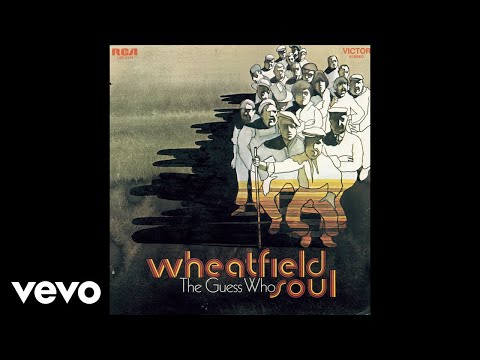
→ More from the 1970s File
View all 1970s hits →




Keep digging